
Sphaerocera
Sphaerocera
Description
How to identify
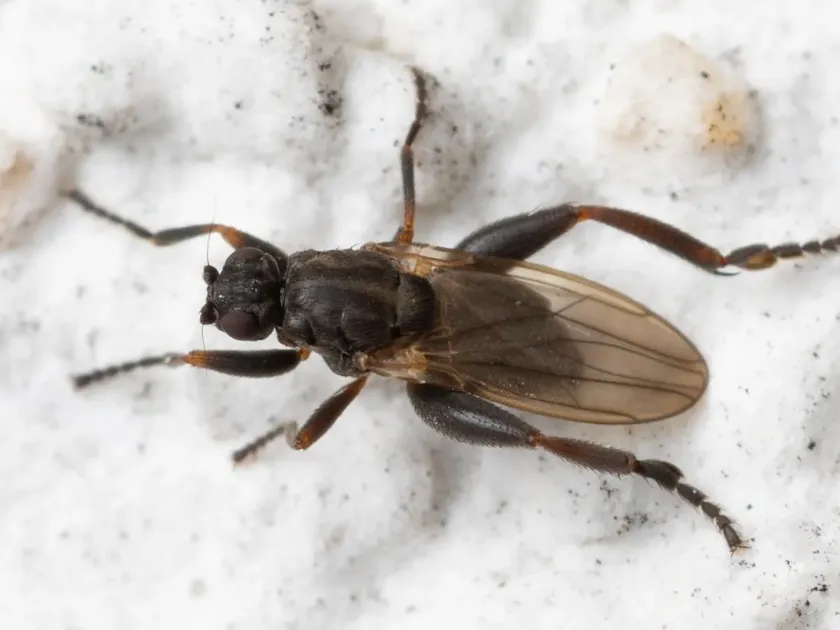
Sphaerocera is a genus of small flies within the Sphaeroceridae family, commonly referred to as lesser dung flies. These insects typically measure between 1 and 3 millimeters in length and possess a dark, sometimes blackish coloration.
A distinctive morphological feature of this genus is the structure of the hind legs, where the first tarsal segment is noticeably thickened. Adult flies exhibit simplified wing venation, which is a key trait for accurate identification under a microscope.
The larvae are cylindrical and often lack the developed mouth hooks found in other fly pests. They thrive exclusively in environments characterized by high humidity and decaying organic matter.
In nature, they are frequently encountered near manure piles, compost heaps, and decaying plant debris, though their small size allows them to easily infiltrate greenhouses and other protected growing structures.
Systematically, this genus belongs to the order Diptera and the suborder Brachycera. Their ecological niche is closely linked to synanthropic habitats, making them common in human-altered environments.
What it damages
Direct damage caused by adult flies is minimal, but the larvae are capable of causing significant injury to the underground portions of plants. While they prefer decaying tissue, they may attack healthy roots when populations are high.
Sphaerocera poses a particular threat to greenhouse vegetables such as tomatoes, cucumbers, and lettuce, especially in damp conditions where seedlings are vulnerable to root damage.
The damage manifests as a weakened root system, leading to stunted plant growth and reduced physiological vigor. Damaged roots are also highly susceptible to secondary fungal infections.
These flies can also be problematic in mushroom farming, where larvae colonize the growing substrate and damage the mycelium, directly impacting crop yield and quality.
Additionally, they serve as vectors for various pathogens, as adult flies can carry bacteria and fungal spores on their bodies, facilitating the spread of plant diseases throughout the greenhouse.
When it appears
The activity of Sphaerocera is primarily dictated by soil moisture levels and ambient temperature. They typically become active once temperatures exceed 15 degrees Celsius.
Within greenhouses, the developmental cycle can continue year-round if the microclimate remains stable, which often leads to an accumulation of the population over time.
Population peaks usually occur during periods of high humidity, as the larvae require a moist environment for successful pupation and overall development.
During autumn, these flies frequently migrate into indoor structures and storage facilities, where they continue to thrive in the presence of organic waste.
In outdoor environments, their activity sharply declines with the onset of the first frosts, at which point they enter diapause or perish as pupae within the soil.
Signs of infestation
The presence of these pests is usually first noticed when small black flies are observed hovering near the soil surface. Yellow sticky traps are highly effective for detecting and monitoring their populations.
Stunted seedlings or plants that appear pale and fail to thrive in damp soil are strong indicators of potential larval damage to the root system.
Excessive moisture in the growing medium or the presence of decaying plant matter serves as an early warning sign that the conditions are optimal for Sphaerocera breeding.
A closer inspection of the substrate may reveal the larvae, which appear as tiny, pale, worm-like organisms moving within the wet soil or compost.
Wilting of plants in the absence of obvious water stress is a classic symptom in greenhouse environments that warrants immediate inspection for fly infestations.
Control measures
The primary control method is good agricultural practice: managing soil moisture to prevent waterlogging and ensuring the prompt removal of decaying organic debris.
The use of yellow sticky cards is an effective cultural control method that reduces the population of adult flies, thereby limiting egg-laying potential in the greenhouse.
Biological controls, such as the application of entomopathogenic nematodes, are highly effective at targeting and reducing larval populations within the soil without the use of harsh chemicals.
Chemical intervention should be considered a last resort and only when infestations reach critical levels, ensuring that approved insecticides with short pre-harvest intervals are utilized.
Sanitation is key; disinfecting tools, cleaning containers, and ensuring the quality of imported substrate are vital steps to prevent the introduction of this pest into new areas.
Taxonomy
- Latin name
- Sphaerocera
- Order
- Diptera (flies)
- Family
- Sphaeroceridae
- EPPO code
- SPOCSP
Discussion
No discussions yet — be the first.