
Coproica fly
Coproica
Description
How to identify
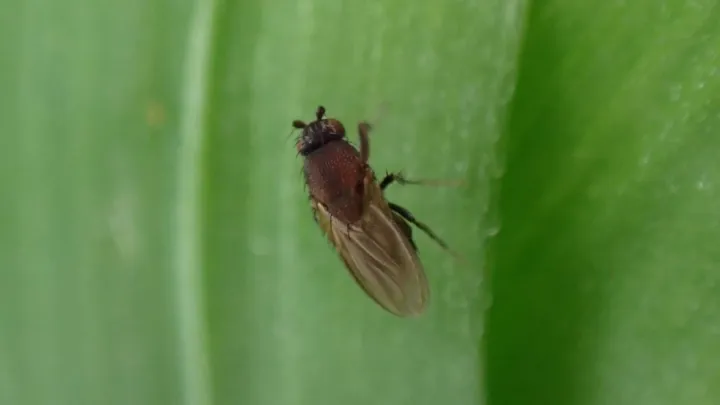
The Coproica genus belongs to the Sphaeroceridae family (lesser dung flies) within the order Diptera. These are tiny insects, typically measuring 1–2 mm in length, often dark-bodied.
Adult flies are characterized by specific wing venation patterns typical of the family and thickened hind tarsi, which are key features for identification by entomologists.
Larvae are small, whitish, legless maggots that live concealed within organic matter or damaged plant tissues. They lack a distinct head capsule and have a simple body structure.
Identification in the field is challenging due to their microscopic size and similarity to other related genera in the Sphaeroceridae family.
Their presence is almost always associated with high moisture levels and decaying organic materials, making them common in poorly managed greenhouse environments.
What it damages
The damage caused by Coproica is primarily observed in seedlings and young vegetables in greenhouse conditions where sanitation is lacking.
Larvae may penetrate weakened plant stems or the crown, creating tunnels that obstruct water and nutrient transport, often leading to plant collapse.
Crops affected include various greenhouse vegetables (tomatoes, cucumbers) and ornamental plants, especially those grown in organic-rich, moist potting mixes.
The injury is often secondary, as the flies are attracted to plants that are already struggling with root decay or mechanical injury, but the larvae can exacerbate the health of the plant.
By tunneling into stems, larvae create infection courts for soil-borne pathogens, leading to rapid disease development and plant death.
When it appears
Coproica activity is highly dependent on environmental conditions, particularly humidity and temperature. They thrive in wet, stagnant conditions common in poorly ventilated greenhouses.
In climate-controlled facilities, these flies can breed continuously throughout the year, with generation cycles spanning only a few weeks under optimal conditions (20–25°C).
In outdoor settings, populations peak during the late summer and early autumn when organic waste accumulates and seasonal rainfall keeps the soil surface moist.
They overwinter as puparia buried in the soil or protected within plant debris, allowing them to withstand various cold-weather stressors.
Because of their short lifecycle, a population can rebound quickly if conditions remain favorable, making persistent monitoring essential.
Signs of infestation
Early signs include the development of soft, darkened areas at the base of the stem near the soil line, often accompanied by unexplained stunted growth.
Monitoring using yellow sticky cards near the soil surface helps detect the presence of adult flies before larvae cause significant damage.
If a plant begins to wilt suddenly, inspecting the stem base for small entry holes or larval activity is a standard diagnostic procedure.
- Small dark lesions at the crown of the plant
- Gradual yellowing of lower foliage without nutrient deficiency symptoms
- Presence of tiny maggots within the pith of the stem
- Visual observation of small flies moving over moist soil surfaces
In many cases, damage is mistaken for primary fungal rot, but the presence of larvae confirms a pest-driven infection process.
Control measures
The primary control measure is strict sanitation, including the removal of decaying organic material and plant debris from the growing area.
Biological control using entomopathogenic nematodes, specifically Steinernema feltiae, is highly effective at targeting larvae in the soil or potting media.
Cultural controls focus on improving drainage and airflow to prevent the accumulation of moisture on the soil surface, which discourages egg-laying.
Chemical intervention is possible but limited; treatments should focus on the soil zone if insecticides are applied, ensuring safety for the host plants.
Preventive measures like using pasteurized or sterile soil mixes and avoiding over-irrigation are the most sustainable strategies for long-term management.
Taxonomy
- Latin name
- Coproica
- Order
- Diptera (flies)
- Family
- Sphaeroceridae
- EPPO code
- COPASP
Discussion
No discussions yet — be the first.