
Leptocera
Leptocera
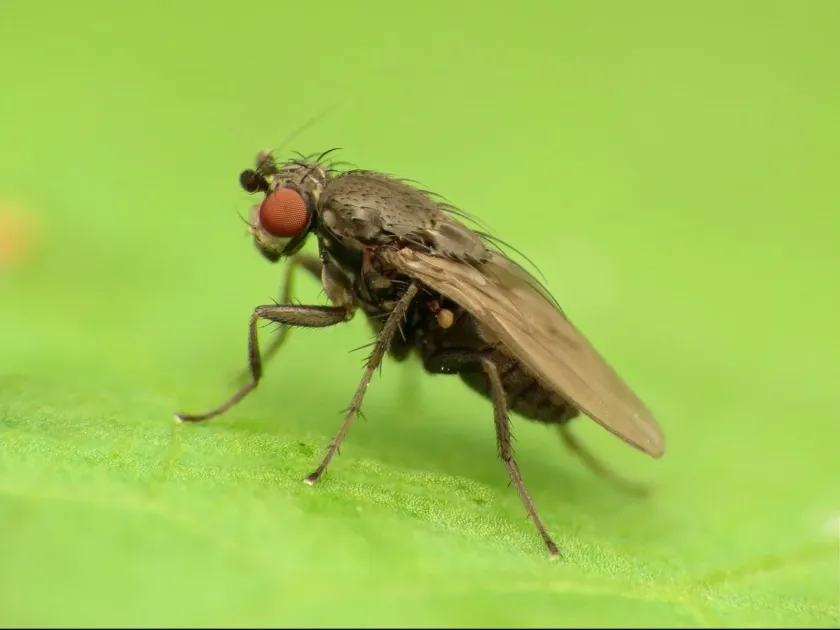
Description
How to identify
Leptocera belongs to the Sphaeroceridae family, commonly known as lesser dung flies. These are minute flies, typically measuring between 2 and 4 millimeters in length.
The adults generally possess a dark, often black or dark brown body, which provides excellent camouflage against soil and decaying organic substrates.
A key diagnostic feature of this family is the enlarged, thickened first segment of the hind tarsus, which facilitates locomotion in dense organic matter.
The larvae are worm-like, legless, and typically pale or yellowish in color, adapted for living within moist and decaying plant environments.
The wings are clear with specific venation patterns, which is the primary trait used by entomologists for precise identification and classification.
What it damages
The primary damage is caused by the larvae, which thrive in nutrient-rich decaying organic matter, compost piles, and waterlogged growing substrates.
In greenhouse conditions, Leptocera can infest seedling roots and plants already weakened by root rot, further compromising their health.
Adult flies act as vectors for various fungal spores and bacteria, promoting the spread of secondary infections throughout the crop production area.
Significant economic losses occur in mushroom farming, as larvae feed on the mycelium and sporocarps, rendering the harvest unmarketable.
Mass outbreaks in vegetable crops usually indicate poor sanitation, the use of uncomposted manure, or excessive moisture in the root zone.
When it appears
In heated greenhouses, Leptocera can remain active year-round, as they do not require a specific environmental trigger for continuous reproduction.
In outdoor settings, population peaks occur during summer months when warm temperatures and high humidity promote rapid development.
Under optimal temperatures of 20-25 degrees Celsius, the life cycle from egg to adult can be completed in as little as two to three weeks.
Females lay their eggs directly onto moist, decaying organic surfaces, ensuring that the emerging larvae have immediate access to food.
Overwintering typically takes place in the larval or pupal stage, buried deep within the soil, in compost piles, or inside protected organic debris.
Signs of infestation
The most noticeable sign of infestation is the presence of numerous small black flies hovering around the base of plants or near the soil surface.
Sudden wilting of seedlings or individual leaves is a common symptom, often caused by root damage and subsequent infection by soil-borne pathogens.
Close inspection of the soil or the base of the plant stem often reveals the presence of small, pale, legless larvae actively moving through the debris.
A distinct smell of decay coming from the pot or root zone is often associated with the breakdown of organic tissues caused by larval activity.
In mushroom cultivation, tunnel-like damage inside the stems of the mushrooms and visible degradation of the mycelium indicate a Leptocera problem.
Control measures
Strict sanitation practices in greenhouses are crucial, including the thorough removal and disposal of all decaying plant materials and crop residues.
Avoid using fresh or improperly composted manure, as this provides a primary breeding site for the flies and increases the risk of infestation.
Yellow sticky traps are highly effective for monitoring adult populations and reducing the number of fertile females capable of laying new eggs.
Biological control using entomopathogenic nematodes applied to the soil is an efficient way to suppress larval populations without using harsh chemicals.
Maintaining a balanced irrigation system that prevents standing water in pots or trays is essential to keeping the environment unattractive to these flies.
Taxonomy
- Latin name
- Leptocera
- Order
- Diptera (flies)
- Family
- Sphaeroceridae
- EPPO code
- LPTCSP
Discussion
No discussions yet — be the first.