
Golden-mantled ground squirrel
Spermophilus lateralis
Description
How to identify
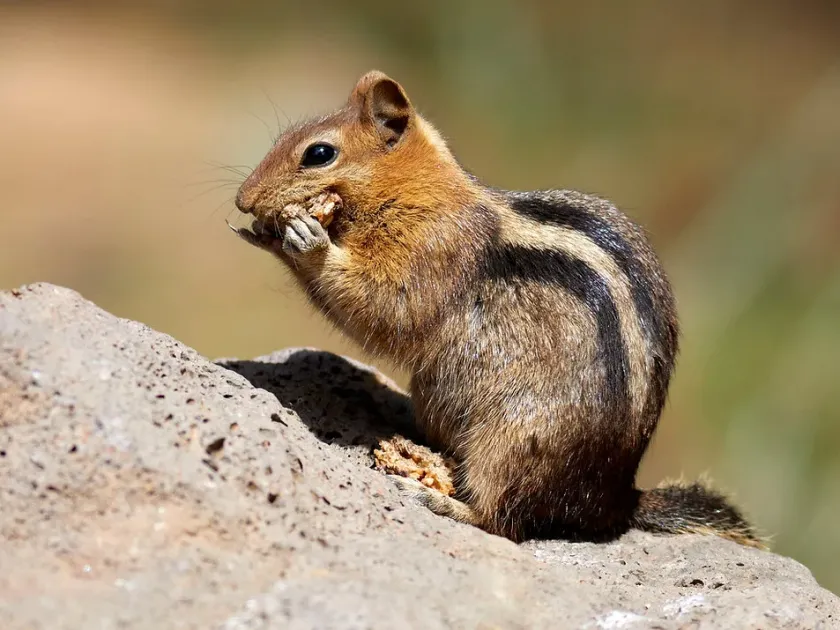
The golden-mantled ground squirrel (Spermophilus lateralis) is a member of the squirrel family (Sciuridae). It is a medium-sized rodent characterized by a golden-brown mantle over the shoulders and a distinct white stripe on each side of the body, bordered by black.
While often confused with chipmunks, the golden-mantled ground squirrel is significantly larger and has a more robust body shape. They are proficient diggers, using their strong forelimbs to construct elaborate underground burrow systems.
These rodents prefer open habitats, including mountain meadows, forest edges, and grasslands. In agricultural regions, they frequently colonize field boundaries, where they establish extensive networks of tunnels for shelter and food storage.
They are strictly diurnal, meaning they are active during the day. They maintain a state of constant vigilance, using high-pitched whistling calls to alert others in the colony of approaching predators or human activity.
The reproductive cycle typically involves one litter per year, born in late spring. Their ability to recover quickly from environmental stress makes consistent management strategies necessary for long-term agricultural protection.
What it damages
Golden-mantled ground squirrels cause significant economic damage to cereal crops, including wheat, barley, and corn. They consume young seedlings, often decimating entire rows of emerging crops within days.
They also inflict severe damage on pasture lands by chewing through the root systems of forage grasses. This reduces the quality of grazing areas and often necessitates expensive reseeding of affected plots.
In garden settings, they damage root vegetables, bulbs, and the bark of young trees. Their opportunistic feeding habits allow them to switch between crops as different plant species reach various stages of development throughout the season.
Beyond direct feeding, their burrowing activities alter soil structure, leading to increased erosion and interference with irrigation systems. Uneven ground caused by burrow mounds can also damage harvesting and seeding machinery.
In areas of high population density, ground squirrels can destroy a large portion of a harvest. Furthermore, as rodents, they can act as vectors for various zoonotic diseases that pose health risks to both livestock and farm personnel.
When it appears
Activity begins in early spring, immediately following emergence from hibernation. This is the period of highest consumption, as the squirrels need to regain body weight and feed their young offspring.
The peak damage period occurs during May and June, coinciding with the rapid growth of juvenile squirrels. At this stage, the expanding population requires substantial energy intake, leading to aggressive crop foraging.
During the summer, as temperatures rise, surface activity may decrease, but underground feeding on roots and tubers continues. This hidden activity often leads to plant wilting without obvious signs of the culprit on the surface.
Autumn is marked by hoarding behavior. The squirrels actively collect grain and seeds, transporting them to their underground caches. This can result in significant losses during the ripening stage of cereal crops.
Hibernation begins as ambient temperatures drop in late autumn. They retreat to deep underground chambers, often situated well below the frost line, to survive the winter months in a state of suspended animation.
Signs of infestation
The most prominent sign of infestation is the presence of dirt mounds or "plugs" at burrow entrances. These mounds are typically fan-shaped and indicate active digging and maintenance of the tunnel system.
Patches of denuded soil or "grazing circles" around burrow entrances are clear indicators of a resident colony. In these areas, both cultivated plants and weeds are eaten down to the ground level.
Well-worn trails through tall grass, connecting burrows to feeding grounds, reveal the habitual movement patterns of the squirrels. Frequent use of these paths signifies a well-established and comfortable population.
The auditory cue of a sharp, repetitive whistle serves as a warning signal among squirrels. If you hear these sounds while working in the fields, it confirms that the colony is actively monitoring its territory.
Finding dug-up seed rows, chewed-off stems, or mysterious holes near plant bases is a direct observation of their pest activity, which requires prompt intervention to prevent the colonization of the entire field.
Control measures
Effective management of the golden-mantled ground squirrel requires an integrated approach that targets both individual animals and the overall colony structure.
- Deep plowing of field edges in the off-season to collapse burrow systems and disrupt nesting sites.
- Utilization of mechanical traps or live-capture devices to remove individuals from critical areas.
- Application of EPA-registered rodenticides in accordance with local regulations and environmental safety guidelines.
- Deployment of ultrasonic repellent devices to create an acoustic environment that encourages squirrels to relocate.
- Vegetation management around field perimeters to reduce cover and nesting opportunities for burrowing rodents.
Taxonomy
- Latin name
- Spermophilus lateralis
- Order
- Rodents
- Family
- Sciuridae
- EPPO code
- CITELA
Discussion
No discussions yet — be the first.