
Simocephalus
Simocephalus vetulus
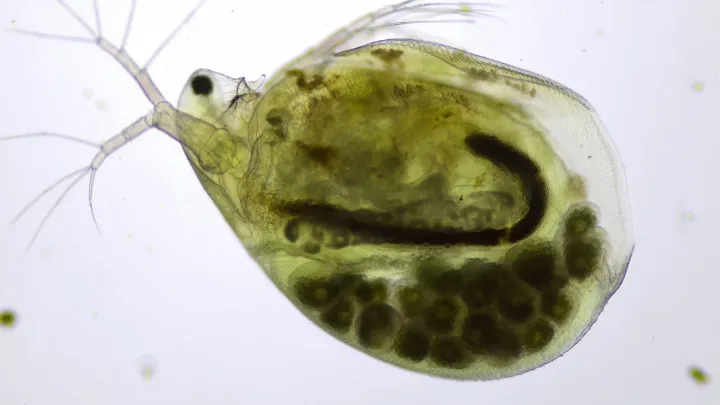
Description
How to identify
Simocephalus vetulus is a crustacean belonging to the order Cladocera and the family Daphniidae. It is a common inhabitant of fresh water environments.
The body is covered by a bivalve-like carapace, which is generally flattened and provides protection. Adult specimens typically reach 1.5 to 3 mm in length.
Its distinctive features include a broadly rounded head region and prominent antennae used for movement through the water column.
The coloration can vary from transparent to brownish, depending on the availability of nutrients and environmental conditions in the water.
Unlike common Daphnia species that swim constantly, Simocephalus individuals often attach themselves to substrates, roots, or tank walls using their antennae.
What it damages
Simocephalus is not a direct parasite of terrestrial plants and does not feed on their leaf or root tissues.
The primary concern arises in intensive hydroponic systems and aquaculture, where these organisms compete for nutrients and phytoplankton.
An overpopulation of these crustaceans can lead to the depletion of the nutrient solution, which indirectly hampers the growth of sensitive plant crops.
Massive swarms can physically clog mechanical filters, drip lines, and circulation pumps, causing maintenance challenges for the growers.
The presence of high numbers of crustaceans affects the overall water quality and can alter the pH balance of the nutrient mix used for plants.
When it appears
The peak activity and rapid reproduction of these populations occur during the spring and summer months when water temperatures range from 18 to 25 degrees Celsius.
They reproduce parthenogenetically, which allows a single colony to colonize an entire water system in a very short period of time.
In greenhouses or controlled indoor environments, their life cycle is uninterrupted, allowing for year-round presence in hydroponic setups.
When environmental conditions become unfavorable, they produce ephippia, which are dormant eggs capable of surviving extreme weather or drought.
Increased levels of organic matter in the hydroponic solution serve as a primary trigger for rapid population growth of this species.
Signs of infestation
The first indicator of an infestation is a noticeable turbidity in the water, appearing as tiny suspended particles that move independently.
Visual inspection of the root zone in hydroponic systems may reveal small, translucent organisms clinging to the plant roots.
A sudden decline in dissolved oxygen levels in the water, despite proper aeration, often indicates a high crustacean density.
The presence of molted carapaces caught in the filtration system is a clear sign of an active and growing population.
Stunted development of seedlings combined with a depletion of nutrient solution parameters often points toward an unseen population explosion.
Control measures
Mechanical filtration with fine-mesh screens is the most effective method for removing these crustaceans from circulation systems.
Periodic disinfection of the system using hydrogen peroxide or aquaculture-safe algaecides can successfully eliminate colonies.
Maintaining high standards of water cleanliness and minimizing unnecessary organic buildup helps control the food source for Simocephalus.
Integrating UV sterilizers into the water circulation loop is a highly recommended practice for killing planktonic organisms effectively.
Regular monitoring of the nutrient solution composition allows growers to catch and mitigate population spikes before they impact plant health.
Taxonomy
- Latin name
- Simocephalus vetulus
- Family
- Daphniidae
- EPPO code
- SIMOVE
Discussion
No discussions yet — be the first.