
Ceriodaphnia
Ceriodaphnia
Description
How to identify
Ceriodaphnia is a genus of small branchiopod crustaceans belonging to the family Daphniidae. Often found in freshwater environments, they can become an issue in controlled hydroponic or aquaponic setups.
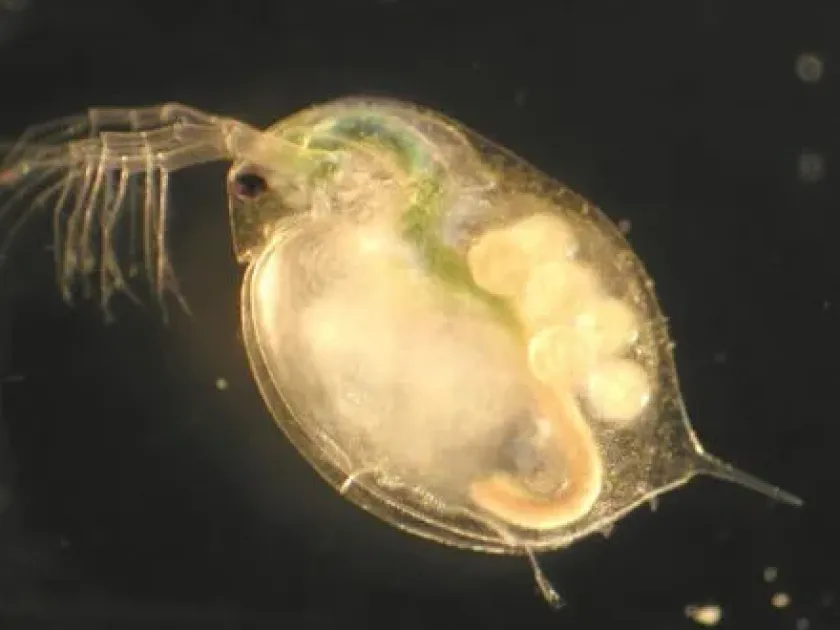
The organism is characterized by a rounded, semi-transparent body protected by a chitinous shell. They are typically very small, measuring between 0.5 and 1.5 mm in total length.
A distinctive feature of this genus is the clear separation between the head and the body, along with a short, often inconspicuous spine at the rear end of the shell.
These crustaceans navigate through water using rapid, jerky movements driven by their second antennae. In clear nutrient solutions, these movements can be easily observed.
Due to their size and rapid reproduction rates, they can quickly colonize nutrient tanks, often being mistaken for simple organic debris if not viewed under a magnifying glass.
What it damages
Ceriodaphnia are filter feeders that consume bacteria, phytoplankton, and small organic particles. While they do not attack plant tissue directly, they compete for resources in the system.
The primary damage occurs through the depletion of oxygen in the nutrient solution. Dense populations can significantly reduce dissolved oxygen levels, stressing plant roots.
They consume organic matter that might otherwise be broken down by beneficial microbes, disrupting the biological balance within the nutrient circulation system.
High numbers of these crustaceans produce waste products that can alter the pH and electrical conductivity (EC) of the solution, potentially leading to nutrient imbalances.
Furthermore, their presence causes physical clogging of fine irrigation nozzles, drip emitters, and mechanical filters, which leads to increased maintenance requirements.
When it appears
In greenhouses and indoor farming environments, Ceriodaphnia can reproduce year-round, as the stable temperature and nutrient availability provide optimal conditions.
Their life cycle is notably fast; they reproduce via parthenogenesis, allowing a single female to produce a large offspring population in just a few days.
When environmental conditions are favorable, particularly at temperatures between 20°C and 25°C, their population growth can be exponential.
Under stress, they produce resting eggs (ephippia) that are highly resistant to desiccation, chemical treatments, and harsh environmental conditions.
These resting eggs ensure that the pest can survive cleaning processes and re-emerge as soon as the water quality and temperature stabilize again.
Signs of infestation
The first sign of an infestation is often a slight turbidity or "haze" in the nutrient solution. Upon closer inspection, you may notice tiny, flickering dots in the water.
Reduced efficiency of the irrigation system, characterized by lower flow rates in drip lines, often indicates that filter systems are being clogged by these organisms.
Accumulation of translucent, flake-like chitinous sheds on the inner walls of the nutrient reservoir suggests a well-established colony of crustaceans.
A sudden fluctuation in the EC or pH levels of the solution, without an obvious external cause, is frequently associated with large populations of filter feeders.
If plant growth slows down or roots appear darkened despite correct nutrient dosing, it may be a sign of oxygen deprivation caused by an overpopulation of Ceriodaphnia.
Control measures
Mechanical filtration is the most direct control method. Installing high-quality cartridge filters with a mesh size of 50 microns or smaller will effectively remove them.
UV-C sterilization units are highly recommended for recirculating systems as they are effective at neutralizing both active individuals and smaller life stages.
Routine cleaning and disinfection of reservoirs are essential. Using mild oxidative disinfectants can help break down the organic matter that supports their growth.
Maintaining high hygiene standards by removing dead root matter and debris from the nutrient tank is crucial to starving out the population.
Finally, keeping a consistent and stable nutrient chemistry prevents the opportunistic population booms that typically occur when the system becomes unbalanced.
Taxonomy
- Latin name
- Ceriodaphnia
- Family
- Daphniidae
- EPPO code
- CRDPSP
Discussion
No discussions yet — be the first.