
Simocephalus serrulatus
Simocephalus serrulatus
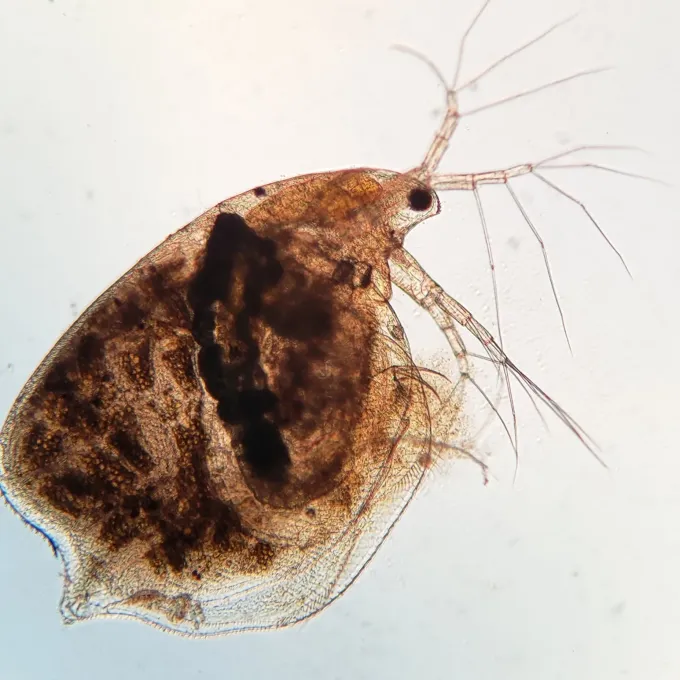
Description
How to identify
Simocephalus serrulatus is a species of freshwater cladoceran belonging to the family Daphniidae, frequently observed in ponds, lakes, and stagnant water bodies.
The organism is characterized by its compressed, bivalve-like carapace, which features distinct serrations along the posterior edge, helping distinguish it from similar species.
Unlike free-swimming daphnia, this species often exhibits a sedentary lifestyle, attaching itself to aquatic vegetation or submerged debris using specialized appendages.
The reproduction cycle is primarily parthenogenetic during favorable conditions, enabling rapid population growth in nutrient-rich aquatic environments.
With an average body length of 1.5 to 2.5 mm, it plays a vital role as a primary consumer in the aquatic food web, filtering microscopic algae and detritus.
What it damages
Simocephalus serrulatus is not an agricultural pest; it poses no threat to terrestrial crops or garden plants as it is strictly confined to aquatic environments.
In aquaculture, high densities of these crustaceans might create competition for food resources with fish larvae, although they serve as an excellent natural food source.
They do not damage aquatic vegetation; in fact, they contribute to water clarity by filtering organic particles that would otherwise cloud the water.
Potential issues are limited to technical operations, such as the clogging of fine-mesh filtration systems in hydroponic or aquaponic setups.
The species is considered environmentally beneficial rather than harmful, maintaining the equilibrium of the micro-ecosystem within managed ponds.
When it appears
Population density typically peaks during the spring and summer months, responding positively to increased water temperatures and abundant phytoplankton availability.
During autumn or harsh environmental shifts, they produce dormant eggs known as ephippia, which remain viable in the sediment until conditions improve.
Control measures
Physical filtration using fine-mesh screens is the most effective and eco-friendly method to regulate population size in controlled water systems.
Avoid the use of chemical pesticides, as they are toxic to the wider aquatic community and can permanently damage the biological balance of the pond.
Biological control, specifically the introduction of insectivorous fish, acts as a sustainable way to keep population levels within a manageable range.
Regular maintenance of filtration units and the removal of excessive bottom sludge prevent the accumulation of organic matter that supports population blooms.
Maintaining high water quality and oxygen levels encourages a diverse ecosystem, which naturally limits the dominance of any single species of crustacean.
Taxonomy
- Latin name
- Simocephalus serrulatus
- Family
- Daphniidae
- EPPO code
- SIMOSE
Discussion
No discussions yet — be the first.