

Pest · Lepidoptera (butterflies) · affects Apple, Winter rapeseed, Corn
Pink stem borer (genus Sesamia)
Sesamia
Description
How to identify
The genus Sesamia, belonging to the Noctuidae family, includes several species known as pink stem borers. These insects are significant pests that cause considerable economic damage.
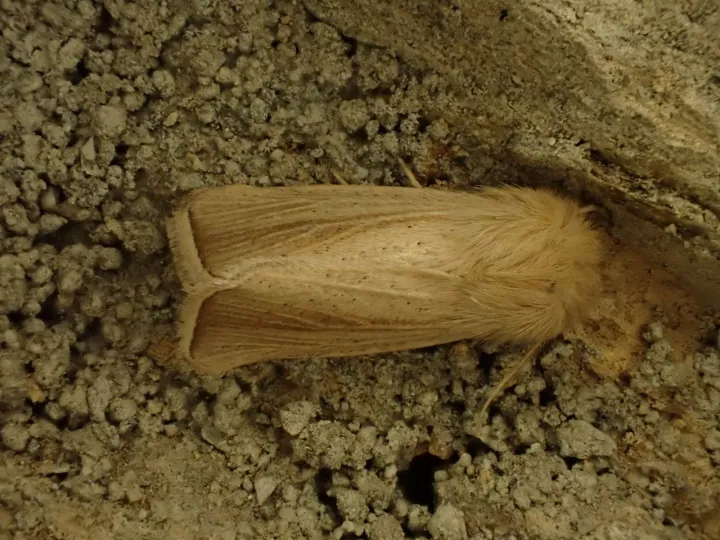
Adult moths typically have a wingspan of 30-40 mm. Their forewings are usually a straw or ochre color, often featuring darker longitudinal streaks along the veins.
The larvae are pale cream to pinkish-brown in color with a darker, brownish head. They grow up to 40 mm in length and are adapted for a concealed life within plant stems.
Pupation occurs within the larval tunnels inside the stems of host plants or occasionally in leaf sheaths, protecting the pupa from external predators.
Eggs are laid in clusters, usually tucked between the stem and the leaf sheath, ensuring that larvae have immediate access to food upon hatching.
What it damages
The primary hosts include maize, sorghum, millet, sugarcane, and other cereal crops. These plants are preferred due to their soft, nutrient-rich stem tissues.
Young plants are particularly vulnerable; larvae often bore into the whorl, killing the growing point and leading to the condition known as "dead heart."
In older plants, larvae tunnel through the stem, weakening the structural integrity of the plant and interfering with the translocation of water and nutrients.
Feeding within the stem can cause significant lodging, making mechanical harvesting difficult and causing direct yield loss in the field.
Secondary damage often occurs as the tunnels created by the larvae become entry points for various bacterial and fungal pathogens, leading to stem rots.
When it appears
The life cycle of Sesamia is highly dependent on environmental conditions, with multiple generations possible in tropical and warm temperate climates.
Moths are primarily nocturnal, emerging at night to mate and lay eggs on crops that are in the susceptible growth stages.
Overwintering typically takes place as larvae within crop residues or the stems of wild grasses, which act as secondary hosts during the off-season.
Larval activity peaks during the vegetative growth of host crops, particularly when humidity levels favor the survival of young larvae before they bore into stems.
Monitoring the flight patterns of adult moths is critical for determining the timing of control measures to prevent successful larval establishment.
Signs of infestation
The most visible sign of an infestation in young crops is the yellowing and subsequent withering of the central leaf, often called a "dead heart."
Frass (larval excrement) is often visible as sawdust-like material around the entry holes on the stems or at the base of leaf sheaths.
Internal damage manifests as longitudinal tunnels running through the pith of the stem, often containing larval remains or frass accumulations.
On reproductive structures, larvae may bore into the ear or panicle, directly consuming seeds and reducing both the quality and quantity of the harvest.
- Withered central leaves in young maize plants.
- Visible entry holes in the stems with frass deposits.
- Stem breakage due to internal tunneling.
- Poor grain filling in ears or panicles.
- Increased incidence of stem rot diseases in infested fields.
Control measures
Effective management begins with strict cultural practices, including the destruction or deep burial of crop residues immediately after harvest to eliminate overwintering sites.
Crop rotation is an essential strategy; alternating host crops with non-host crops helps to break the life cycle of the pest population.
Sanitation of field borders by removing wild grass species is crucial, as these plants serve as alternative hosts for larvae during the non-cropping season.
Chemical control is most effective when applied during the egg-hatching phase; once larvae penetrate the stem, systemic insecticides become significantly less effective.
Biological control, including the release of egg parasitoids like Trichogramma, is a valuable component of integrated pest management (IPM) to reduce population growth.
Content graph
Connections · Pink stem borer (genus Sesamia)
Most often together:
Marketplace
Products · 4


Biology
Taxonomy
- Latin name
- Sesamia
- Order
- Lepidoptera (butterflies)
- Family
- Noctuidae
- EPPO code
- SESASP
Community
Discussion
No discussions yet — be the first.