
Sericoda
Sericoda
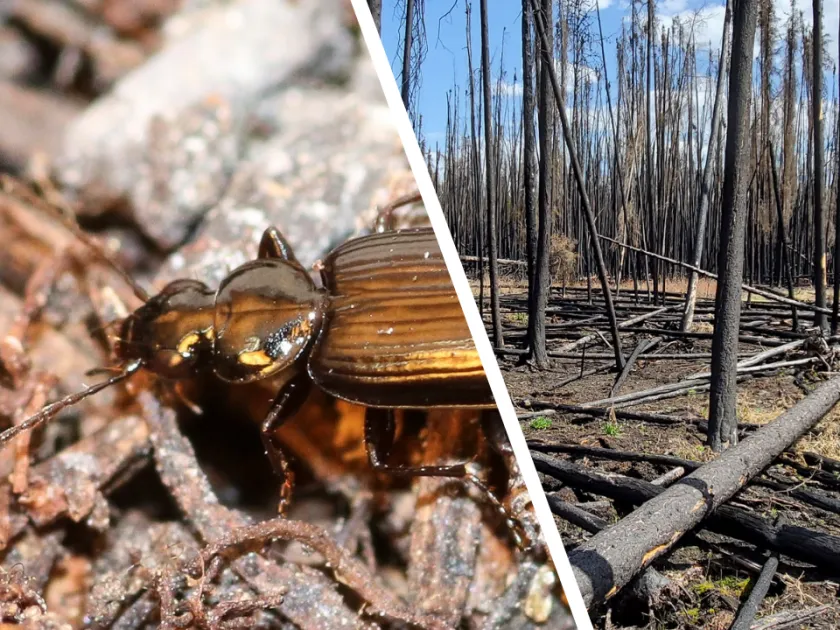
Description
How to identify
The genus Sericoda belongs to the family Carabidae (ground beetles) within the order Coleoptera. These insects are known for their metallic luster and are generally small to medium in size, exhibiting the typical morphology of the tribe Platynini.
Adults of the genus Sericoda usually possess smooth elytra without deep striae, with colors ranging from deep black to dark bronze. The head and pronotum are well-proportioned, which facilitates their predatory movement through dense ground cover.
Their biology is closely associated with natural habitats, including forest edges and burned areas. Unlike many other pests, their presence in agricultural landscapes is often sporadic and linked to specific environmental conditions.
Accurate identification requires professional entomological examination of morphological features, such as the shape of the pronotum and tarsal structures. They are primarily nocturnal, making them elusive during standard daylight inspections.
In agronomy, it is crucial to recognize that while they are beetles, they are not always damaging. Determining whether they are acting as predators of other pests or as opportunistic herbivores is essential for decision-making.
What it damages
Damage caused by Sericoda is rarely primary or catastrophic. In commercial agriculture, they are not classified as major pests, but they can cause localized problems in specific farming environments.
When natural prey is scarce, these beetles may engage in opportunistic herbivory, feeding on the tender tissues of seedlings. This usually occurs during the early stages of crop development.
Signs of feeding include irregular edges on leaves and stems. These mechanical wounds can serve as points of entry for various pathogens, potentially leading to fungal or bacterial infections in the crop.
Increased damage risk is often observed in greenhouse environments and nurseries. In these controlled settings, the abundance of high-quality plant tissue can encourage the beetles to feed on seedlings.
It is important to differentiate between damage caused by ground beetles and that caused by more aggressive pests like cutworms. Relying on accurate visual diagnostic tools is necessary to avoid unnecessary chemical applications.
When it appears
The activity of Sericoda is largely dictated by soil moisture and ambient temperature. Population peaks typically occur during the late spring and summer months following the overwintering period.
Mating and oviposition usually take place in early summer. Larvae develop within the soil layer, where they thrive in moist conditions and feed on soil-dwelling invertebrates or decomposing organic matter.
A second period of activity is often noted in late summer and autumn as new adults emerge and prepare for winter dormancy. Overwintering occurs in the soil or beneath leaf litter to survive the cold months.
Climate anomalies, such as an exceptionally warm early spring, can lead to earlier emergence, which may synchronize the pest's activity with the germination phase of sensitive crops.
Systematic monitoring using pitfall traps is the most reliable method for assessing population density and determining if the beetle activity warrants a protective intervention.
Signs of infestation
Primary indicators of Sericoda presence are the characteristic irregular nibbles found on the margins of younger leaves. These marks are distinct from the circular holes often made by other insects.
Finding adult beetles in pitfall traps or observing them under soil debris during early morning hours confirms their active presence on the site and suggests potential feeding activity.
In cases of high infestation, wilting or stunted growth of seedlings may occur if the beetles focus their feeding on the root collar or stem base, though this is relatively uncommon.
The presence of beetle excrement on foliage is a secondary sign of their activity. Regular field scouting is advised to ensure that any potential outbreaks are identified before significant damage occurs.
Field inspections should focus on the soil surface and the lower canopy, as these are the preferred habitats for the beetles during the day, providing them with shelter from direct sunlight.
Control measures
Management of Sericoda focuses primarily on cultural and mechanical methods rather than chemical interventions. These strategies aim to reduce the habitat suitability for the beetles.
Recommended management practices include:
- Tilling the soil thoroughly to disrupt overwintering sites and destroy egg-laying grounds.
- Rigorous weed control to eliminate shelter and alternative food sources for the beetles.
- Crop rotation to break the cycle of pest colonization in the field.
- Promoting rapid, vigorous crop growth through balanced fertilization to overcome vulnerable stages.
- Using biological control agents in greenhouse environments to manage population levels effectively.
Chemical control should be viewed as a last resort, used only if monitoring reveals populations that exceed the economic injury level. Selectivity is key to protecting beneficial predators.
An integrated pest management (IPM) approach is highly encouraged. This involves preserving the natural enemies of ground beetles, such as predatory arthropods and birds, which naturally regulate their population.
By maintaining a clean field and utilizing proactive monitoring, farmers can successfully mitigate the impact of Sericoda without the need for intensive, broad-spectrum insecticide applications.
Taxonomy
- Latin name
- Sericoda
- Order
- Coleoptera (beetles)
- Family
- Carabidae
- EPPO code
- SEDASP
Discussion
No discussions yet — be the first.