
Celtis moth
Selepa celtis
Description
How to identify
The Celtis moth (Selepa celtis) belongs to the order Lepidoptera and the family Nolidae (often associated with Noctuidae). This moth is a specialized herbivore that primarily targets specific deciduous trees, notably those within the Celtis genus.
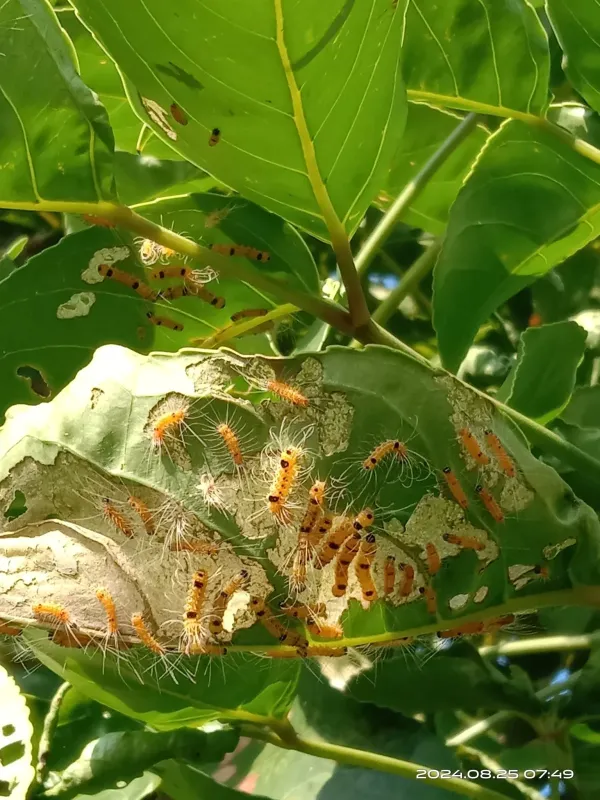
Adult moths are nocturnal and possess cryptically colored wings, which provide excellent camouflage against tree bark. The larval stage, which is responsible for the actual damage, exhibits distinct bristled bodies that serve as a defense mechanism against local predators.
What it damages
The primary host for this pest is the hackberry tree (Celtis occidentalis) and its relatives. In areas where these trees are planted as street trees or ornamental plants, the moth can become a localized nuisance.
Larvae consume the foliage of the host tree. A severe infestation can lead to significant defoliation, which stresses the tree, reduces its aesthetic value, and makes it more susceptible to secondary infections or environmental stressors.
When it appears
The lifecycle of Selepa celtis is synchronized with the budburst and leaf development of its host plants. Adults typically emerge in the spring, initiating the first generation of the season by laying eggs on the undersides of the leaves.
Depending on the climatic conditions, the moth can complete multiple generations in a single year. Warm summer months accelerate the larval development, often leading to explosive population growth if not monitored closely.
Signs of infestation
Early signs of an infestation include the appearance of small, irregular holes in the leaves. As the larvae grow, their consumption rate increases, resulting in skeletonized leaves where only the primary veins remain.
Observers might notice the presence of frass (droppings) on the leaves or the ground beneath the canopy. Additionally, the webbing created by larvae to protect themselves or bind leaves together is a common visual indicator of an active colony.
Control measures
Managing the Celtis moth requires regular inspection of host trees throughout the growing season. Early detection of larvae is crucial, as younger stages of the pest are more vulnerable to control efforts.
Effective control strategies include:
- Applying biological insecticides containing Bacillus thuringiensis.
- Using targeted chemical sprays if biological methods prove insufficient.
- Maintaining tree health through proper watering and soil care.
- Encouraging natural predators like birds and parasitic wasps in the environment.
Taxonomy
- Latin name
- Selepa celtis
- Order
- Lepidoptera (butterflies)
- Family
- Nolidae
- EPPO code
- SELPCE
Discussion
No discussions yet — be the first.