
Passion vine hopper
Scolypopa
Description
How to identify
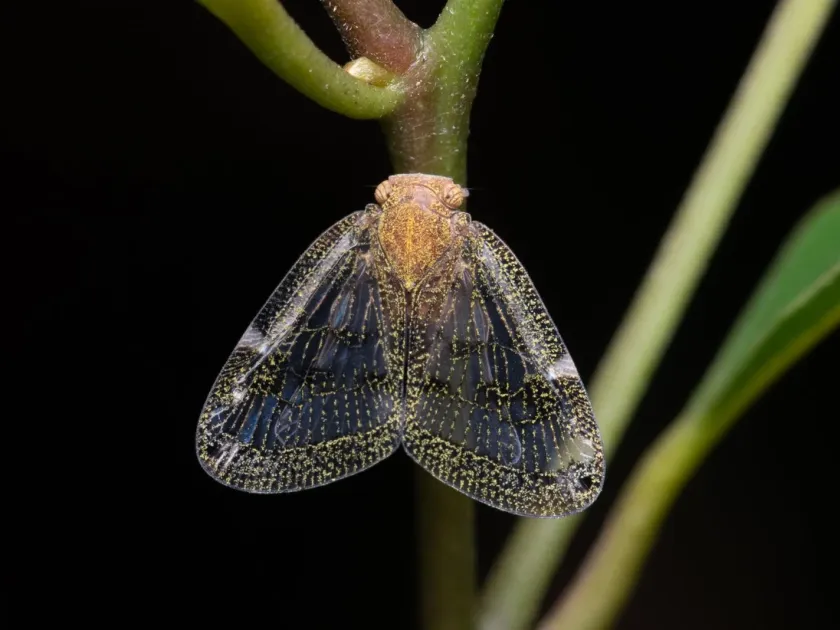
The passion vine hopper (Scolypopa australis) is a member of the Ricaniidae family of planthoppers. Adults are approximately 6-8 mm long with mottled brown, translucent wings that are held tent-like over their body, giving them a distinct triangular appearance.
The immature stage, known as the nymph, is easily identified by the presence of fluffy, white waxy filaments covering its body. These look like small tufts of cotton wool and are typically found on the undersides of leaves or along stems.
Adults possess strong hind legs allowing them to jump rapidly when disturbed, making them difficult to capture. They are primarily active during the day and are commonly found resting on stems and foliage of various host plants.
Eggs are laid in clusters by the female, typically inserted into the soft tissue of plant stems or under the bark of woody plants. These egg-laying sites appear as small, longitudinal slits in the plant surface.
Both nymphs and adults feed by piercing the plant's vascular tissue with their mouthparts and sucking up the phloem sap, which deprives the plant of essential nutrients needed for healthy growth.
What it damages
This pest is highly polyphagous, meaning it feeds on a vast range of plants including vines, kiwifruit, citrus, passionfruit, and numerous ornamental plants such as roses and hydrangeas.
The primary damage results from the direct removal of sap, which stunts plant growth and reduces vigor. This is especially detrimental to young plants and sensitive species like grapevine that require steady nutrient flow for fruit development.
A secondary effect of their feeding is the excretion of honeydew, a sugary substance that coats leaves and fruit. This promotes the growth of sooty mold, a black fungus that covers the plant surfaces.
The sooty mold blocks sunlight and severely restricts the photosynthetic ability of the plant, leading to poor fruit quality, reduced sugar content, and potential leaf drop during the peak summer months.
In addition to these symptoms, the passion vine hopper is a known vector for certain plant pathogens, which can transmit diseases that cause significant yield loss and even permanent damage to orchard health.
When it appears
The life cycle begins in spring when nymphs hatch from overwintering eggs. The hatch period can last for several weeks, meaning nymphs are present in the garden from early spring through early summer.
By mid-summer, the nymphs transition into the adult stage. These adults become highly mobile and begin to disperse throughout the garden, colonizing new plants and mating to continue the cycle.
Adult populations are most active throughout the late summer and autumn months. During this period, they are frequently seen in large numbers on diverse host plants, including many common weeds.
As temperatures begin to drop in late autumn, adult females lay eggs that will survive the winter. These eggs are embedded in bark or stems, ensuring the survival of the species during cold conditions.
Because the nymphs have a protracted hatching period, the pest can be present on the crop for a significant portion of the growing season, necessitating ongoing vigilance and monitoring.
Signs of infestation
The most telltale sign of an infestation is the presence of white, cotton-like masses on stems or leaf undersides. Finding these nymphs confirms that the hopper is present and active.
Sticky residue or "honeydew" on leaves is another primary indicator. If you notice the foliage feels tacky or sticky, it is highly likely that a colony of hoppers is feeding nearby.
The accumulation of black sooty mold on leaves and fruit is a critical sign of a mature colony. This growth appears as a black, soot-like powder that does not easily wash off with rain.
Leaf curling, yellowing, and general lack of plant vitality are common physiological signs. If a plant appears stressed without any obvious irrigation or nutrient issues, inspect it for hoppers.
Observing adult hoppers jumping from foliage when you brush against a plant is a clear indication that a population is established in the area and immediate action should be considered.
Control measures
Effective control requires an integrated approach that targets both the vulnerable nymph stage and reduces the attractiveness of the garden to adults.
Winter pruning is a powerful preventative tool. By removing and burning woody cuttings that may contain egg clusters, gardeners can significantly reduce the number of nymphs that hatch in the spring.
- Apply systemic insecticides specifically during the nymph stage for best results.
- Use yellow sticky traps to capture adults and monitor population density.
- Maintain garden hygiene by removing weeds that act as alternative hosts.
- Encourage natural predators such as ladybugs and lacewings.
- Spray foliage with insecticidal soaps to suffocate young, soft-bodied nymphs.
Always ensure that any chemical application is carried out according to the label instructions, taking special care to avoid spraying during flowering to protect essential pollinators.
Taxonomy
- Latin name
- Scolypopa
- Order
- Hemiptera (bugs, aphids, leafhoppers)
- Family
- Ricaniidae
- EPPO code
- SCPPSP
Discussion
No discussions yet — be the first.