
Euricania
Euricania
Description
How to identify
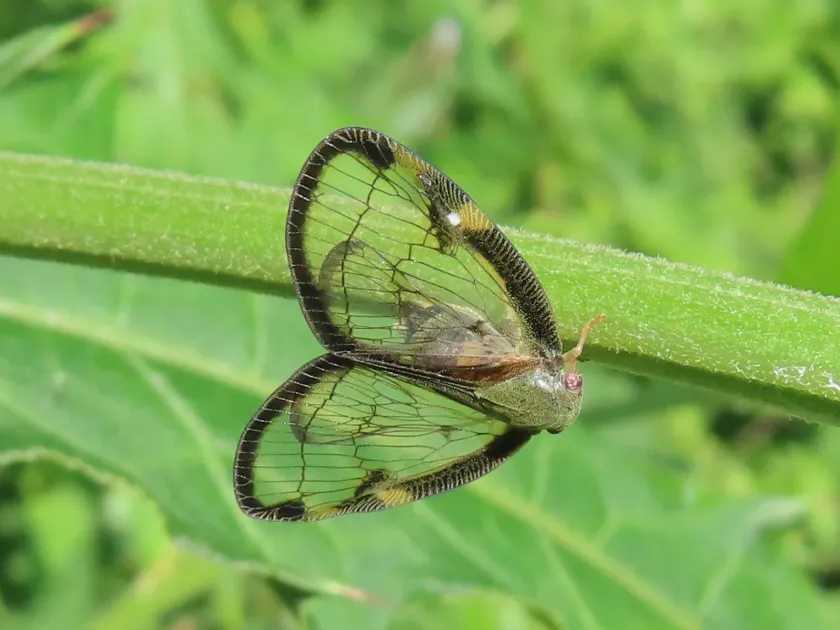
Euricania is a genus of planthoppers belonging to the Ricaniidae family, within the order Hemiptera. These insects are distinguished by their moth-like appearance when at rest, with wings folded in a tent-like shape over their bodies.
Adults typically exhibit a dark or dusky coloration on their wings, often accented with light, cloudy patterns. They are small insects, usually measuring between 7 and 10 mm in length, known for being agile and prone to jumping when disturbed.
Nymphs of the genus are easily recognized by the presence of dense, white, waxy filaments covering their bodies. This waxy secretion serves as a primary defense mechanism against desiccation and predators.
The mouthparts are of the piercing-sucking type, specialized for tapping into the phloem of host plants to extract nutrients. This feeding strategy is the basis for their impact on agriculture.
Identification often involves checking the underside of leaves and young shoots during the daytime, as these are the preferred locations for colonies to feed and develop.
What it damages
Euricania species are polyphagous pests, capable of infesting a wide range of woody plants, shrubs, and perennial crops. They are particularly noted as pests in viticulture and citrus production.
The primary damage is caused by the extraction of large volumes of plant sap, which weakens the host, leads to reduced vigor, and induces chlorosis or leaf yellowing.
Furthermore, nymphs excrete honeydew, a sugary substance that facilitates the growth of sooty mold. This layer of mold hinders photosynthesis, severely impacting the plant's metabolic health.
Feeding on young shoots often results in stunted growth and leaf deformation. In severe cases of infestation, early senescence and premature dropping of leaves and flowers occur.
Economic damage is twofold: the reduction of crop yield due to weakened plant health and the aesthetic or quality degradation of fruits due to mold contamination and stress.
When it appears
The life cycle of Euricania typically involves overwintering as eggs. These eggs are embedded within the bark or the tissues of woody host plants, providing protection against winter cold.
In spring, typically as temperatures rise, the nymphs emerge and begin feeding on the developing buds and new foliage, coinciding with the start of the plant's growing season.
The nymphal stage undergoes several molts throughout late spring and early summer, gradually increasing in size while continuing to build up their protective waxy layer.
Adults emerge in mid-summer and are active through the warmer months. This is the period when they are most mobile, spreading to neighboring plants and laying eggs for the next generation.
The cycle concludes with the late-season mating and oviposition, where females deposit eggs that will remain dormant throughout the following winter until spring conditions return.
Control measures
Managing Euricania populations requires a strategic approach, as their waxy coating often reduces the efficacy of standard contact-based insecticides.
The most effective chemical management involves the use of systemic insecticides that are absorbed by the plant and ingested by the insects during feeding, circumventing the waxy protection.
Good agricultural practices, such as removing infested plant parts during early stages of colonization, can significantly reduce the local pest pressure in a garden or orchard.
It is crucial to monitor the orchard regularly, focusing on the undersides of leaves and young stems to identify the onset of nymph emergence before populations peak.
Integrated Pest Management (IPM) should also include the conservation of natural enemies, such as predators and parasitoids, which help maintain balance within the ecosystem and prevent massive outbreaks.
Taxonomy
- Latin name
- Euricania
- Order
- Hemiptera (bugs, aphids, leafhoppers)
- Family
- Ricaniidae
- EPPO code
- EURNSP
Discussion
No discussions yet — be the first.