
Japanese wax hopper
Orosanga japonica
Description
How to identify
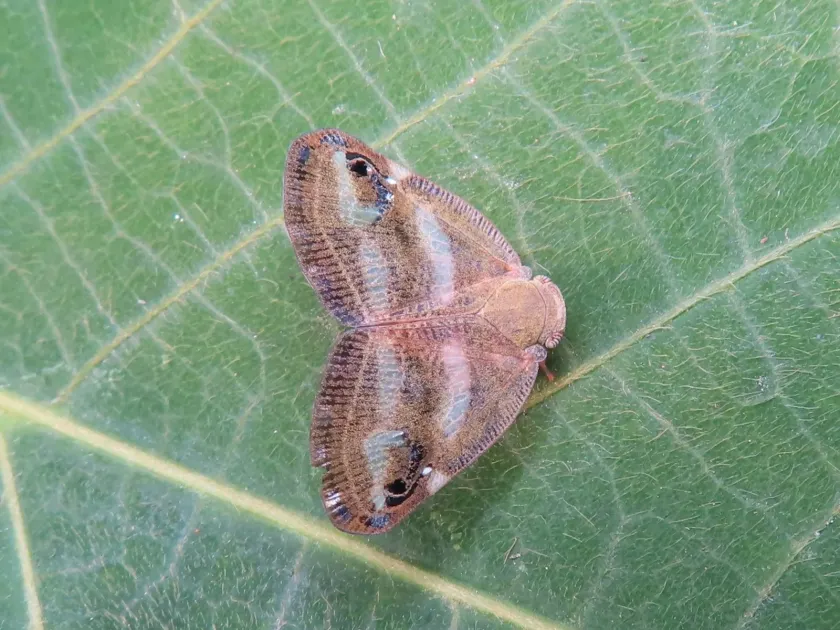
The Japanese wax hopper (Orosanga japonica) belongs to the order Hemiptera, family Flatidae. These insects are distinguished by their unique body shape, which often appears flattened or triangular when at rest.
Adults typically measure between 7 and 9 millimeters. They are generally brownish-grey, which allows them to blend in perfectly with tree bark, making them difficult for casual observers to spot.
Nymphs are easily recognized by the presence of dense, white, waxy, thread-like secretions that cover their bodies. This waxy coating acts as a protective shield against heat, dehydration, and potential predators.
These insects are highly mobile, especially in the nymphal stage, and are known to jump when disturbed, which is a common defensive reaction shared by many species in the family.
The insect typically overwinters in the egg stage, with eggs laid in clusters under the bark of host plants, remaining dormant throughout the cold months until conditions improve.
What it damages
This pest is highly polyphagous, meaning it feeds on a broad range of plant species. It is particularly damaging to fruit trees like apple, pear, peach, and various ornamental shrubs and trees.
Vineyards are also significantly affected, as the Japanese wax hopper extracts vital fluids from the vines, leading to reduced plant vigor and lower yields over consecutive seasons.
The primary damage occurs due to the continuous sap-sucking activity of both nymphs and adults. By piercing the plant tissues, they remove essential nutrients, causing the plant to weaken and growth to stunt.
Beyond direct sap loss, the feeding process leaves behind microscopic wounds. These injuries serve as entry points for secondary pathogens, such as fungi and bacteria, which can cause branch dieback.
Furthermore, there is evidence that these insects may act as vectors for various phytoplasma diseases, which can lead to significant economic losses in commercial orchards.
When it appears
The life cycle begins in early spring, synchronized with the resumption of sap flow in host trees. This is when the overwintering eggs hatch, and the young nymphs emerge.
The peak activity of the adult population usually occurs during the summer months, specifically from June through August. During this time, they reproduce and migrate to new host plants.
Egg-laying begins in late summer and continues into the autumn. The females carefully insert their eggs into the crevices of bark, providing them with protection against the winter elements.
Temperature patterns play a massive role in the insect's development. Warm and humid conditions accelerate the maturation of nymphs and increase the frequency of reproduction cycles.
Knowing the seasonal emergence window is critical for growers, as it allows for the precise timing of insecticide applications to maximize effectiveness while minimizing environmental impact.
Signs of infestation
The presence of honeydew is often the first visible symptom of an infestation. This sticky, sugary substance is excreted by the insects and settles on leaves and branches, creating a shiny appearance.
This honeydew serves as a food source for ants, so a sudden increase in ant activity on fruit trees or shrubs is a strong indicator that sap-sucking pests like the Japanese wax hopper are present.
Another major sign is the development of sooty mold, a black, velvety fungus that grows on top of the honeydew deposits, which can block photosynthesis and further stress the plant.
- Sticky, shiny honeydew residue on leaves and stems.
- Increased ant traffic on branches.
- The growth of black sooty mold on the surface of foliage.
Significant infestations often lead to yellowing leaves, premature leaf drop, and overall thinning of the canopy, as the plant struggles to compensate for the constant nutrient loss.
Control measures
Cultural control is a primary defense. Regular pruning of infected branches and ensuring optimal plant health helps trees withstand and recover from light infestations.
Chemical control involving systemic insecticides is most effective when applied during the early nymphal stage, before the insects develop their protective waxy layer or reach maturity.
Managing the ant population using sticky bands or barriers on tree trunks is essential. By preventing ants from tending to the hoppers, you expose the pests to their natural predators, such as ladybirds.
Biological control, utilizing natural enemies and parasitic wasps, can be highly effective in stable orchard ecosystems where chemical interference is minimized.
Continuous monitoring and adhering to strict quarantine measures in susceptible areas are necessary to prevent the further spread of this pest into new regions and orchards.
Taxonomy
- Latin name
- Orosanga japonica
- Order
- Hemiptera (bugs, aphids, leafhoppers)
- Family
- Ricaniidae
- EPPO code
- RICAJA
Discussion
No discussions yet — be the first.