
Sclerodermus domesticus
Sclerodermus domesticus
Description
How to identify
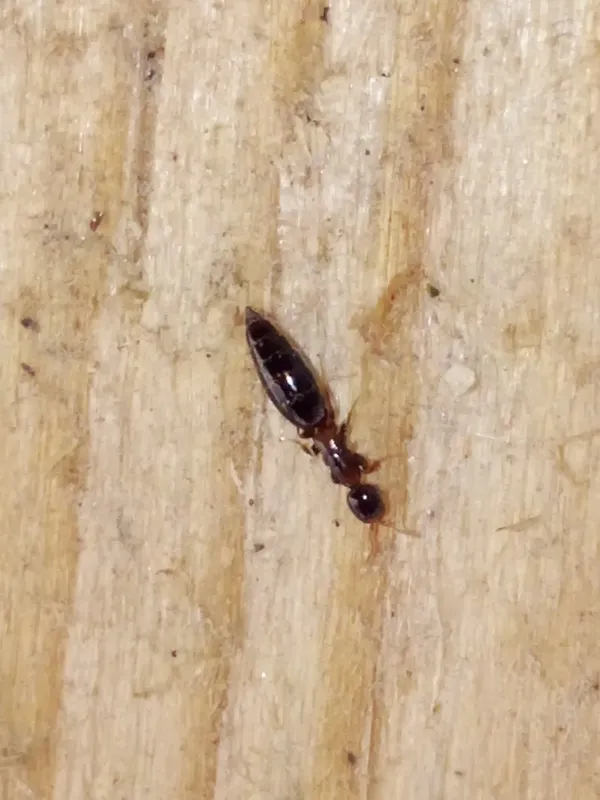
Sclerodermus domesticus is a small Hymenopteran insect belonging to the Bethylidae family. Measuring only 2–4 mm in length, it is often mistaken for an ant due to its physical appearance.
Females of the species are typically wingless, while males possess wings. Their slender, flattened bodies allow them to easily navigate the galleries and tunnels created by wood-boring beetles.
This species is classified as a parasitoid. It primarily targets the larvae of various wood-destroying beetles, utilizing a stinger to paralyze its prey before depositing eggs on them.
They are notoriously difficult to detect because they spend most of their life cycle hidden deep within wooden structures, furniture, or wooden flooring.
Despite their small size, they are biologically successful hunters within the micro-environments of infested timber, adapting perfectly to the habitats of their beetle hosts.
What it damages
The damage caused by Sclerodermus domesticus is twofold: it signifies an existing infestation of wood-destroying beetles, and it poses a direct medical risk to human inhabitants.
While the wasp does not feed on wood itself, it infests wood that is already compromised by beetles like the common furniture beetle (Anobium punctatum). This means the structural integrity of the wood is already at risk.
Human beings are often bitten by the female Sclerodermus wasp when they come into contact with infested furniture or sleeping areas. These bites are known to cause painful, long-lasting skin lesions.
The bites are characterized by severe itching and red papules that can persist for several days or even weeks, frequently leading to secondary infections due to constant scratching.
The ongoing activity of both the beetle larvae and the predatory wasps leads to the progressive degradation of wooden items, making them brittle and structurally unsound over time.
Signs of infestation
The most common sign of an infestation is the appearance of mysterious, itchy skin eruptions on residents, which are often wrongly attributed to bed bugs or allergic reactions.
Tiny exit holes, roughly 1–2 mm in diameter, on the surface of wooden furniture indicate the presence of woodworm, which serves as a host for the Sclerodermus wasp.
Fine wood dust or "frass" near wooden objects is a clear indicator that insect activity is occurring deep inside the material, providing the necessary environment for the wasps to thrive.
Spotting individual wasps near wooden window frames, antique furniture, or parquet floors is a definitive warning sign that an established population is present.
Symptoms usually peak during warmer months, when both the beetle larvae are active and the adult wasps emerge from the wood to mate and search for new hosts.
Control measures
Effective control of Sclerodermus domesticus requires the eradication of the host beetle population, as removing only the wasps will not solve the underlying wood-boring infestation.
Professional fumigation is the most reliable method, as it allows chemical agents to penetrate deep into the wood galleries where both the wasps and their larvae reside.
Targeted injection of insecticide solutions into the boreholes is necessary to ensure the chemicals reach the deep-seated areas of the furniture or timber construction.
- Professional-grade chemical fumigation of infested areas.
- Direct injection of wood preservatives and insecticides into tunnels.
- Heat treatment or freezing of small infected items.
- Removal and disposal of severely infested timber to stop the cycle.
Given the difficulty of reaching deep-seated infestations, professional pest management services are strongly recommended to ensure the complete elimination of the colony.
Taxonomy
- Latin name
- Sclerodermus domesticus
- Order
- Hymenoptera
- Family
- Bethylidae
- EPPO code
- SCLMDO
Discussion
No discussions yet — be the first.