
Cephalonomia tarsalis
Cephalonomia tarsalis
Description
How to identify
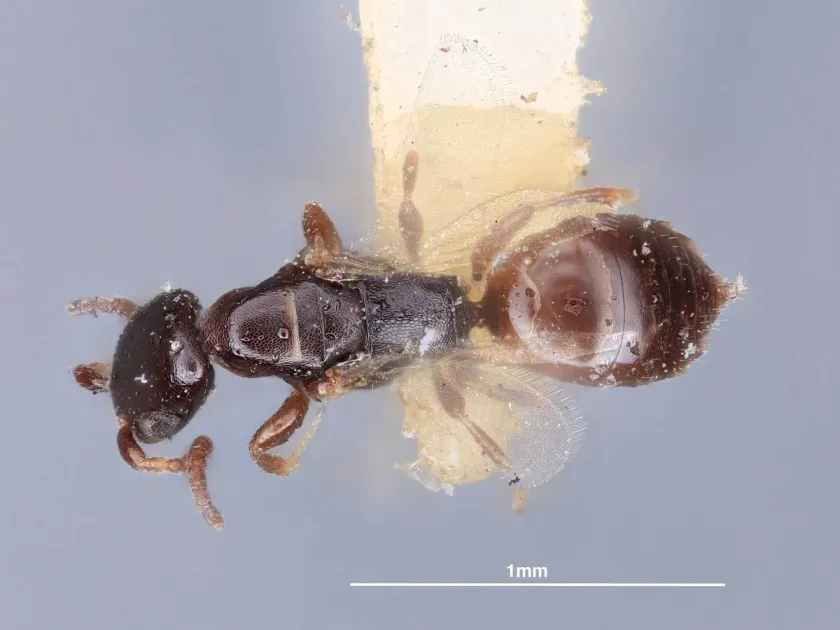
Cephalonomia tarsalis is a small parasitoid wasp belonging to the Bethylidae family within the order Hymenoptera. Adults typically measure about 2-3 mm in length and feature a dark brown or black elongated body.
Females of this species are often apterous (wingless) or have vestigial wings, which allows them to move efficiently through dense masses of grain or processed food products. Males are generally winged and fly to locate mates.
The head is relatively large with specialized mouthparts adapted for feeding on the hemolymph of their host larvae. Sensory antennae play a crucial role in navigating and locating the host within the substrate.
The life cycle is inextricably linked to other stored grain pests, particularly the sawtoothed grain beetle. The female wasp locates a host larva, paralyzes it, and deposits eggs on the host's body surface.
Development proceeds through egg, larval, and pupal stages. Depending on warehouse temperatures, the entire life cycle typically completes within a few weeks to a month.
What it damages
Technically, this species is an entomophage rather than a direct pest of grain, but its presence is a diagnostic indicator of heavy primary pest infestation in storage facilities.
Its primary targets are the larvae of beetles infesting grains, flours, cereals, and dried fruits. The species most commonly parasitizes the larvae of the sawtoothed grain beetle (Oryzaephilus surinamensis).
Economic damage is indirect; while the wasp does not consume the grain, the pest population it feeds upon continues to destroy the physical structure and nutritional quality of the stored produce.
High levels of wasp presence in product samples render the goods unmarketable, as strict sanitary regulations prohibit the presence of live insects in commercial grain shipments.
Infestation of a warehouse by this species necessitates immediate inspection to locate the primary source of the herbivorous pest population.
Control measures
Effective management relies on strict sanitary hygiene, including the frequent and thorough removal of grain dust, debris, and residues from storage equipment and structural crevices.
Maintaining optimal temperature and humidity levels is critical, as elevated warmth and moisture accelerate the reproductive cycles of both the host pests and their parasitoids.
If significant infestations are identified, professional fumigation of the facility and grain mass using approved insecticides is required in accordance with local safety regulations.
Integrated pest management includes the regular use of sticky traps and pheromone lures to monitor population growth and intervene before an outbreak becomes unmanageable.
Preventive treatment of empty storage bins before the arrival of new harvests remains the most effective defense against the establishment of stored product pest complexes.
Taxonomy
- Latin name
- Cephalonomia tarsalis
- Order
- Hymenoptera
- Family
- Bethylidae
- EPPO code
- CEPLTA
Discussion
No discussions yet — be the first.