
Goniozus indicus
Goniozus indicus
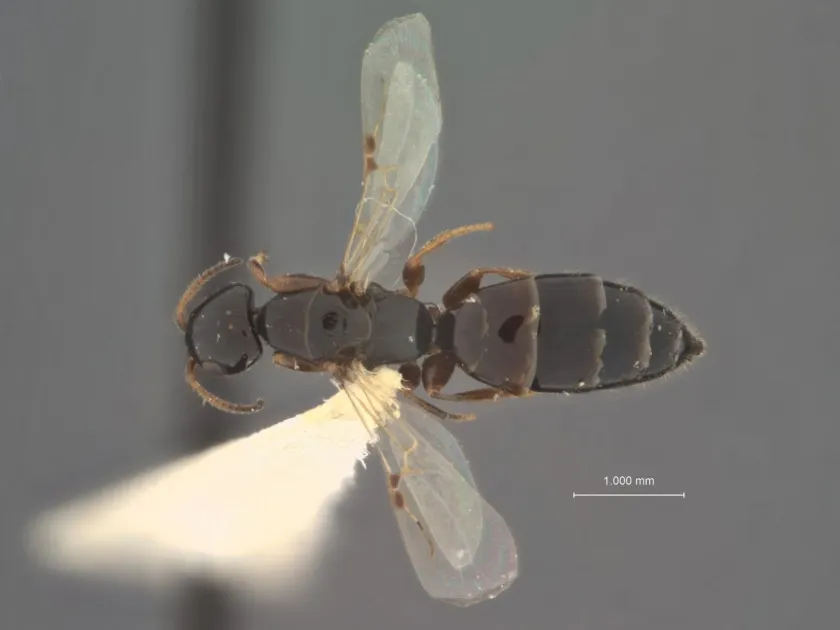
Description
How to identify
Goniozus indicus is a species of parasitic wasp belonging to the family Bethylidae, order Hymenoptera. It is widely recognized in tropical agriculture for its role as an ectoparasitoid of lepidopteran larvae.
Adult wasps are characterized by their small, slender bodies, typically dark in color. They exhibit specialized host-seeking behaviors, allowing females to locate larvae hidden within leaf tissues or galleries.
The reproductive strategy of this species involves stinging and paralyzing the host larva before oviposition. The wasp larvae then feed externally on the paralyzed host until reaching maturity.
The life cycle duration is highly dependent on ambient temperatures and host availability. Under favorable conditions, Goniozus indicus can complete multiple generations per season, facilitating rapid population growth.
Entomologists classify this species as a vital natural enemy of specific coconut pests, emphasizing its importance in sustainable agricultural ecosystems where chemical intervention is discouraged.
What it damages
Goniozus indicus itself is not a plant pest; rather, it is a biological agent that targets the larvae of the coconut leaf-eating caterpillar, Opisina arenosella.
The damage caused by the host larvae includes extensive skeletonization of leaves, which significantly impacts the health and vitality of coconut palms.
When infestation levels of the caterpillar are high, the palm's photosynthetic capacity drops, leading to stunted growth, reduced nut yield, and sometimes the death of the entire tree.
By effectively parasitizing these caterpillars, Goniozus indicus mitigates the severe damage that would otherwise lead to massive financial losses in palm oil and coconut production.
Consequently, the presence of this wasp is a critical factor in the natural regulation of pest populations, acting as a buffer against outbreaks that threaten plantation productivity.
Control measures
Biological control through inundative releases is the primary method for utilizing this wasp to manage outbreaks of lepidopteran pests.
Integrated Pest Management (IPM) strategies emphasize the reduction of broad-spectrum insecticide applications to protect the survival of this delicate natural enemy.
Field management should focus on maintaining host plants or refugia that provide nectar and shelter for the adult wasps, enhancing their longevity and reproductive output.
Timing the release of laboratory-reared wasps must align with the phenology of the pest to maximize the efficiency of host detection and parasitism rates.
- Implementing regular pest scouting and population monitoring.
- Avoiding toxic chemical sprays that disrupt the wasp's life cycle.
- Establishing biodiversity corridors to support indigenous populations of parasitoids.
Taxonomy
- Latin name
- Goniozus indicus
- Order
- Hymenoptera
- Family
- Bethylidae
- EPPO code
- GONZIN
Discussion
No discussions yet — be the first.