
Goniozus
Goniozus
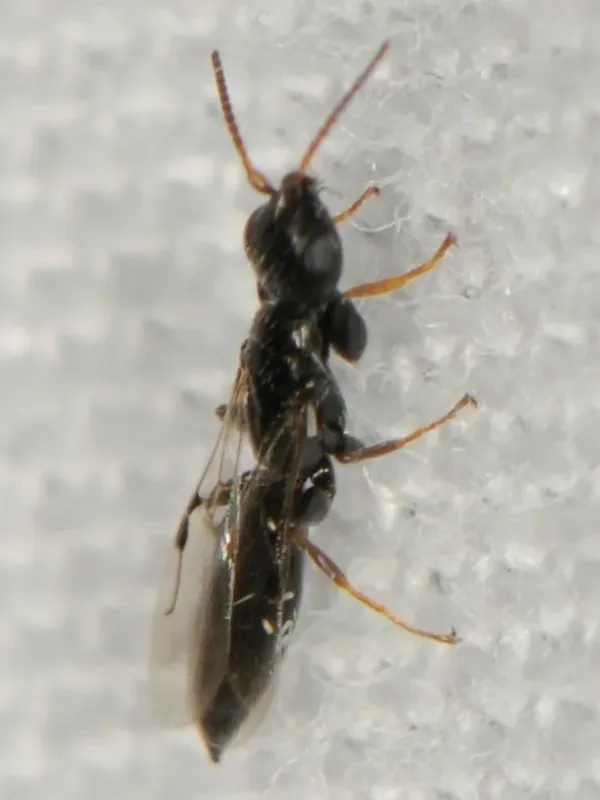
Description
How to identify
Goniozus is a genus of small parasitic wasps belonging to the family Bethylidae, order Hymenoptera. These tiny wasps are specialized parasitoids that target the larvae of various lepidopteran species.
Adult Goniozus are generally very small, with elongated black or dark brown bodies, allowing them to crawl into narrow spaces like leaf rolls or bark crevices.
The female wasp possesses a specialized ovipositor, which she uses to sting and paralyze the host caterpillar before laying her eggs on the surface of its body.
The larvae of the wasp develop as ectoparasites, meaning they remain on the outside of the host, feeding on its internal fluids while the host remains in a paralyzed state.
Identification of the species within the Goniozus genus is highly technical and usually requires laboratory examination of the adult morphology under high magnification.
What it damages
Goniozus is not a pest but rather an important beneficial insect, specifically a biological control agent that suppresses populations of agricultural pests.
They target various concealed larvae, including leafrollers, codling moths, and other small caterpillars that damage fruit trees and grain crops.
By paralyzing and consuming the host larvae, Goniozus significantly reduces the mechanical damage these pests inflict on plant foliage and fruit.
In integrated pest management systems, Goniozus is highly valued because it can reach pests that are protected by webbing or leaf curling, where chemical sprays often fail.
Their activity helps maintain ecological balance, contributing to higher crop quality and reduced reliance on synthetic pesticides.
When it appears
The seasonal appearance of Goniozus is strictly linked to the emergence and activity of their lepidopteran hosts, typically from late spring through late summer.
As temperatures rise in the spring, overwintered female wasps become active, beginning the search for suitable host larvae to initiate the first generation.
Multiple generations can occur throughout the growing season, with population numbers peaking when host density is at its highest in fields or orchards.
During the autumn, the wasps enter a dormant stage or diapause, finding shelter in bark fissures, leaf litter, or the soil to survive the winter months.
Synchronization with the host life cycle is a critical factor for the effectiveness of Goniozus as a natural biological control agent.
Signs of infestation
The primary sign of Goniozus presence is the discovery of paralyzed caterpillars that appear limp and unresponsive to touch.
Upon closer examination, you may notice small, white, grub-like wasp larvae attached to the exterior of the paralyzed caterpillar.
- Paralyzed host larvae found within curled or webbed leaves.
- Small, white wasp larvae visible on the surface of the host body.
- Formation of small, oval cocoons near the remains of the consumed host.
A noticeable decrease in the fresh feeding damage on leaves within a specific tree or crop area often indicates the successful activity of these parasitoids.
If you observe caterpillars that have stopped growing or eating but have no visible signs of disease, they may be host to developing Goniozus larvae.
Control measures
Protecting and encouraging Goniozus populations is a key strategy in sustainable agricultural pest management rather than controlling the wasp itself.
Farmers should avoid broad-spectrum insecticide applications, especially during the peak flight times of adult wasps, to prevent the destruction of this beneficial agent.
Biological control programs may involve the mass-rearing and release of specific Goniozus species into orchards to ensure high parasitism rates.
Maintaining floral strips or hedgerows near crop fields provides nectar sources and shelter for adult wasps, increasing their longevity and reproductive success.
Proper monitoring of fields to distinguish between harmful pests and beneficial parasitoids is essential for effective integrated pest management (IPM).
Taxonomy
- Latin name
- Goniozus
- Order
- Hymenoptera
- Family
- Bethylidae
- EPPO code
- GONZSP
Discussion
No discussions yet — be the first.