
Cephalonomia waterstoni
Cephalonomia waterstoni
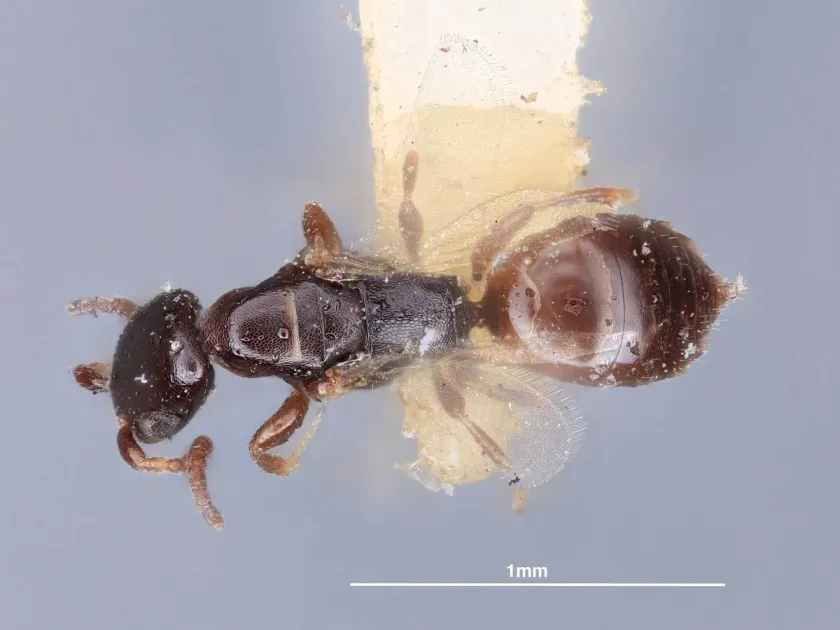
Description
How to identify
Cephalonomia waterstoni is a tiny parasitoid wasp belonging to the family Bethylidae (order Hymenoptera). Adults are typically very small, measuring about 1.5 to 2 mm in length, and possess a dark-colored, slender body.
These insects are highly specialized parasitoids that target the larvae of various beetles living in stored grains, such as the rusty grain beetle. They have adapted specifically to crawl through tight spaces between grain kernels to reach their hosts.
The life cycle of the wasp is completed in close proximity to the larvae of the host beetle. After finding a host, the female paralyzes it with her sting and deposits eggs directly onto its body.
The larvae of the wasp hatch and consume the host beetle, effectively suppressing the host population. However, their presence indicates a severe infestation of the underlying grain pests.
Adult wasps are mobile and can be found flying or walking inside grain storage facilities, particularly when temperatures are warm enough to support their rapid reproductive cycle.
What it damages
The damage caused by Cephalonomia waterstoni is primarily related to the contamination of agricultural commodities. While they act as biological control agents against beetle larvae, their presence in stored grain makes the product unacceptable for trade.
Food safety standards strictly prohibit the presence of parasitic insects in grains destined for human consumption or animal feed. Even a small number of these wasps can lead to the rejection of a whole storage lot.
Beyond product contamination, these wasps are known to bite humans who handle infested grain. These stings are painful and can lead to allergic reactions or severe localized skin irritation among warehouse workers.
The presence of this species is a clear warning sign that the storage facility is heavily infested with grain beetles. Ignoring their presence allows the primary pests to continue destroying the nutritional value of the grain.
Economic losses associated with this pest are significant, as they lead to increased costs for fumigation, product disposal, and damage to the facility's reputation in the supply chain.
Control measures
Effective management begins with stringent sanitation practices. Regularly cleaning up grain dust, debris, and spilled commodities is the most efficient way to reduce the habitat required by host beetles and the subsequent wasp population.
Empty storage facilities should undergo thorough fumigation using appropriate chemical agents, such as phosphine-based products, to eliminate any hidden populations of Cephalonomia waterstoni.
Maintaining low temperatures in grain piles through aeration is a key preventative measure. Lowering the grain temperature prevents the beetles from thriving, thereby removing the food source required for the wasps to reproduce.
Implementing regular monitoring programs using pheromone traps and light traps helps in early detection of both the host beetles and the parasitic wasps, allowing for rapid intervention.
If an infestation is detected, immediate action must be taken to isolate the affected lot. Professional pest control services should be engaged to ensure that the infestation is completely eradicated before further spread occurs.
Taxonomy
- Latin name
- Cephalonomia waterstoni
- Order
- Hymenoptera
- Family
- Bethylidae
- EPPO code
- CEPLWA
Discussion
No discussions yet — be the first.