
Sclerodermus
Sclerodermus
Description
How to identify
Sclerodermus is a genus of wasps belonging to the family Bethylidae in the order Hymenoptera, known for their specialized parasitic lifestyle.
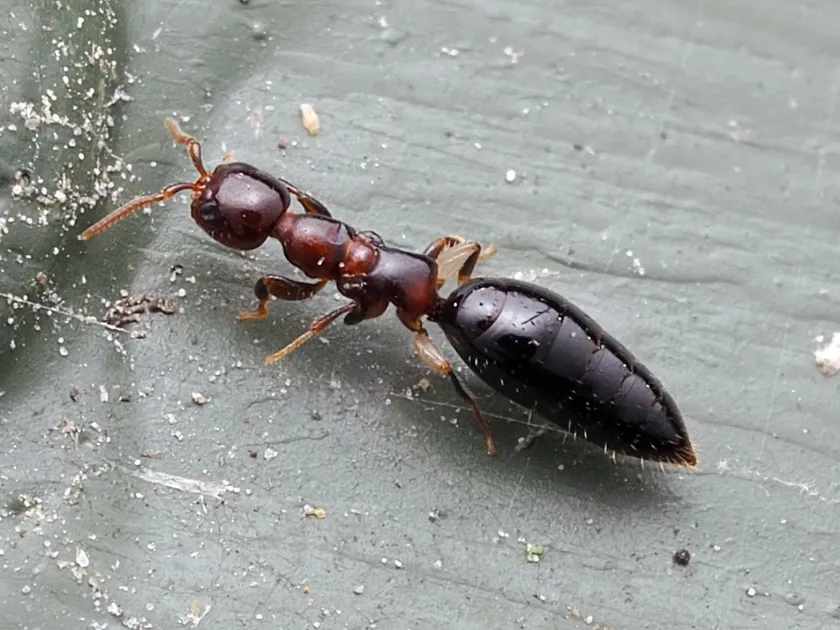
These insects are small and often go unnoticed because females are typically wingless and look very similar to common ants in their morphology.
Their bodies are elongated and protected by a dark, chitinous exoskeleton, which allows them to maneuver easily within the narrow tunnels of wood.
Male specimens, in contrast to females, possess wings, enabling them to fly actively in search of mates during the breeding season.
The life cycle of Sclerodermus is intrinsically linked to the presence of other wood-boring larvae that serve as hosts for their offspring.
What it damages
This pest is primarily associated with damaged wood in both forest ecosystems and human structures like houses, furniture, and flooring.
Sclerodermus acts as an ectoparasite to larvae of wood-boring beetles such as cerambycids or buprestids, which are the primary destroyers of timber.
The danger increases significantly when infested firewood or wooden furniture is moved into residential areas, introducing the wasps to human living spaces.
Human contact with these insects can lead to painful bites, often resulting in allergic skin reactions, dermatitis, and significant discomfort.
Managing this pest is essential not only for preserving wooden structures but also for maintaining a safe and healthy home environment for residents.
When it appears
The activity period begins when temperatures rise, allowing these insects to emerge from their overwintering sites and start their search for prey.
Inside heated buildings, the life cycle may persist throughout the year, provided there is a continuous food source available in the form of host larvae.
Mass emergence of adults is most commonly observed during the summer months, which aligns with their peak reproductive and migratory phase.
Overwintering occurs deep inside tunnels within wood, where the insects enter a state of diapause to survive cold environmental conditions.
Changes in building heating or the introduction of infested materials can trigger the premature emergence of these wasps from their dormant state.
Signs of infestation
The most common sign of an infestation is the presence of small exit holes in wood, created by the primary wood-boring beetle larvae.
Sudden, unexplained skin bites among residents are a classic indicator that Sclerodermus wasps have established a presence in the local timber.
Detailed inspections may reveal individual wasps crawling on surfaces near wooden furniture or structural beams that show signs of previous damage.
The presence of fine wood dust or frass near small holes acts as a clear indicator of the primary pest activity that attracts these parasitic wasps.
Persistent or recurring skin rashes should prompt a professional inspection to confirm if the habitat is infested with these wood-dwelling parasites.
Control measures
The primary control strategy involves the identification and immediate removal of the infested wooden materials that act as the breeding reservoir.
Applying effective contact insecticides to the surface of infested items can help reduce the population of active adults living in the vicinity.
For more severe cases, professional fumigation is recommended, as it ensures that the treatment reaches deep into the tunnels within the wood.
- Engaging professional pest control services for fumigation.
- Thermal treatment or heat sterilization of wooden items.
- Preventive application of wood preservatives to deter wood-boring hosts.
Maintaining strict hygiene and preventing the long-term storage of unprocessed wood inside living quarters are critical for long-term prevention.
Taxonomy
- Latin name
- Sclerodermus
- Order
- Hymenoptera
- Family
- Bethylidae
- EPPO code
- SCLMSP
Discussion
No discussions yet — be the first.