
Red squirrel
Sciurus vulgaris
Description
How to identify
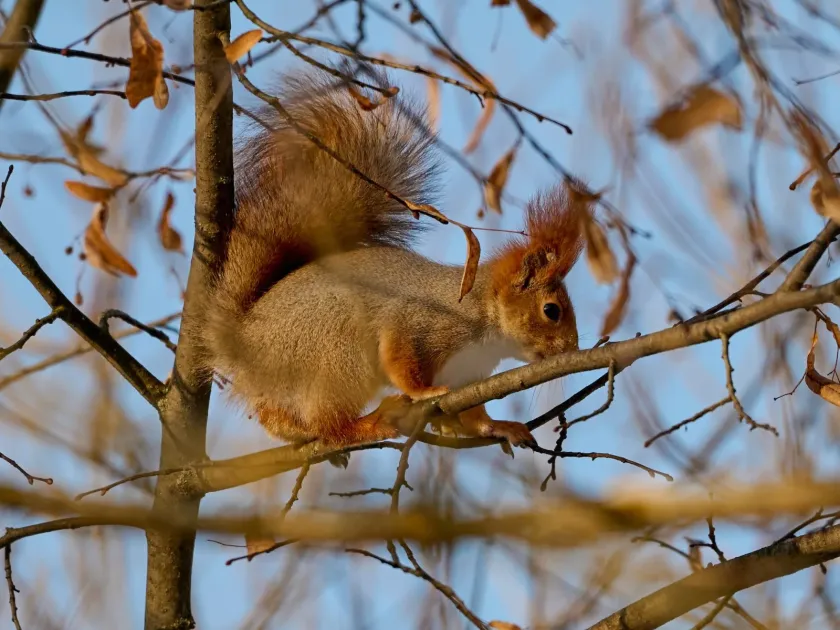
The red squirrel (Sciurus vulgaris) is a member of the order Rodentia and the family Sciuridae. It is a small to medium-sized arboreal mammal recognized by its reddish-brown fur and distinctive ear tufts.
Adult squirrels typically measure 18 to 28 cm in body length, excluding their long, bushy tail. They are highly agile climbers, capable of navigating dense foliage with ease.
They are primarily diurnal, meaning they are active during the day, with peaks in activity usually occurring in the early morning and late afternoon hours.
Red squirrels reproduce relatively quickly, with females potentially giving birth to two litters per year, which allows their populations to expand rapidly in food-rich environments.
While they play an important role in forest ecosystems, they can become significant agricultural pests in nurseries, orchards, and nut plantations when natural food supplies are scarce.
What it damages
The red squirrel causes extensive damage to orchard crops by consuming fruits such as apples, pears, and various stone fruits at different stages of maturity.
During early spring, squirrels feed on flower buds, which leads to a significant loss of potential fruit set, often reducing the overall yield before the growing season fully begins.
Bark stripping is another form of damage, where squirrels remove bark from young trees. This exposes the inner wood to pathogens, weakens the tree structure, and can lead to branch dieback.
Nut crops like hazelnuts and walnuts are especially vulnerable. Squirrels are adept at raiding these trees and can strip an entire plantation of its harvest in a very short time.
In forest plantations, squirrels may nip off the leading shoots of coniferous saplings, which disrupts the tree's growth pattern and reduces the commercial value of the timber.
When it appears
The spring season is a critical period for crop damage, as squirrels actively seek nutrient-dense food sources like developing buds after a winter of low food availability.
Mid-summer marks the beginning of fruit damage as crops like apples and pears ripen. Squirrels often discard partially eaten fruits, creating waste and attracting secondary pests.
Autumn is the peak time for harvesting and storing reserves. During this time, squirrels are most intensive in gathering seeds and nuts, posing the greatest threat to nut growers.
Winter damage occurs when alternative food sources are unavailable. Squirrels may feed on the cambium layer of tree bark, causing localized injury to trunks and branches.
Consistent monitoring is essential throughout the growing season, particularly during phenological stages that correlate with the squirrel's dietary needs.
Signs of infestation
The most common sign of squirrel presence is the discovery of half-eaten fruits, nutshell remnants, or discarded twigs lying on the ground beneath the tree canopy.
Marks on tree bark, characterized by fine teeth impressions or irregular patches of missing bark, are clear indicators that squirrels have been foraging on the stems.
- Evidence of gnawed shoots and buds on the ground.
- Missing fruits from orchards that were expected to be productive.
- Discovery of squirrel caches containing stored nuts or cones nearby.
- Audible chattering and sudden movement in the upper canopy.
An unexplained reduction in the bird population within a garden or orchard can also indicate that squirrels are preying on nests, which in turn removes natural pest controllers from the area.
Control measures
Installing metal or plastic baffles on tree trunks is highly effective. These barriers prevent squirrels from climbing the trees and accessing the fruit and buds.
Netting individual trees or small berry patches provides a physical barrier that successfully protects high-value crops from rodent foraging.
Sanitation is key; promptly harvesting ripened fruit and cleaning up fallen produce reduces the attractiveness of the garden to scavenging squirrels.
Managing the surrounding landscape, such as trimming branches that hang over roofs or fences, restricts access routes to the tree canopy.
While ultrasonic repellers are available, their effectiveness can vary significantly as squirrels often habituate to repetitive sounds and static visual deterrents over time.
Taxonomy
- Latin name
- Sciurus vulgaris
- Order
- Rodents
- Family
- Sciuridae
- EPPO code
- SCIUVU
Discussion
No discussions yet — be the first.