
Fox squirrel
Sciurus niger
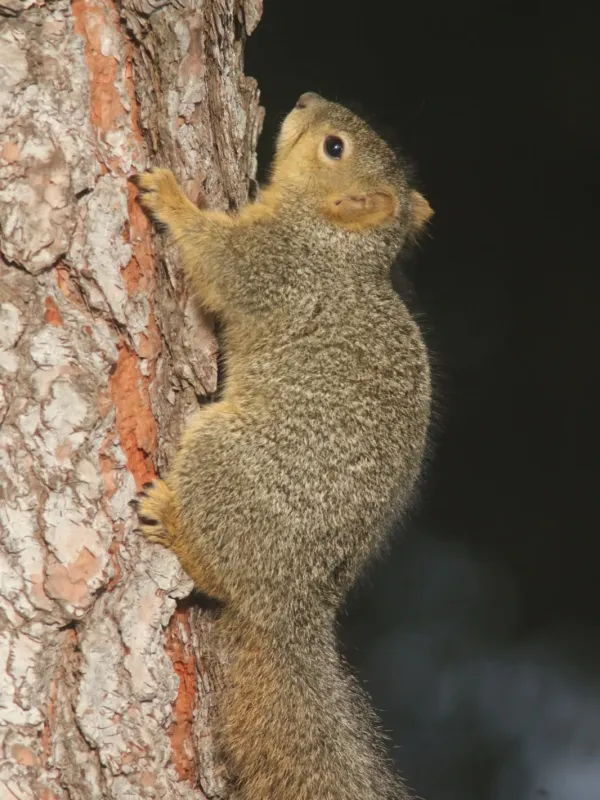
Description
How to identify
The fox squirrel (Sciurus niger) is the largest North American tree squirrel, a member of the family Sciuridae and the order Rodentia. It is distinguished by its size and its variable coat color, which typically ranges from a rich brown to a reddish-orange, often with a white or buff-colored belly.
Measuring between 45 and 70 centimeters in length, including its tail, this squirrel is a robust and highly active mammal. Its body weight can exceed one kilogram, providing it with the strength needed to scale tall trees and access agricultural crops that smaller animals might struggle to reach.
Fox squirrels thrive in diverse habitats, including forests, parks, and agricultural areas. They are primarily diurnal, meaning they are most active during the day, which makes them highly visible when foraging for food in gardens and fields throughout the growing season.
Their life cycle includes breeding twice annually, producing litters of 2 to 4 kits. This reproductive strategy allows fox squirrel populations to establish themselves rapidly, leading to sustained pressure on local fruit and nut tree populations if left unmanaged.
These rodents are remarkably intelligent and highly territorial. They build large nests, known as dreys, in the branches of trees, using these structures as central hubs for their foraging activities and to shelter during harsh weather conditions.
What it damages
Fox squirrels are particularly notorious for destroying corn crops. They attack corn at the milk and dough stages, husking the ears and consuming the developing kernels, often wasting significantly more than they actually eat, resulting in substantial yield losses.
Fruit orchards frequently suffer from fox squirrel activity, as they feed on apples, pears, peaches, and various stone fruits. They are also proficient nut foragers, and can deplete an entire pecan or walnut crop within a few days once the fruit begins to ripen.
In ornamental landscaping, fox squirrels cause damage by gnawing on the bark of trees and shrubs, particularly during late winter when food sources are scarce. This girdling can severely weaken trees and create entry points for pathogens and wood-boring insects.
Additionally, they dig in flower beds, lawns, and vegetable gardens to bury or retrieve food caches, damaging plant root systems. They are also known to chew through irrigation lines, causing leaks and disruption to essential watering systems in agricultural settings.
- Severe damage to ripening corn cobs in the field.
- Destruction of fruit and nut harvests in orchards.
- Bark stripping on young trees, causing stunted growth.
- Disturbance to lawn soil and flower bed root systems.
Signs of infestation
The most telltale sign of fox squirrel activity is the presence of corn cobs with shredded husks left scattered across agricultural fields. Unlike other predators, squirrels leave distinct, clean-cut grooves on the cob surface from their incisors.
You may find discarded bits of debris, such as fruit skins, shells, and shredded bark, piled at the base of trees. These "feeding stations" are common locations where squirrels process their food before climbing back into the safety of their nests.
Small, shallow, irregular holes in the soil of your lawn or garden are clear evidence that squirrels have been foraging for buried nuts or seeds. This digging behavior often disrupts mulch and exposes plant roots to drying out.
Large nests made of twigs, leaves, and moss located in the canopy of trees are primary indicators of a permanent squirrel presence. Multiple dreys in a single area often suggest a family group is residing nearby.
Auditory evidence, such as sharp barking, chattering, or the sound of claws scraping against tree trunks, is a frequent sign of their presence. They are quite vocal, especially when they feel their territory is being encroached upon by potential rivals.
Control measures
Installing metal or plastic tree guards (baffles) around the trunks of valuable fruit and nut trees is a highly effective way to prevent squirrels from climbing. These barriers should be placed high enough to prevent jumping and be smooth enough to provide no grip.
Ultrasonic deterrent devices can provide some level of protection by emitting high-frequency sounds that are uncomfortable for rodents. For the best results, these should be used in combination with other methods to prevent squirrels from becoming accustomed to the sound.
Physical exclusion remains the most reliable method for protecting high-value crops. Using netting, cages, or wire mesh to cover vegetable gardens and individual berry bushes prevents squirrels from accessing the ripening produce without harming them.
Good garden sanitation is critical; removing fallen fruit, nuts, and bird feeders from the vicinity of the garden reduces the area's attractiveness to squirrels. A well-managed area with limited food sources naturally discourages these pests from settling.
If population levels are excessive, humane live-trapping and relocation (where permitted by local law) can be used. This should be followed by sealing off potential nesting sites in structures and clearing nearby brush to make the habitat less inviting.
Taxonomy
- Latin name
- Sciurus niger
- Order
- Rodents
- Family
- Sciuridae
- EPPO code
- SCIUNI
Discussion
No discussions yet — be the first.