
Eurasian red squirrel
Sciurus
Description
How to identify
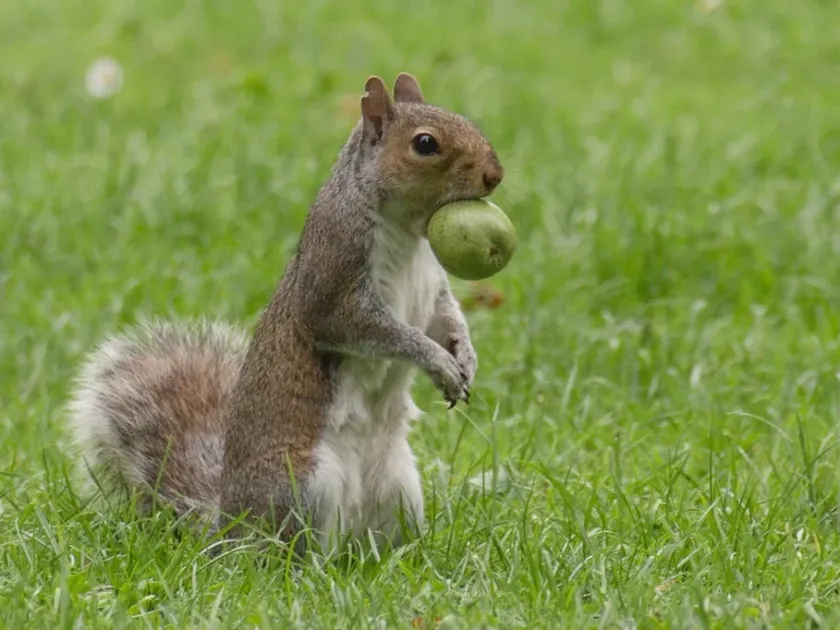
The Eurasian red squirrel (Sciurus vulgaris) is a small rodent in the Sciuridae family, known for its agile nature and bushy tail, often featuring ear tufts.
These mammals are arboreal, spending most of their time in tree canopies, which makes them highly efficient at reaching fruit and nuts before human harvest.
Adult squirrels are characterized by their sharp, continuously growing incisors, which they must use to gnaw on various materials, including tree bark and fruit.
Their high metabolic rate requires them to be active for most of the day, during which they explore gardens in search of high-energy food sources.
While often seen as cute, their territorial behavior and resource-gathering instincts can lead to significant destruction in orchards and home gardens.
What it damages
The damage caused by squirrels is most significant in nut orchards, where they consume large quantities of walnuts, hazelnuts, and acorns before they ripen.
In fruit gardens, squirrels are known to strip trees of apples, pears, and stone fruits, often harvesting unripe fruit that is subsequently wasted or left to rot.
Beyond consuming the fruit, squirrels damage the tree structure by gnawing on the bark of young stems, which can disrupt the vascular system and lead to branch death.
During the dormant season, squirrels feed on tree buds, which significantly impacts the flower and fruit production for the following growing season.
Their foraging habits can also attract other pests, as half-eaten fruit left on the ground serves as a breeding ground for various fungi and insects.
When it appears
The peak of squirrel activity occurs during late summer and autumn, as they prepare for the winter by gathering and storing large amounts of food.
Spring is another critical period when food reserves are depleted and the animals turn to newly formed buds and fresh shoots to satisfy their nutritional needs.
During the breeding season, the increased demand for energy leads squirrels to frequent gardens more often, increasing the risk to ripening fruit crops.
In mid-winter, when natural food is scarce, squirrels may even target the bark of older trees, causing localized damage that stresses the tree's health.
High population density in urbanized areas ensures that gardens are under constant pressure from squirrel foraging throughout the entire growing season.
Signs of infestation
The most evident sign of squirrel presence is the discovery of empty nut shells or partially eaten fruit scattered beneath the canopy of trees.
Gnaw marks on the bark, characterized by narrow, parallel grooves, indicate the presence of squirrels attempting to sharpen their teeth or reach the cambium layer.
- Scattered remains of fruits and nuts on the ground.
- Missing buds on the tips of fruit-bearing branches.
- Small, neat holes in the skin of ripening fruits.
- The presence of spherical nests (dreys) in the tree forks.
- Scratch marks and smooth patches on tree bark.
Large amounts of fruit prematurely falling to the ground without signs of disease often indicate mechanical harvesting by foraging squirrels.
A sudden decline in tree vigor or wilting of specific branches can also be linked to previous gnawing activity by these rodents.
Control measures
Installing metal or plastic baffles around the trunks of trees is a highly effective way to prevent squirrels from climbing up to the canopy.
Protecting ripening fruit crops with fine-mesh netting can physically block access and ensure that the harvest remains intact for the gardener.
Removing potential food sources, such as bird feeders or fallen fruit, reduces the attractiveness of the garden to scavenging squirrels.
Ultrasonic repellers can be deployed to create a nuisance environment that encourages squirrels to move away from sensitive areas of the orchard.
Applying scent-based repellents to the trunks of young trees can provide a temporary deterrent, effectively protecting sensitive bark from gnawing.
Taxonomy
- Latin name
- Sciurus
- Order
- Rodents
- Family
- Sciuridae
- EPPO code
- SCIUSP
Discussion
No discussions yet — be the first.