
Scaptomyza pallida
Scaptomyza pallida
Description
How to identify
Scaptomyza pallida, commonly known as a type of vinegar fly or leaf-mining fly, belongs to the family Drosophilidae. These are small insects, typically measuring 2–3 mm in length, often overlooked due to their size.
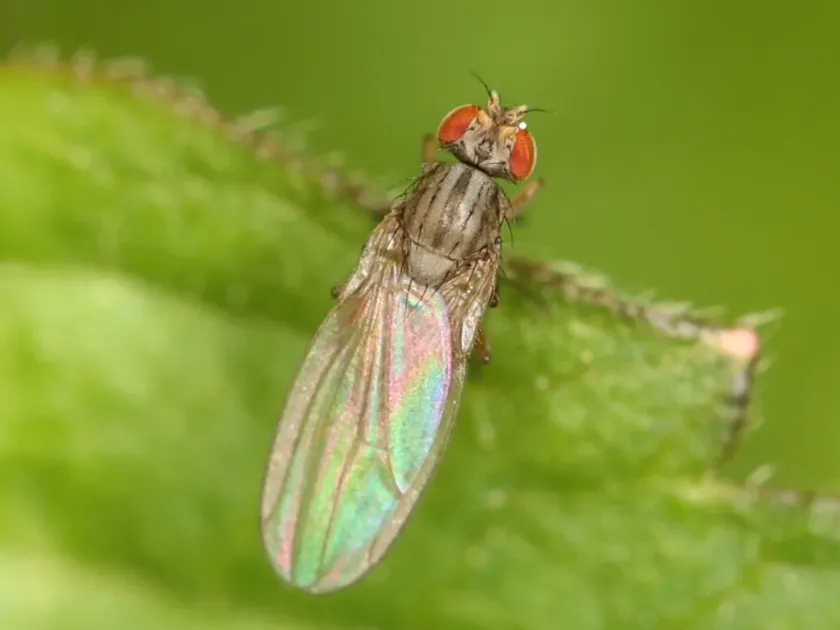
The adult fly is characterized by a yellowish-brown body and clear wings. Their prominent red eyes are a key taxonomic feature, helping to distinguish them from other similar dipterans found in agricultural environments.
The larvae are small, legless maggots that are white or cream in color. They are specialized for a cryptic life, living entirely within the leaf tissue, which protects them from many external predators and environmental stresses.
Eggs are extremely small and deposited under the leaf epidermis. Their hidden placement makes them nearly invisible during the initial stages of infestation, complicating early detection efforts.
This species has a short generation time, allowing for rapid population growth under favorable conditions, which can lead to significant infestations within a single growing season.
What it damages
The primary hosts of Scaptomyza pallida are plants in the Brassicaceae family, including cabbage, radish, mustard, and canola. Certain legumes can also be affected by this pest under specific conditions.
Larvae feed internally by creating "mines" or tunnels within the leaf blades. They consume the nutritious parenchyma tissue while leaving the upper and lower leaf surfaces intact, which creates the distinctive mining appearance.
Heavy mining results in leaf chlorosis, premature wilting, and necrosis of the affected foliage. This significantly reduces the photosynthetic efficiency of the plant, leading to stunted growth and reduced yields.
In seedlings, severe infestations can lead to total plant death. The damage is not only direct but also creates openings that allow secondary pathogens, such as bacteria and fungi, to invade the plant tissue.
Reduced marketability of crops like cabbage or leafy greens is a major economic consequence, as the tunnels and subsequent tissue decay make the produce unsuitable for sale.
When it appears
Scaptomyza pallida activity begins in early spring, coinciding with the warming of temperatures and the availability of succulent host plants. They are most active during the vegetative phase of crops.
Multiple generations occur throughout the growing season. The development cycle is highly dependent on ambient temperature, with warmer months allowing for faster turnover of generations.
The peak of damage is often observed during the late spring and early summer when young, vulnerable plants are most abundant in the field. Careful monitoring is essential during these stages.
As the season progresses toward autumn, the flies often move to wild cruciferous weeds, which serve as overwintering reservoirs for the population.
The insects overwinter as pupae, primarily located in the soil or within decomposing plant debris, making post-harvest sanitation a vital part of the annual pest management cycle.
Signs of infestation
The most recognizable sign is the presence of narrow, winding, whitish lines (mines) on the surface of the leaves. These patterns often grow wider as the larva matures and consumes more tissue.
Upon closer inspection, dark spots of larval frass (excrement) can be seen deposited along the tunnels within the mine. This confirms the presence of active mining larvae.
Affected leaves may exhibit curling, yellowing, or browning in areas where the mines are concentrated. In severe cases, the leaf tissue may collapse or become papery.
Using a backlight on an infested leaf reveals the internal structure of the mine and the presence of the larva itself, which is a definitive method for confirming the identity of the pest.
Secondary infections of gray mold or soft rot often follow the mining damage, causing additional patches of decay that spread beyond the immediate area of the leaf mine.
Control measures
Cultural control is the first line of defense, including the removal of cruciferous weeds and the implementation of strict crop rotation cycles to disrupt the fly's habitat.
Deep plowing after harvest is highly effective at burying pupae, which disrupts their development and reduces the population of emerging adults in the following spring.
Physical protection, such as the use of fine-mesh row covers or insect-proof netting, can prevent adult flies from reaching the plants to lay their eggs, particularly for high-value seedlings.
When chemical control is necessary, systemic insecticides are required to penetrate the leaf tissue and reach the feeding larvae. Timing is critical, and applications should be based on scouting reports.
Biological control, including the use of parasitic wasps that target fly larvae, can be effective in integrated pest management (IPM) programs to maintain low population levels naturally.
Taxonomy
- Latin name
- Scaptomyza pallida
- Order
- Diptera (flies)
- Family
- Drosophilidae
- EPPO code
- SCATPA
Discussion
No discussions yet — be the first.