
Scaptomyza graminum
Scaptomyza graminum
Description
How to identify
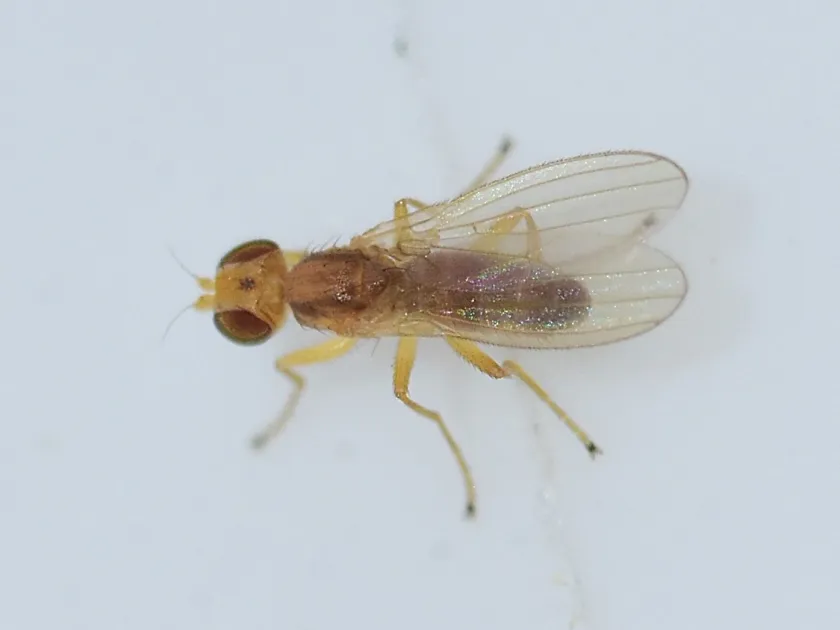
Scaptomyza graminum is a dipteran fly belonging to the family Drosophilidae. These small insects are common agricultural pests known for their larvae's mining behavior.
The adult fly typically measures about 2-3 mm in length, characterized by a yellowish-gray body and small, clear wings suitable for rapid flight.
The life cycle encompasses four distinct stages: egg, larva, pupa, and adult. The larval stage is exclusively responsible for the damage caused to plant tissues.
Pupation frequently occurs within the soil or in the remains of dried plant leaves, allowing the species to survive various environmental conditions.
Because they are small and often nocturnal or crepuscular, identifying the adults visually in a field can be challenging without specialized traps.
What it damages
The larvae of Scaptomyza graminum are primarily polyphagous, targeting a variety of cruciferous plants and some members of the Caryophyllaceae family.
Upon hatching, larvae burrow into the leaf lamina, creating serpentine mines where they consume the inner parenchyma tissue while leaving the epidermis intact.
This mining activity directly disrupts the plant's ability to photosynthesize, which can cause significant stress, stunted growth, and loss of vigor in crops.
Severe infestations lead to the browning and necrosis of leaves, resulting in a decline in the commercial quality and nutritional value of vegetable crops.
The breached leaf tissues often become entry points for secondary pathogens, such as soft rot bacteria or fungi, further compromising the plant's health.
When it appears
The activity of these flies usually begins in early spring as temperatures rise, signaling the emergence of adults from their overwintering pupal stage.
Throughout the growing season, multiple overlapping generations can occur, especially in temperate regions where summer conditions are warm and humid.
The period of maximum damage usually coincides with the fast-growing phase of host plants, where tender leaf tissues are most susceptible to larvae.
Towards late autumn, as temperatures drop, the fly population undergoes a transition to diapause, ensuring survival through the winter months.
Environmental conditions such as excessive moisture or irrigation may sometimes inadvertently favor the rapid development of successive generations.
Signs of infestation
The most diagnostic sign is the appearance of winding, translucent or white tracks (mines) meandering across the leaf surface.
Upon closer examination, small, dark granular deposits (frass) left by the larvae can often be seen within the mined tunnels.
Infected leaves may exhibit subtle yellowing or blistering in the areas where the larval mining has stripped the internal tissue.
Early stage indicators include tiny white stippling marks on the foliage, which are the oviposition scars created by the adult female fly.
If the infestation is heavy, entire leaves may shrivel and fall prematurely, leaving the plant visually stunted and poorly developed.
Control measures
Cultural management is the first line of defense, including the thorough removal of weeds that serve as alternative hosts, particularly cruciferous species.
Applying physical barriers such as floating row covers over young vegetable crops effectively prevents female flies from laying eggs on the leaves.
Post-harvest soil cultivation is essential for disrupting the pupal stage, as it exposes the insects to predators and unfavorable environmental conditions.
When necessary, systemic insecticides are the most effective chemical intervention, as they translocate within the plant to target larvae hidden inside the mines.
Integrated Pest Management (IPM) practices, including the use of sticky yellow traps, help monitor population levels and guide the timing of intervention.
Taxonomy
- Latin name
- Scaptomyza graminum
- Order
- Diptera (flies)
- Family
- Drosophilidae
- EPPO code
- SCATGR
Discussion
No discussions yet — be the first.