
Yellow leaf miner
Scaptomyza flava
Description
How to identify
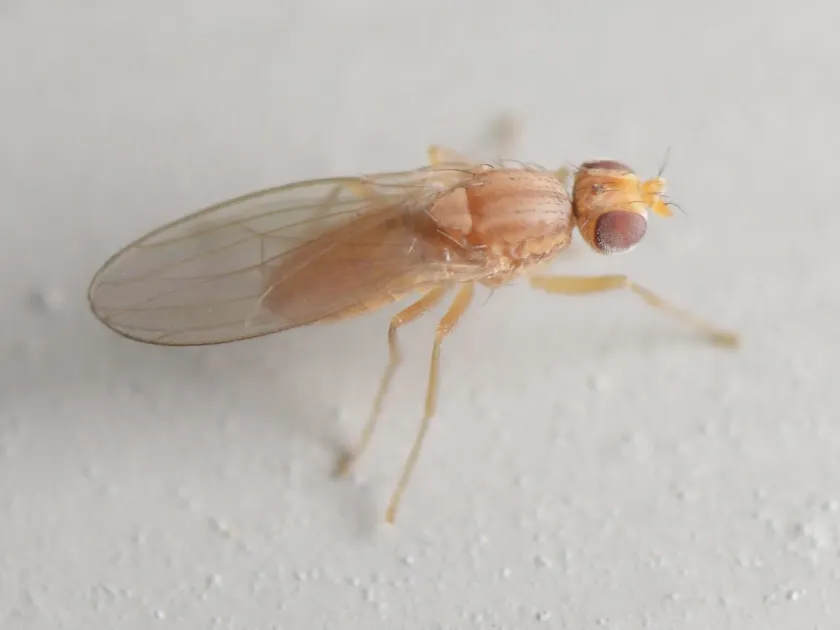
Scaptomyza flava, commonly known as the yellow leaf miner, is a small dipteran insect belonging to the family Drosophilidae. Adults are typically 2–3 mm long, with a yellowish-brown body and clear wings, resembling small fruit flies.
The larvae are small, legless, and creamy-white, reaching about 3–4 mm in length. They possess small black mouth hooks, which allow them to feed efficiently within the mesophyll layer of the leaves they inhabit.
Eggs are tiny, oval-shaped, and usually deposited singly or in small clusters within the leaf tissue, particularly on the underside. They are very difficult to detect with the naked eye during the early stages of infestation.
Pupation occurs either within the leaf mine itself or in the topsoil near the host plant. The pupae are enclosed in a hard, dark-brown puparium, providing protection against environmental fluctuations.
The developmental cycle is relatively short, often completed within two to three weeks under optimal summer temperatures, allowing for multiple overlapping generations throughout the growing season.
What it damages
Damage is exclusively caused by the larvae, which mine into the leaf tissue. By feeding on the internal cells, they leave behind characteristic winding, white tunnels, known as mines, which are visible on the leaf surface.
The primary host range includes members of the Brassicaceae family. Vegetables such as radish, cabbage, kale, arugula, and mustard greens are highly susceptible to infestation by this pest.
Feeding damage significantly reduces the photosynthetic capacity of the plants, leading to stunted growth. In severe cases, the foliage may wither, turn yellow, and die off completely before harvest.
For leafy vegetables, the damage is particularly destructive as it renders the crop unmarketable. The presence of mines also lowers the aesthetic value and shelf life of the harvested produce.
Furthermore, these mines provide entry points for secondary pathogens, such as bacteria and fungi, which can cause rotting of the leaves and further compromise the overall yield and quality of the crop.
When it appears
Adults emerge in early spring when temperatures consistently reach 10–12°C. The first generation typically starts on wild cruciferous weeds before migrating to agricultural fields.
The pest is most active during warm, humid weather. While peak population levels often occur mid-summer, several generations can overlap, creating a constant pressure on crops throughout the entire season.
Development slows down during periods of extreme drought or cold. However, in irrigated systems, the population can maintain high density even during dry spells, as the plants remain lush and attractive.
As temperatures drop in the autumn, the pest enters a dormancy phase. They spend the winter as pupae protected within the soil or in sheltered debris, preparing for emergence the following spring.
Monitoring using yellow sticky traps is highly recommended for growers to detect the initial arrival of adults and determine the best timing for implementing control measures.
Signs of infestation
The most prominent sign of infestation is the appearance of distinct, thin, light-colored winding lines on the leaves. As the larva grows, the mine becomes wider and more conspicuous.
Inside the mine, small dark deposits of frass (larval excrement) can often be seen. This pattern helps distinguish Scaptomyza flava mines from other types of leaf damage or foliar diseases.
- Pale, serpentine streaks on the surface of the leaves.
- Yellowing and necrosis of tissue directly surrounding the tunnels.
- Deformed or wrinkled leaves in heavily infested young plants.
- Small exit holes where the mature larva has emerged to pupate.
Advanced infestations show multiple, intersecting mines that create large dead patches, significantly weakening the plant and eventually leading to tissue collapse.
Control measures
Cultural control is essential. This includes the systematic removal and destruction of cruciferous weeds, which serve as crucial reservoirs for the pest when primary crops are not available.
Crop rotation should be practiced by avoiding the planting of Brassicaceae crops in the same field for consecutive years, which helps disrupt the lifecycle of the overwintering pupae.
Physical protection, such as covering crops with fine-mesh insect netting, is highly effective in preventing adults from landing on leaves to lay their eggs, particularly during the seedling stage.
When chemical intervention is required, insecticides should be applied based on local threshold guidelines. It is vital to select products labeled for edible vegetables and observe appropriate pre-harvest intervals.
Biological control agents, including various species of parasitic wasps (hymenopteran parasitoids), can naturally reduce larval populations. Promoting biodiversity on the farm helps support these beneficial insects.
Taxonomy
- Latin name
- Scaptomyza flava
- Order
- Diptera (flies)
- Family
- Drosophilidae
- EPPO code
- SCATFL
Discussion
No discussions yet — be the first.