
Southern mole cricket
Scapteriscus oxydactylus
Description
How to identify
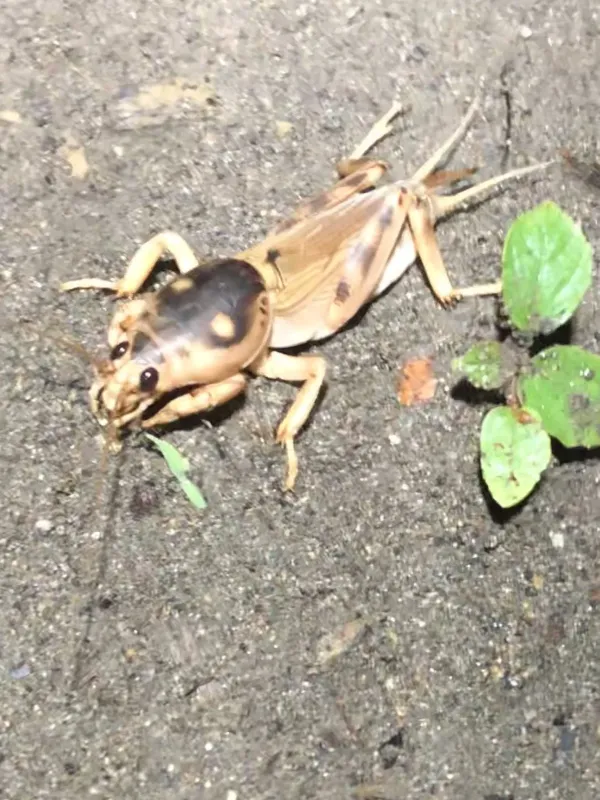
The Southern mole cricket (Scapteriscus oxydactylus) is a member of the Gryllotalpidae family, known for its specialized anatomy for subterranean existence.
This insect features heavily sclerotized, shovel-like forelegs that are exceptionally adapted for digging through dense soil layers in search of food and mates.
Adults are brownish in color, often growing to substantial sizes, and possess a robust thorax that protects them while navigating through narrow tunnel networks.
The life cycle is tightly coupled with soil moisture levels, as both the eggs and the nymphs require specific humidity ranges to successfully complete their development.
Although they are capable of flight, they spend the vast majority of their lives underground, relying on sensory hairs and vibration perception to navigate their environment.
What it damages
These pests are generalist herbivores that cause severe damage to a wide range of horticultural, cereal, and ornamental crops across their habitat.
The most significant harm occurs when they consume root systems, causing young seedlings to wilt and collapse shortly after their emergence in the spring.
Tubers and root crops, such as potatoes, sweet potatoes, and carrots, are frequently hollowed out, which renders the entire harvest commercially valueless.
By loosening the soil around root zones while digging their tunnels, they create air pockets that cause roots to desiccate and plants to suffer from drought stress.
Large populations can completely devastate a nursery or garden bed by physically disrupting the soil structure and severing the main stems of developing plants.
Signs of infestation
Visual identification of their presence often starts with observing uneven, raised ridges of soil on the surface after irrigation or rainfall events.
Abrupt wilting of healthy plants is a primary indicator; upon examination, the root system is typically found to be missing or severely gnawed off.
Circular entrance holes with smooth, rounded edges appearing on the surface of the soil indicate active entry and exit points for the crickets.
The presence of patches where the soil feels spongy or hollow suggests an extensive network of sub-surface galleries constructed by the insects.
Characteristic acoustic calling by males during warm, humid evenings can help identify the active breeding season of the population on your property.
Control measures
Cultural control strategies include intensive tilling and plowing during the off-season to physically destroy nesting chambers and expose larvae to predators.
The application of granular or liquid insecticide baits at localized hot spots is highly effective, as the crickets are attracted to these toxic food sources.
Light traps installed strategically throughout the landscape can disrupt the breeding cycle by capturing adults during their swarming and mating flights.
Biological control agents, particularly insect-parasitic nematodes or entomopathogenic fungi, offer a sustainable way to suppress populations without harsh chemicals.
- Maintain proper soil moisture management.
- Install physical barriers around young plant roots during transplanting.
- Promote biodiversity by supporting local avian predators.
Taxonomy
- Latin name
- Scapteriscus oxydactylus
- Order
- Orthoptera (locusts)
- Family
- Gryllotalpidae
- EPPO code
- SCAEOX
Discussion
No discussions yet — be the first.