
West Indian mole cricket
Scapteriscus didactylus
Description
How to identify
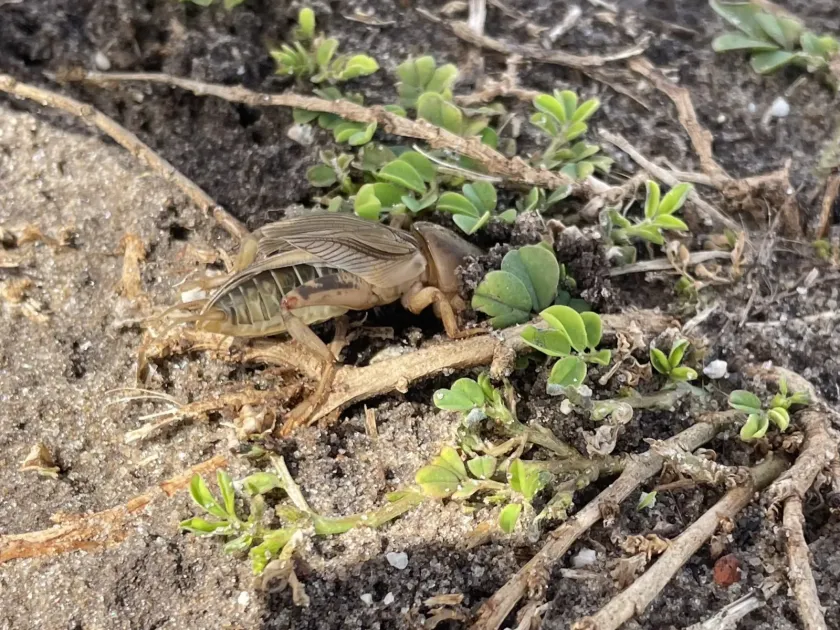
The West Indian mole cricket is a member of the Gryllotalpidae family, known for its highly specialized burrowing habits. It is a large insect equipped with powerful, shovel-like front legs designed for excavating soil.
Adult crickets possess a robust, brown-colored body covered with fine hairs. Their physical structure is optimized for subterranean movement, allowing them to navigate through soil layers with significant speed and strength.
These insects are primarily nocturnal, spending most of their lifecycle underground to avoid predators and extreme surface temperatures, which complicates early pest detection.
The lifecycle follows a process of egg, nymph, and adult stages. Favorable environmental conditions, specifically high soil moisture and warm temperatures, accelerate the reproduction cycle.
Females construct underground chambers to lay their eggs. They actively tend to these nests, ensuring the survival of the offspring until they are ready to emerge into the soil as nymphs.
What it damages
As a polyphagous pest, the West Indian mole cricket infests a wide range of crops, including vegetables, grains, and turfgrass, causing severe agricultural and economic losses.
The primary damage occurs when the crickets tunnel through the soil, severing the root systems of young seedlings. This often leads to immediate plant wilting and death within a short timeframe.
Root crops and tubers are also heavily targeted. The crickets chew deep cavities into potatoes, carrots, and onions, rendering the produce unmarketable and susceptible to secondary decay.
Beyond direct feeding, the mechanical disruption of the soil created by tunneling prevents roots from accessing necessary nutrients and water, essentially starving the plants.
In high-density infestations, the damage can become so extensive that complete crop failure occurs, necessitating aggressive management interventions to save the remaining harvest.
Signs of infestation
The most visible sign of an infestation is the presence of winding, raised ridges on the soil surface, which appear particularly after rainfall or irrigation when the soil is moist.
Plants that appear healthy in the evening but are withered or fallen the next morning are classic indicators of root damage caused by mole crickets feeding directly beneath the plant.
During soil cultivation, one may encounter exit holes or subsurface galleries. Damaged root crops will often exhibit large, irregular hollows or tunnels chewed into the surface tissue.
- Raised soil ridges across fields or gardens.
- Wilting of seedlings without apparent surface damage.
- Deep holes and surface tunnels in turf or soil.
Monitoring efforts should focus on the evening hours when crickets are most active near the surface, as this provides an opportunity to estimate the population size.
Control measures
Cultural practices are essential for management, including frequent mechanical tilling of the soil, which disrupts established tunnels and destroys nesting chambers and egg clusters.
The use of insecticide-laced bait is a widely accepted control method. These baits are typically placed near entrance holes to target the crickets as they emerge to feed at night.
Biological control options involve applying entomopathogenic fungi or beneficial nematodes into the soil. These organisms naturally parasitize the mole crickets without harming the soil health.
Chemical control involves applying granular insecticides at the time of planting or as a preventative measure to create a protective barrier against subterranean feeding activity.
Preventative measures include removing debris and avoiding the use of fresh manure, as these environments are highly attractive to mole crickets looking for breeding sites.
Taxonomy
- Latin name
- Scapteriscus didactylus
- Order
- Orthoptera (locusts)
- Family
- Gryllotalpidae
- EPPO code
- SCAEDI
Discussion
No discussions yet — be the first.