
Southern mole cricket
Scapteriscus borellii
Description
How to identify
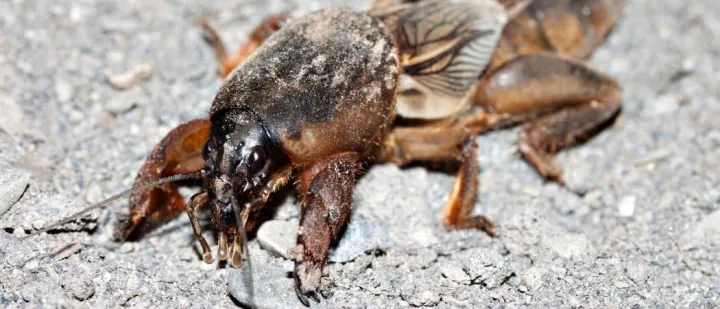
The Southern mole cricket (Scapteriscus borellii) is a member of the Gryllotalpidae family, known for its exceptional digging capabilities. These insects are highly adapted to a subterranean lifestyle, featuring a robust, cylindrical body.
Adults typically measure between 30 and 35 mm in length. Their most prominent feature is the modified front pair of legs, which function like shovel-shaped tools to tunnel through soil with remarkable efficiency and speed.
They possess well-developed wings, enabling both sexes to fly, especially at night when searching for mates or new habitats. Their coloration varies from light brown to dark brown, providing effective camouflage within various soil types.
Nymphs resemble smaller versions of the adults but lack full wing development. Despite their smaller size, they are highly active and contribute significantly to crop damage throughout their developmental stages.
This species thrives in moist, well-draining soils. They are known for their territorial behavior and ability to adapt to diverse environments, making them a challenging pest in both residential landscapes and commercial agriculture.
What it damages
As polyphagous insects, Southern mole crickets feed on a vast array of plant materials, primarily targeting roots, tubers, and the lower stems of seedlings. Their feeding habits cause severe damage to young, developing plants.
Commonly damaged crops include various vegetables, such as tomatoes, peppers, and cabbages, as well as turfgrass and nursery plants. They frequently sever root systems, causing immediate wilting and plant death.
Beyond direct feeding, the mechanical action of tunneling creates air pockets around roots. This disrupts the soil-to-root contact necessary for water and nutrient uptake, leading to desiccation of the affected plants.
In nursery settings, these crickets can decimate seedlings overnight. Their ability to move quickly through the upper layers of soil allows them to shift between plants, compounding the damage in a very short time.
Root crops like potatoes or carrots may exhibit irregular, ragged holes. Such damage not only ruins the produce but also introduces pathogens into the plant tissue, promoting secondary decay.
When it appears
Activity typically peaks in the spring when soil temperatures rise, prompting overwintering adults to emerge and begin reproductive cycles. This is the period when early-season vegetable crops are most vulnerable.
Mid-summer is characterized by the emergence of new nymphal generations. These young crickets are highly voracious, often causing the most noticeable damage during the peak growing season of most crops.
As autumn temperatures decline, the insects migrate to deeper soil layers to avoid frost. They construct specialized overwintering chambers, remaining largely inactive until the following spring.
Rainfall significantly influences their activity on the surface. During periods of high moisture, crickets are more likely to create shallow tunnels, making their presence easier to detect for monitoring purposes.
In protected cultivation areas like greenhouses, the lack of extreme temperature fluctuations may lead to year-round activity, necessitating consistent and vigilant pest management practices.
Signs of infestation
The most reliable indicator of Southern mole cricket activity is the presence of winding, raised ridges on the soil surface, particularly after a rain event or a heavy irrigation cycle.
Sudden wilting of healthy plants is a primary warning sign. When checked, the root system often appears sheared or completely severed just beneath the surface of the soil.
Small exit holes near the base of plants or irregular mounds of loose soil are typical signs of subterranean excavation. Nighttime audible chirping from male crickets can also confirm an active infestation.
Observing the garden at night with a flashlight often reveals the insects themselves on the surface. This is an effective method for assessing the size of the population and determining the scope of control needed.
Trapping techniques, such as using soapy water flushes or dedicated pheromone traps, can serve as a diagnostic tool to verify the presence of the pest before significant crop loss occurs.
Control measures
Management of the Southern mole cricket requires an integrated pest management (IPM) strategy that combines physical, chemical, and biological controls to reduce population density.
- Implementing deep tillage before the planting season to destroy tunnels and disturb overwintering chambers.
- Deploying insecticide-treated bran baits specifically formulated to target mole crickets while minimizing impact on non-target species.
- Using light traps to capture adults during their peak flight periods, which helps prevent egg-laying in the area.
- Encouraging natural predators such as birds and certain predatory insects to balance the ecosystem.
- Applying biological control agents, including entomopathogenic nematodes (e.g., Steinernema scapterisci), which are highly effective against mole cricket populations.
Taxonomy
- Latin name
- Scapteriscus borellii
- Order
- Orthoptera (locusts)
- Family
- Gryllotalpidae
- EPPO code
- SCAEAC
Discussion
No discussions yet — be the first.