
Scapholeberis mucronata
Scapholeberis mucronata
Description
How to identify
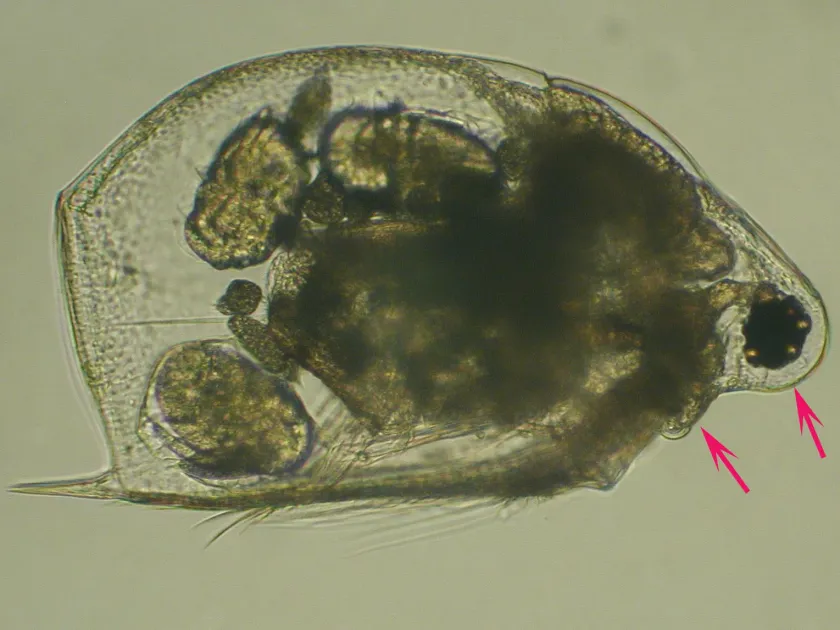
Scapholeberis mucronata belongs to the Daphniidae family within the order Cladocera. It is a small branchiopod crustacean distinguished by its angular carapace and a characteristic sharp spine on the posterior margin.
Unlike many other daphnids, this species typically inhabits the surface layer of the water, often moving along the surface tension film. Its color ranges from transparent to brownish, providing excellent camouflage in turbid water.
Adult individuals are usually less than 1 mm in length, requiring microscopic examination for precise identification. The head is held tightly against the body, which is a key trait for classification.
This species is widely distributed across freshwater habitats, including ponds, lakes, and aquaculture systems in the Northern Hemisphere. It thrives in diverse environmental conditions.
Its unique morphology allows it to exploit the water surface, where it uses the surface tension to trap and filter organic particles, placing it in a specific ecological niche.
What it damages
In the context of aquaculture, Scapholeberis mucronata acts as a significant food competitor for fish fry. By consuming large amounts of phytoplankton, it reduces the natural food available for valuable fish species.
High population densities of this crustacean lead to stunted growth in fish fry, significantly affecting the productivity and economic output of nursery ponds.
Furthermore, these crustaceans can serve as intermediate hosts for various fish parasites, increasing the prevalence of diseases within the fish stock.
Excessive proliferation of the species can alter the transparency and nutrient balance of the water, indirectly impacting the growth of beneficial submerged aquatic vegetation.
The rapid life cycle and accumulation of waste products by dense populations can contribute to poor water quality, adding stress to the aquatic environment.
When it appears
The peak activity and mass reproduction of Scapholeberis mucronata occur during the spring and summer months when water temperatures range between 15°C and 25°C.
During the winter or adverse conditions, the population survives through the production of dormant eggs known as ephippia. These eggs settle in the sediment and are highly resistant to freezing.
In spring, rising temperatures trigger the hatching of ephippia, starting a new cycle of parthenogenesis that allows the population to multiply rapidly within days.
As the season progresses toward autumn, environmental cues trigger a shift from asexual to sexual reproduction, leading to the formation of new ephippia for winter survival.
Understanding these seasonal dynamics is crucial for pond managers to implement preemptive control measures before the population reaches critical levels.
Signs of infestation
A primary sign of infestation is the presence of numerous tiny, jerky movements just below the water surface, often forming visible clusters along the pond banks.
Microscopic analysis of plankton samples collected via a fine-mesh net reveals the presence of angular shells with the distinct posterior spine, confirming the species identity.
Stunted growth or poor condition of fish fry, despite the availability of water, often signals severe food competition from a high density of cladoceran pests.
Decreased water clarity without corresponding phytoplankton blooms can indicate high filtration activity by these crustaceans, suggesting an overpopulated environment.
The detection of ephippia in sediment samples is a definitive indicator of the species' presence and a warning of potential population spikes in the coming season.
Control measures
Biological control is the most effective approach in aquaculture. This involves managing the population through the introduction of fish species that feed actively on zooplankton.
Regular drying and mechanical cleaning of pond beds during the winter season are essential practices to eliminate the resting ephippia from the sediment.
Managing the nutrient input into ponds helps limit the growth of the phytoplankton that the crustaceans rely on, thereby reducing their overall population density.
The use of fine-mesh filtration systems for incoming water can prevent the accidental introduction of the pest from surrounding water bodies.
Integrated management plans, combining water quality monitoring with planned stocking densities, ensure a stable and productive ecosystem for fish farming.
Taxonomy
- Latin name
- Scapholeberis mucronata
- Family
- Daphniidae
- EPPO code
- SCLBMU
Discussion
No discussions yet — be the first.