
Anatolian saga
Saga anatolica
Description
How to identify
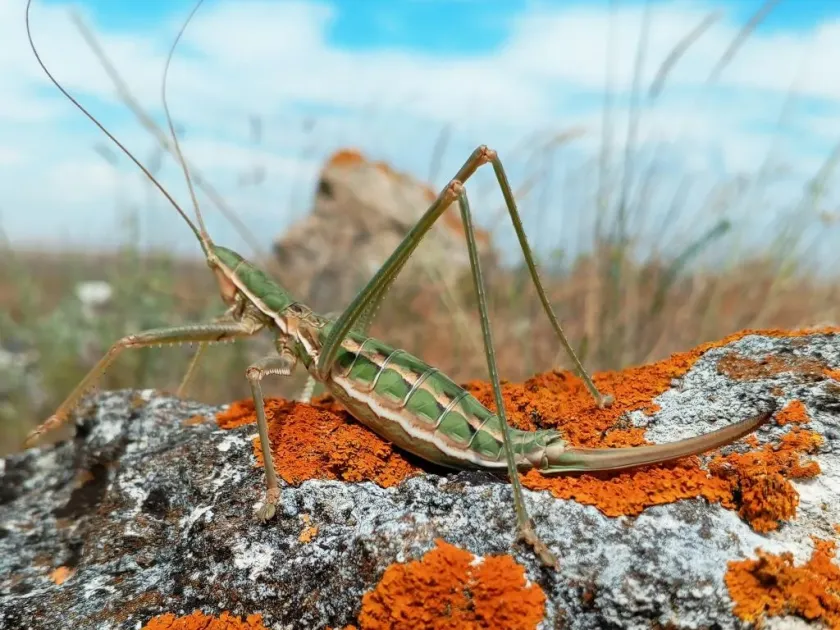
Anatolian saga (Latin: Saga anatolica) is a large insect species belonging to the family Tettigoniidae, order Orthoptera. It is recognized as one of the largest predatory bush-crickets found in the region.
The insect features an elongated, slender body, often displaying vibrant green or brownish hues. This color pattern provides excellent camouflage, allowing the insect to blend seamlessly into dense vegetation and crops.
The defining physical feature of this species is its robust, spiny forelegs and midlegs. These limbs are specifically adapted to capture and secure prey, reflecting the insect's predatory nature rather than a herbivorous one.
Females are equipped with a prominent saber-shaped ovipositor. This appendage is essential for depositing eggs into the soil or plant stems, marking a crucial stage in their lifecycle during the warmer months of the year.
Due to their elusive behavior and specialized morphology, these insects are rarely seen in the field. They prefer habitats where they can remain concealed from potential predators while scanning for their own prey.
What it damages
From an agronomical perspective, Saga anatolica acts primarily as a beneficial insect. As an obligate predator, it feeds on other insects, including grasshoppers and locusts that are notorious for damaging agricultural harvests.
The species does not feed on leaves or stems of cultivated plants, meaning it poses no direct threat of defoliation to crops. It is not classified as a plant pest in the traditional sense of crop production.
Potential damage is restricted to minor physical injuries caused by females inserting their eggs into the stalks of plants. However, this is rarely extensive enough to affect the economic yield or health of the crop field.
The presence of this species is generally a sign of a balanced agroecosystem. By controlling populations of other harmful insects, the Anatolian saga contributes to natural pest management practices.
Therefore, any attempt to eradicate this predator is usually counterproductive. Farmers are encouraged to recognize its role as a natural ally in maintaining the stability of the local ecosystem.
When it appears
The lifecycle of Saga anatolica is seasonal, with adult activity typically observed from late summer, peaking between July and September. This is when mating and egg-laying occur most frequently.
Overwintering occurs in the egg stage. The eggs remain dormant in the soil or protected plant tissues throughout the winter, which allows the species to survive harsh seasonal fluctuations.
Nymphs emerge in the late spring as temperatures rise, signaling the beginning of the annual growth cycle. They undergo several molting stages, gradually maturing into adult insects while developing their predatory hunting skills.
The maturation process is synchronized with the availability of prey items in the environment. Sufficient prey density is crucial for the successful development of the nymphs into healthy adults capable of reproduction.
Once the reproductive cycle is complete at the end of the season, the adult insects die off. The next generation is secured by the eggs deposited in the substrate, ensuring the species continues the following year.
Control measures
Specific control measures against the Anatolian saga are generally unnecessary and not recommended. Because it is a beneficial predator, targeting this species could inadvertently remove natural checks on actual crop pests.
If management is required due to extremely high local density, cultural methods are the safest approach. Autumn tillage helps disrupt the overwintering sites, reducing the egg count for the upcoming season without resorting to chemicals.
Broad-spectrum insecticide usage should be avoided at all costs. Such chemicals are indiscriminate and will likely kill natural enemies alongside any targeted pests, leading to a potential resurgence of destructive populations.
Integrated Pest Management (IPM) guidelines suggest that monitoring is the key strategy. If population levels are stable, no action is needed, as the insect provides valuable ecological services to the farm.
Maintaining buffer zones and non-crop vegetation around field margins provides habitats for these predatory bush-crickets, helping to preserve the ecological integrity of the agricultural area.
Taxonomy
- Latin name
- Saga anatolica
- Order
- Orthoptera (locusts)
- Family
- Tettigoniidae
- EPPO code
- SAGXAN
Discussion
No discussions yet — be the first.