
Green spruce-larch adelgid
Sacchiphantes viridis
Description
How to identify
The green spruce-larch adelgid (Sacchiphantes viridis) is a small insect belonging to the family Adelgidae. These pests are known for their complex two-year life cycle, which requires two distinct host tree species: spruce and larch.
Adult adelgids are minute and typically cover themselves in a protective waxy or woolly substance. This secretion acts as a barrier against weather conditions and natural predators, making physical control challenging during certain stages of their life cycle.
The life cycle involves an alternation of generations, where both wingless and winged forms are produced. This adaptation allows the species to efficiently migrate between their primary host, Norway spruce, and their secondary host, the larch.
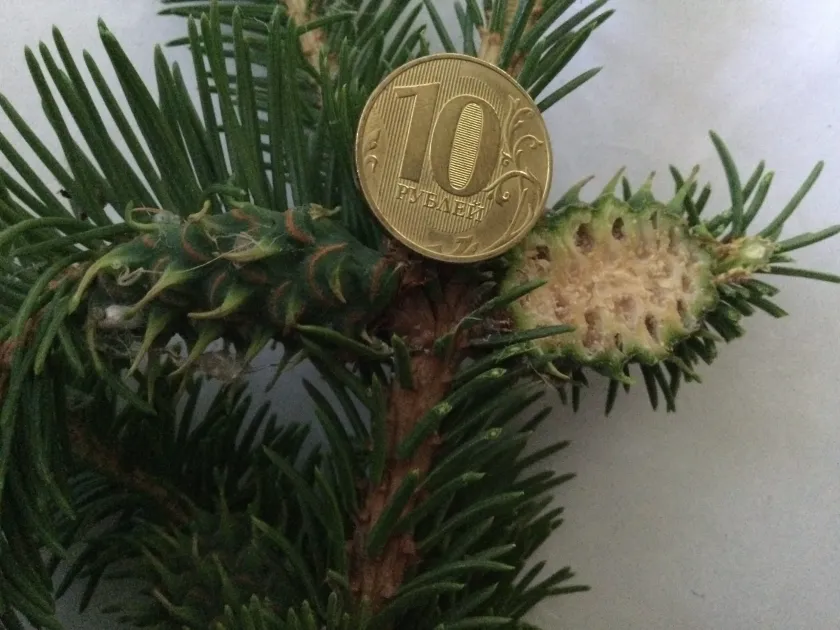
Identification is primarily based on the visual evidence they leave behind on the trees. On spruce, they create distinct cone-like galls, whereas on larch, they establish fluffy white colonies on the needles.
Due to their secretive nature and protective wax, these insects can easily go unnoticed in the early stages of infestation. Careful inspection is required to detect colonies before they cause significant physiological damage to the host trees.
What it damages
The primary hosts affected by this pest are Norway spruce (Picea abies) and various larch species (Larix). Both forest and ornamental plantings are susceptible to infestation, which can reduce the tree's health and aesthetic appeal.
On spruce, the feeding activity of the nymphs triggers the development of galls at the base of young shoots. These galls divert the tree's nutrients, causing the shoots to deform, weaken, and eventually stop growing properly.
On larch, the adelgids suck sap directly from the needles. This feeding leads to the yellowing, curling, and premature shedding of the needles, which can severely stunt the growth of young trees and degrade the canopy of older specimens.
Heavy infestations weaken the trees, making them highly susceptible to secondary attacks from bark beetles, wood-boring insects, and various fungal infections that thrive in stressed tree tissue.
In landscaping, the presence of these pests is particularly damaging because it ruins the foliage density and color, leading to a thin and sickly appearance that can take several years to recover from after the pest is eradicated.
When it appears
In early spring, as spruce buds begin to swell, overwintering nymphs emerge from their dormant state. This is a critical time when they begin feeding and induce the formation of galls on the developing spruce buds.
During the early summer months, particularly in June, the winged generation emerges. These adults migrate from spruce trees to larch trees to continue their life cycle, further spreading the infestation throughout the local environment.
Throughout the summer and autumn, the adelgids develop on the larch needles. They are protected by white, woolly secretions that make them visible even from a distance if the population density is high enough.
Overwintering occurs as small nymphs located within cracks in the bark or near the base of buds. They enter a state of diapause and remain dormant until the following spring, showing high tolerance for cold climates.
The intensity of the infestation often correlates with spring weather patterns; cool and wet conditions during the initial stage of gall formation can lead to larger, more successful populations of the pest.
Signs of infestation
The most diagnostic sign on spruce is the presence of "pineapples" or galls. These are cone-shaped, swollen growths that replace the normal terminal bud structure and house the developing nymphs within small chambers.
On larch trees, the key indicator is the white, cotton-like fluff visible at the base of the needles. Upon closer inspection, you may find the tiny, dark-colored insects underneath these white filaments.
General signs of stress include needle discoloration, yellowing, and abnormal twisting of the shoots. If a tree appears to be losing its needles during the active growing season, it is a strong indicator of sap-sucking pest activity.
Small, distorted shoots that fail to extend properly are common symptoms of previous years' gall activity. The overall thinning of the foliage is a classic sign that the tree has been suffering from chronic infestation.
Regular visual checks during spring and early summer are essential. If you observe white fuzzy spots on the branches, you should immediately examine the tree for signs of potential infestation before it spreads.
Control measures
Effective management requires a combination of physical and chemical methods. If the infestation is discovered early, manually pruning and destroying the spruce galls before they open is highly effective.
Chemical control should be timed with the life cycle of the pest. Applying systemic insecticides during the spring when nymphs are moving or in early summer when migrants are active can significantly reduce the population.
Commonly used substances include acetamiprid or pyrethroids. It is recommended to apply these treatments thoroughly to ensure good coverage of the needles and branches, using a wetting agent to penetrate the waxy layers.
Maintaining high horticultural standards, such as proper watering and balanced fertilization, helps trees withstand the stress caused by the adelgids. Avoiding excessive nitrogen fertilization can also prevent the rapid growth of succulent shoots that adelgids prefer.
- Monitor trees regularly, especially in the spring.
- Use systemic insecticides for more reliable control in larger trees.
- Avoid planting spruce and larch too close together in landscape designs.
- Sanitize and burn infested clippings immediately to stop migration.
Taxonomy
- Latin name
- Sacchiphantes viridis
- Order
- Hemiptera (bugs, aphids, leafhoppers)
- Family
- Adelgidae
- EPPO code
- ADLGVI
Discussion
No discussions yet — be the first.