
Larch adelgid
Adelges laricis
Description
How to identify
The larch adelgid (Adelges laricis) is a small insect belonging to the family Adelgidae, order Hemiptera. These insects are closely related to aphids and are characterized by their secretion of white, woolly, waxy threads.
The lifecycle of this pest is complex and heteroecious, meaning it requires two different host plants to complete its development: the larch (Larix) and the spruce (Picea).
The insects are very small, often found at the base of needles, where the white wax creates a protective shield against predators and contact pesticides.
Reproduction is both sexual and parthenogenetic. During the growing season, multiple generations occur, which can lead to rapid population explosions if the climate is suitable.
Due to their small size and the similarity of the white wool to natural tree structures, they are often overlooked until significant damage occurs.
What it damages
The larch adelgid causes direct damage by sucking sap from the needles of the larch tree, which serves as one of its primary hosts during the summer.
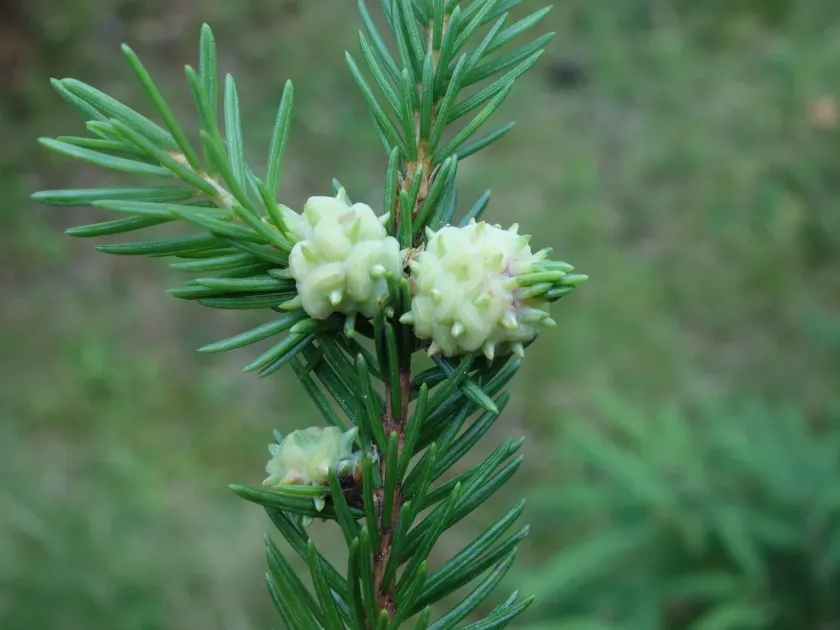
On the secondary host, spruce, the insect induces the formation of galls, which are abnormal growths on the tips of branches, often resembling small pineapples.
The feeding activity leads to needle chlorosis, wilting, and premature needle drop, which reduces the overall vigor of the larch trees.
In spruce, the development of galls causes deformity of the new growth, potentially stunting the tree's development or causing branch dieback.
In nursery environments, infestation can result in significant loss of aesthetic value and poor plant health, rendering the stock unsalable.
Signs of infestation
The most visible sign of infestation is the presence of white, cotton-like masses found at the base of the needles or along the stems of the trees.
On spruce trees, the presence of woody, cone-shaped galls on the current year's growth is a definitive indicator of the adelgid's lifecycle stage.
Honey-dew secretion produced by the insects often supports the growth of sooty mold, appearing as black patches on the foliage and bark.
Yellowing, curling, or brown, dried-out needles are common symptoms caused by the continuous sap-sucking of the adelgid colonies.
Weakened growth patterns, especially in the upper crown or at the tips of branches, serve as a sign that the tree is under heavy pest pressure.
Control measures
Effective management begins with landscape design, specifically avoiding the planting of larch and spruce in close proximity to prevent the pest's cycle.
Dormant oil sprays applied in early spring are highly effective in suffocating the overwintering nymphs before they become active and start feeding.
For active infestations during the summer, systemic insecticides containing neonicotinoids are recommended to ensure the toxin reaches the insect through the plant's sap.
Multiple applications are necessary to ensure coverage because the waxy secretion of the adelgid can repel many contact-based treatments.
- Prune and destroy any branches displaying spruce galls.
- Maintain tree health through proper watering and fertilization.
- Monitor trees regularly, especially in the early spring and early summer.
Taxonomy
- Latin name
- Adelges laricis
- Order
- Hemiptera (bugs, aphids, leafhoppers)
- Family
- Adelgidae
- EPPO code
- ADLGLA
Discussion
No discussions yet — be the first.