
Japanese spruce gall adelgid
Adelges japonicus
Description
How to identify
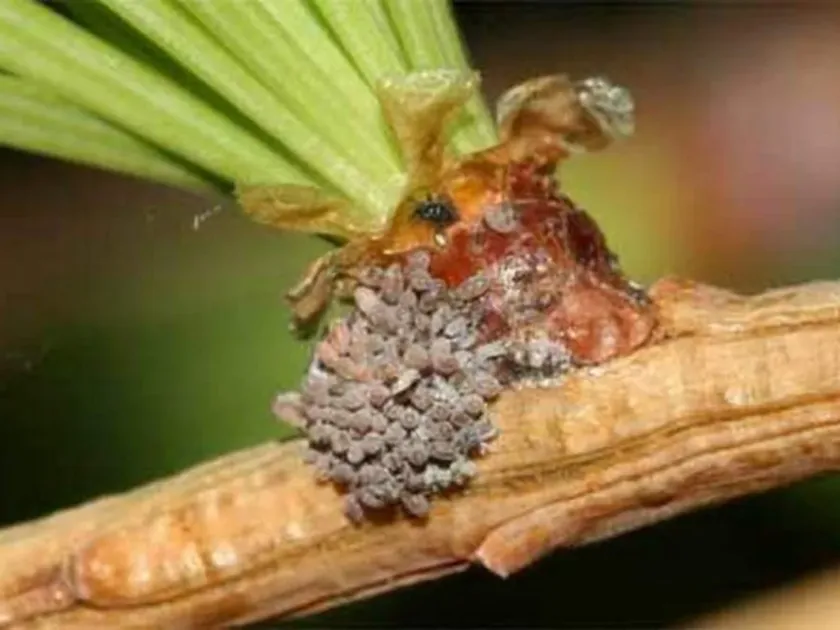
The Japanese spruce gall adelgid (Adelges japonicus) is a small insect belonging to the family Adelgidae. These insects are often recognized by the white, cotton-like waxy secretions they produce to protect themselves and their eggs from environmental stressors.
The life cycle of this pest is complex and often involves several generations throughout the growing season. Adult females are wingless, but specialized generations may develop wings to migrate to other host trees or to different parts of the canopy.
They are primarily found feeding on the twigs, bark, and at the base of the needles of their host trees, specifically spruce species. Due to their small size and protective wax covering, they are often overlooked until a significant population has established.
The biological development of this species is highly synchronized with the growth phases of the host tree. Early spring activation is a critical period in their life cycle when overwintering nymphs emerge to feed on fresh tissues.
For accurate identification, experts often use magnification to observe the insects beneath the white filaments. The presence of these distinctive filaments is the most reliable sign of a developing infestation.
What it damages
The primary hosts of the Japanese spruce gall adelgid are various species of spruce (Picea). By feeding on the plant's sap, these insects cause significant physiological stress to the tree, hindering its overall vitality.
Feeding damage results in chlorosis, where the needles lose their vibrant green color and turn yellow or brown. Continuous feeding often leads to needle deformation, stunted growth, and premature needle drop.
Severe infestations can lead to the dieback of branches, particularly in younger or less vigorous trees. The loss of foliage reduces the tree's photosynthetic capacity, further weakening its resistance to other biotic and abiotic threats.
In nursery settings, the presence of these insects can lead to significant economic losses, as damaged stock becomes unsuitable for sale due to poor aesthetic appearance and reduced health.
Trees stressed by adelgid infestations are often more susceptible to secondary infections by pathogens, such as fungal diseases that exploit the weakened state of the wood and needles.
Signs of infestation
The most noticeable sign of an infestation is the appearance of fluffy, white waxy tufts at the base of the needles or along the stems. These are often mistaken for fungal growth or debris.
Needles on affected branches may appear distorted or yellowish. In some cases, the honeydew excreted by the insects can lead to the growth of sooty mold, which appears as a black, dusty coating on the foliage.
The loss of needles, particularly older foliage, can create a sparse look within the tree canopy. Growth at the tips of branches might be stunted, leading to an irregular and unhealthy appearance of the tree.
A reduction in the typical annual growth rate of the tree is a strong indicator of a chronic infestation that has been occurring for multiple seasons.
Close inspection during the growing season may reveal the presence of small, dark insects concealed beneath the protective white wax, confirming the active stage of the pest.
Control measures
Effective management of the Japanese spruce gall adelgid requires a combination of cultural and chemical strategies designed to interrupt the pest's life cycle.
Cultural methods include the careful pruning of heavily infested branches to reduce the total population within the canopy. This is most effective for small trees or isolated garden specimens.
Chemical control focuses on the use of systemic insecticides that are absorbed by the tree and distributed through its tissues. These treatments are highly effective against sap-sucking insects like adelgids.
- Apply systemic insecticides during the spring when nymphs are most active.
- Use horticultural oils as a dormant spray to kill overwintering stages before bud break.
- Monitor trees regularly to determine the appropriate timing for follow-up applications.
Maintaining optimal tree health through balanced fertilization and proper irrigation helps increase the tree's resilience, making it less favorable for large-scale colonization by this pest.
Taxonomy
- Latin name
- Adelges japonicus
- Order
- Hemiptera (bugs, aphids, leafhoppers)
- Family
- Adelgidae
- EPPO code
- ADLGJA
Discussion
No discussions yet — be the first.