
Spruce gall adelgid
Sacchiphantes
Description
How to identify
The Spruce gall adelgid (Sacchiphantes) belongs to the Adelgidae family, a group of specialized pests that feed exclusively on conifers. These insects are known for their complex life cycles, which often involve multiple generations.
The adults are extremely small, but their presence is easily identified by the white, cotton-like waxy secretions that cover their bodies and egg masses. This white fluff is a diagnostic feature of an active infestation.
Their life cycle can span over two years, involving both asexual and sexual reproductive phases. Some generations produce winged individuals that migrate to other host trees within the forest or garden.
Females lay their eggs near the base of spruce buds. This strategic location ensures that the hatching nymphs have immediate access to the tender tissues required for their development.
The nymphs overwinter in cracks in the bark or near the needle bases. They remain dormant during the cold months and become active as soon as the temperatures rise in the early spring.
What it damages
Spruce species are the primary hosts for this pest. By feeding on the sap of young needles and buds, the adelgids cause physiological stress to the tree throughout the growing season.
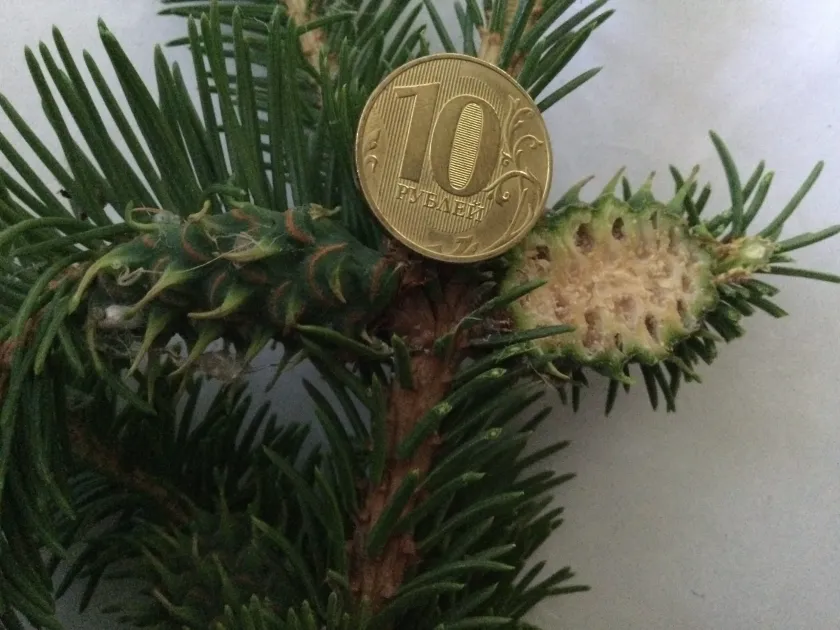
The most significant damage is the formation of galls, which look like small pineapples. These structures are the result of the insect's feeding activity, which forces the tree to grow abnormal tissue.
Once formed, these galls disrupt the normal growth of the shoot. This leads to the deformation of branches and can result in the stunted development of the entire spruce tree if the infestation is severe.
Heavy infestations can lead to premature needle drop. As the tree loses its foliage, its ability to photosynthesize decreases, making it more vulnerable to secondary infections or environmental stress.
The honeydew excreted by the aphids can promote the growth of sooty mold. This black fungal coating covers the needles, further blocking light and reducing the tree's health.
Signs of infestation
The characteristic pineapple-shaped galls on the spruce branches are the most unmistakable sign of an adelgid infestation. They start green and become woody and brown later in the season.
White, woolly tufts on the needles and twigs indicate the presence of the insect's protective waxy coating. During a heavy infestation, the tree may appear as if it is covered in dust or frost.
Yellowing or distorted needles are common symptoms. You may notice that the new spring growth looks twisted or unhealthy compared to older, unaffected branches.
The presence of ants on the spruce trees often indicates a pest problem. Ants are attracted to the sweet honeydew secretion produced by the adelgids while they feed.
In early spring, close inspection of the bud bases can reveal tiny clusters of dark eggs. These are often protected by the characteristic white filaments produced by the females.
Control measures
Managing the Spruce gall adelgid requires a combination of cultural practices and chemical control. Regular monitoring of the trees during early spring is essential for early detection.
Manual removal and destruction of the young, green galls is a highly effective control measure. This must be done before the galls open and the nymphs migrate to new growth.
Systemic insecticides are the most effective chemical treatment. These should be applied just as the nymphs begin to emerge from their eggs to ensure maximum mortality rates.
Always rotate insecticide products to prevent the development of pesticide resistance in the pest population. Ensure thorough coverage of all needle surfaces during application.
Maintain tree health through proper irrigation and fertilization. Healthy, vigorous trees are naturally more resilient to adelgid attacks and can better recover from minor infestations.
Taxonomy
- Latin name
- Sacchiphantes
- Order
- Hemiptera (bugs, aphids, leafhoppers)
- Family
- Adelgidae
- EPPO code
- SACHSP
Discussion
No discussions yet — be the first.