
Oak hook-tip
Sabra harpagula
Description
How to identify
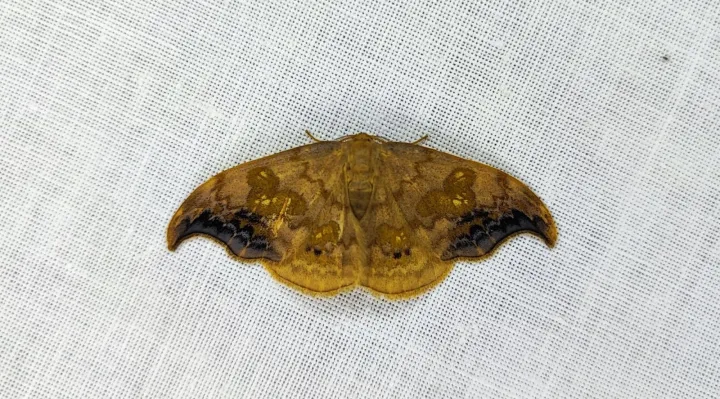
The Oak hook-tip Sabra harpagula is a moth belonging to the Drepanidae family. It is named for the distinctive falcate, hook-like shape of its forewing tips.
Adult moths have a wingspan ranging from 35 to 45 mm. Their wings exhibit an ocherous-yellow to reddish-brown coloration with dark transverse lines and small white spots.
The larvae (caterpillars) are uniquely identified by their body structure, featuring small tubercles and a prominent horn-like appendage at the rear of the abdomen.
The life cycle involves complete metamorphosis. Depending on the geographical region, it usually completes one generation per year, though sometimes two occur in warmer climates.
Overwintering takes place in the pupal stage within a tough, silken cocoon often spun between leaves that fall to the forest floor.
What it damages
The primary host plant is the oak (Quercus species), although the larvae are occasionally observed feeding on birch, linden, and alder.
The larvae primarily target the foliage. Early instars skeletonize the leaves, while older larvae consume the entire leaf blade, leaving only the primary veins intact.
Mass infestations can lead to significant defoliation, which causes physiological stress in trees, reduces annual growth rings, and stunts the development of young trees.
Repeated defoliation cycles weaken the tree's immune system, making it highly susceptible to opportunistic secondary pests and various wood-decaying fungal pathogens.
In landscape gardening, the damage significantly impacts the visual quality of trees, necessitating active monitoring and potential pest control interventions.
When it appears
The flight period for the first generation of adults occurs in late spring to early summer, typically between May and June, depending on local temperatures.
A partial second generation may emerge in late summer, which is generally more prevalent in southern ranges with longer growing seasons.
The larval activity, which is the most destructive phase, is observed throughout the mid-summer months, primarily from June through August.
Pupation typically begins in late summer or early autumn, after which the insect enters diapause to survive the winter conditions inside its cocoon.
Field monitoring for adult activity is best conducted at night, as these moths are attracted to artificial light sources.
Signs of infestation
Visible damage to leaf edges, presenting as large, irregular bite marks, is the most common early sign of an infestation.
Evidence of silken webbing between leaves or within the canopy is a clear indicator that larvae are present and feeding.
The presence of significant quantities of frass (larval droppings) on the ground underneath host trees during summer months indicates high feeding activity.
Direct visual inspection of the canopy can reveal the presence of larvae, recognizable by their distinct abdominal appendage and coloration.
Early leaf drop or thinning of the canopy during the peak growing season often suggests that the population density has reached damaging levels.
Control measures
Mechanical control, such as pruning and destroying infested leaf clusters, is practical only for small trees or isolated garden specimens.
Biological control using microbial insecticides like Bacillus thuringiensis is highly recommended as it targets lepidopteran larvae while sparing beneficial insects.
In larger forest stands, chemical treatments with insecticides should be applied during the early larval stages, following integrated pest management protocols.
Encouraging natural predators, such as insectivorous birds and parasitic wasps, plays a vital role in maintaining the population at non-harmful levels.
Regular forest health assessments are essential for early detection, allowing for rapid response before an outbreak causes widespread ecological or economic damage.
Taxonomy
- Latin name
- Sabra harpagula
- Order
- Lepidoptera (butterflies)
- Family
- Drepanidae
- EPPO code
- SABRHA
Discussion
No discussions yet — be the first.