
Rumina decollata
Rumina decollata
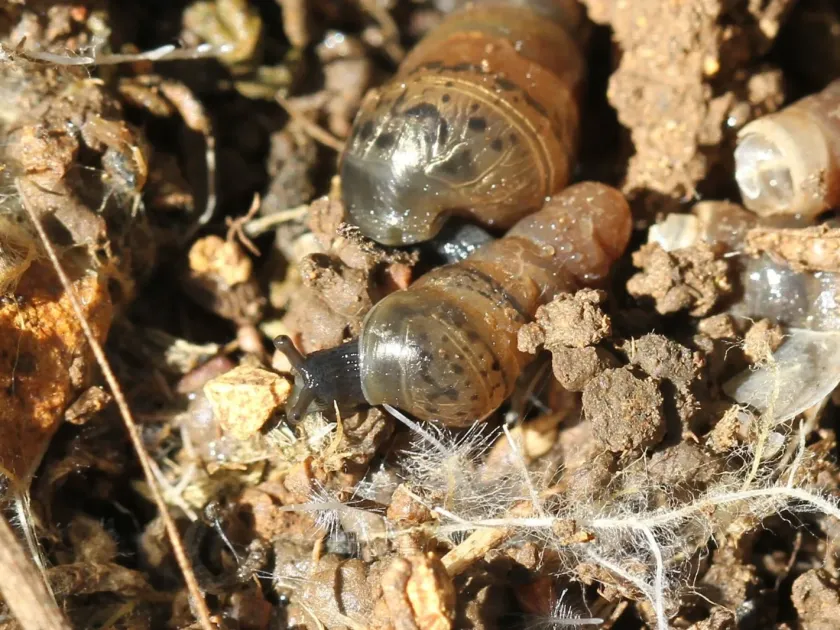
Description
How to identify
Rumina decollata, commonly known as the decollate snail, is a land snail belonging to the Achatinidae family. It is easily identified by its elongated, conical shell that typically measures between 30 and 50 millimeters in length.
A distinctive feature of the adult shell is its decollated tip, which appears blunt or truncated because the snail sheds the upper whorls as it matures. The color ranges from light brown to beige, often appearing slightly translucent.
These snails are nocturnal, spending the daylight hours buried in soil or hidden under garden debris to avoid dehydration. They thrive in moist environments and are most active during periods of high humidity or following rainfall.
They are hermaphroditic, which means every individual can produce eggs, leading to a high reproductive rate under favorable conditions. This biological trait allows them to colonize garden spaces very rapidly if food sources are abundant.
The life cycle is highly influenced by environmental factors such as soil moisture and temperature. In temperate climates, they can remain active for most of the year, provided there is enough ground cover for protection and moisture.
What it damages
As a generalist herbivore, Rumina decollata feeds on a wide range of plants, including ornamental flowers, vegetable seedlings, and soft plant tissues. They can cause severe economic losses in nurseries and home gardens alike.
While they are sometimes considered predators of other snails, they remain a significant pest to agriculture. They consume succulent leaves, stems, and even germinating seeds, often leaving nothing but stalks behind.
Signs of infestation
The most common sign of infestation is irregular, ragged feeding patterns along the edges of leaves. These holes look similar to those created by other garden slugs and snails, often appearing overnight.
Evidence of their presence includes the trail of dried mucus left on plant stems and soil surfaces. Gardeners can often locate them by lifting containers, stones, or mulch during the day to find them resting in the damp substrate.
Control measures
Cultural control practices are fundamental in managing this pest. Keeping the garden clear of debris, weeds, and fallen organic matter removes the damp, dark hiding spots necessary for their survival during the day.
Physical barriers such as copper tape, gravel, or coarse sand can be placed around sensitive plants. These materials create an uncomfortable texture that prevents the snails from crawling up to reach the foliage.
Chemical control involving molluscicides, particularly those based on iron phosphate, provides a targeted way to reduce populations. These treatments are often safer for pets and wildlife compared to older metaldehyde-based baits.
Manual collection in the evenings is a low-tech but highly effective method for small gardens. Removing individuals by hand after sunset can prevent them from reaching maturity and laying large batches of eggs.
Biological control involves encouraging the presence of natural predators. Toads, ground beetles, and certain species of birds frequently consume these snails, helping to balance the population naturally without chemical inputs.
Taxonomy
- Latin name
- Rumina decollata
- Order
- Molluscs
- Family
- Subulinidae
- EPPO code
- RUMIDE
Discussion
No discussions yet — be the first.