
Rumina decollata
Rumina
Description
How to identify
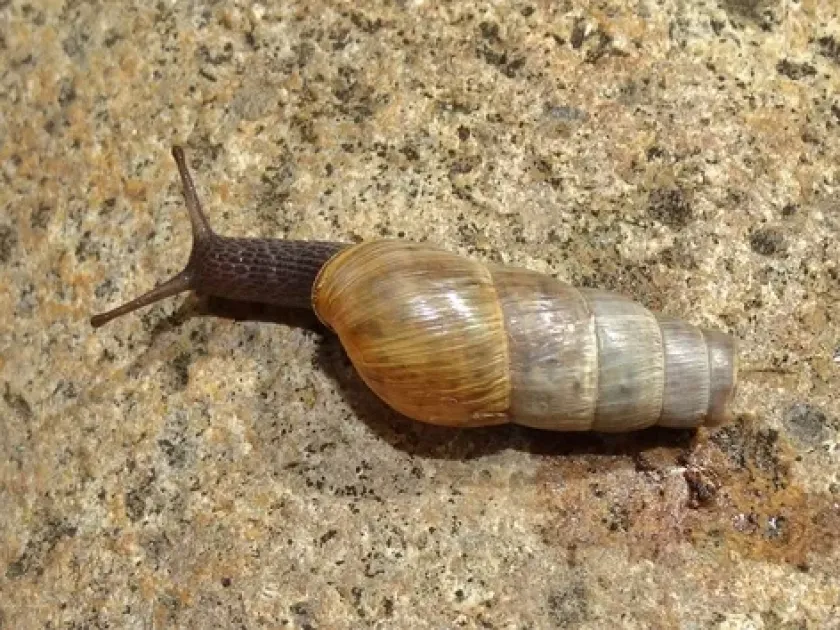
Rumina decollata, commonly known as the decollate snail, is a land snail belonging to the Achatinidae family. It is easily recognized by its elongated, conical shell, which usually features a truncated or decollated apex in adult specimens.
The shell color typically ranges from whitish to yellowish-brown, featuring distinct longitudinal ribs. The body of the snail is generally light, greyish-beige in color, and possesses the typical anatomy of terrestrial gastropods.
Unlike most garden snails, Rumina decollata is a predatory species that feeds on other snails, which has led to its use as a biological control agent in various agricultural regions.
Adult snails grow to approximately 40–50 mm in length. They are nocturnal by nature, spending their daylight hours buried beneath the soil surface or hidden under organic mulch to avoid dehydration.
Originally native to the Mediterranean region, this snail has been introduced to various parts of the world, where it has successfully established populations in temperate and subtropical climates.
What it damages
Despite their predatory behavior towards other snails, Rumina decollata can also act as an opportunistic herbivore, causing damage to tender vegetation and young crop seedlings.
They are known to feed on leafy greens, including lettuce, cabbage, and young vegetable starts, potentially causing significant losses in home gardens and commercial vegetable operations.
In ornamental gardens, they can cause aesthetic damage by chewing holes in leaves and stems of sensitive plants, leaving behind irregular, ragged edges that lower the plant's value.
Fruit and vegetables in contact with the ground are prone to being eaten by these snails, which create open wounds that facilitate secondary infections from fungi and bacteria.
Damage is typically more severe when the snail population density is high and food resources are scarce, leading them to shift their dietary preference towards easily accessible plant matter.
When it appears
The activity of Rumina decollata is highly dependent on humidity levels and ambient temperatures. They prefer moist conditions for movement and feeding.
During hot, dry summer months, or during periods of drought, the snails remain inactive and retreat deep into the soil to survive, waiting for the return of favorable moisture conditions.
Spring is generally the peak season for activity and reproduction, coinciding with the germination and early growth stages of most common garden vegetables.
Autumn, especially during rainy weather, marks another period of increased surface activity before the snails prepare for the winter slowdown.
The reproduction process involves laying eggs in soil cavities, from which juvenile snails hatch and immediately begin their search for food, contributing to the population cycle.
Signs of infestation
The primary indication of their presence is the appearance of ragged, irregularly shaped holes on leaves of vegetable crops and decorative garden plants.
Dried slime trails on the soil surface, greenhouse walls, or the stems of plants provide clear visual evidence that snails have been active during the previous night.
In the morning, one may find groups of snails hiding under pots, stones, or dense mulch layers near the base of damaged plants.
The presence of empty shells, often showing the characteristic truncated tip, on the soil surface serves as a reliable indicator that an active population is present.
- Ragged leaves and stems on seedlings.
- Visible slime trails on soil and garden beds.
- Presence of conical shells with decollated tips.
Control measures
Managing Rumina decollata requires a integrated approach, combining physical barriers, cultural practices, and, when necessary, chemical interventions.
Regular soil cultivation and tilling are effective cultural practices as they disrupt egg-laying sites and expose the soft-bodied snails and their eggs to desiccating conditions.
Physical barriers such as coarse sand, crushed eggshells, or copper tape can be placed around garden beds to deter snails from accessing the protected plants.
For chemical control, molluscicides containing iron phosphate are preferred as they are safer for the environment and pets while being highly effective against gastropod pests.
It is important to assess the population impact before starting drastic control measures, as Rumina decollata can sometimes help control other more destructive garden snails.
Taxonomy
- Latin name
- Rumina
- Order
- Molluscs
- Family
- Subulinidae
- EPPO code
- RUMISP
Discussion
No discussions yet — be the first.