

Pest · Diptera (flies) · affects Soybean, Winter wheat, Common sunflower
Especially harmful
Seedcorn maggot
Delia platura
Description
How to identify
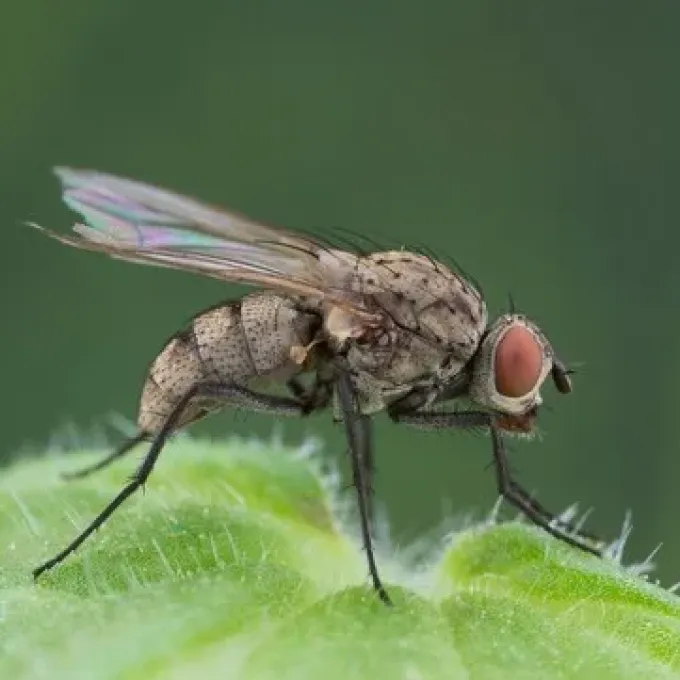
The seedcorn maggot (Delia platura) is a common agricultural pest belonging to the Anthomyiidae family. The adult fly is grayish-brown, measuring approximately 5 mm in length, and is often seen in fields during spring.
The eggs are small, white, and elongated, laid singly or in small clusters in soil cracks near decaying organic matter or emerging seeds. Females are highly attracted to the smell of decomposing crop residues and manure.
The larvae, known as maggots, are yellowish-white, legless, and reach about 7 mm in length. They have a tapered body with distinctive mouth hooks used for feeding on plant tissues.
Pupation occurs within a brown, oval-shaped puparium found in the soil. These pupae are the primary overwintering stage of the pest, allowing them to survive cold temperatures.
This species is highly prolific, often completing multiple generations per year depending on regional temperature variations and host availability.
What it damages
The seedcorn maggot is a polyphagous pest, meaning it attacks a wide variety of crops including corn, soybeans, beans, cucumbers, peas, and various vegetable species.
Damage is primarily caused by larvae feeding on germinating seeds. They penetrate the seed coat, destroying the embryo and preventing germination, which leads to reduced plant stands.
If seeds manage to germinate, larvae may feed on the underground stems or cotyledons, leading to stunted growth, wilting, and often plant death.
Heavy infestations are frequently associated with cool, wet soil conditions that slow seed germination, providing a longer window of opportunity for the maggots to feed.
Economic loss is often significant because replanting is frequently required to achieve a uniform field stand, increasing production costs and delaying maturity.
When it appears
Adult flies emerge in early spring as soon as soil and air temperatures become favorable, typically above 10–12°C.
The timing of the first generation emergence often coincides with the planting season, making newly sown seeds highly susceptible to attack.
Multiple generations occur throughout the growing season, with subsequent generations continuing to affect late-planted crops or vulnerable vegetable patches.
Environmental conditions play a major role: warm and dry weather tends to limit activity, whereas cool, damp soil encourages larval success and survival.
In late autumn, the pupae undergo diapause, settling deeper into the soil profile to endure the winter months until the next season begins.
Signs of infestation
The most visible sign of infestation is irregular or "gappy" plant stands in the field shortly after emergence, where seedlings failed to come up.
Inspecting the soil around empty seed slots usually reveals damaged, decaying seeds with tunneling larvae or the presence of yellowish-white maggots.
Young plants may exhibit yellowing or sudden wilting. When pulled from the ground, they often detach easily due to the destruction of the underground root and stem structure.
Fields with high levels of organic matter or recently incorporated manure are at higher risk, as these materials attract egg-laying females.
- Missing plants in crop rows.
- Seedlings that fail to emerge or appear stunted.
- Visible larvae found inside seeds or stems.
Control measures
Effective management begins with cultural practices, such as ensuring good soil drainage and avoiding planting in excessively cold or waterlogged soil.
Tillage practices that incorporate organic matter well before planting help reduce the attractiveness of the soil to egg-laying flies.
Seed treatments using systemic insecticides are the most effective chemical control method to protect vulnerable seeds during the critical germination phase.
Crop rotation and proper timing of planting—targeting periods when soil conditions favor rapid germination—are crucial for minimizing exposure to the pest.
If chemical application is necessary, soil-applied or foliar insecticides should be used according to local thresholds and regional agricultural guidelines.
Content graph
Connections · Seedcorn maggot
Most often together:
Marketplace
Products · 7


Biology
Taxonomy
- Latin name
- Delia platura
- Order
- Diptera (flies)
- Family
- Anthomyiidae
- EPPO code
- HYLEPL
Community
Discussion
No discussions yet — be the first.