
Roeselia
Roeselia
Description
How to identify
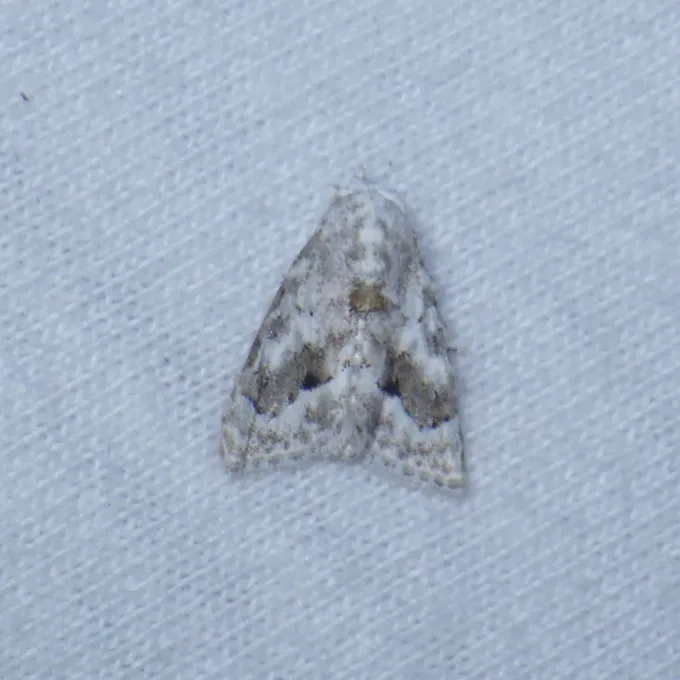
Roeselia is a genus of moths belonging to the family Noctuidae, or more recently classified within the subfamily Nolidae. The adult moth is small, with a wingspan of 25–30 mm, featuring protective gray or ash-colored patterns that allow it to blend perfectly with tree bark.
Roeselia caterpillars have a distinct appearance: their bodies are covered in tufts of hair, resembling some tussock moths. The larvae are usually gray-brown to black in color, often marked with bright spots along the dorsal line, which serves as a warning mechanism against potential predators.
The pupae develop inside dense, silken cocoons, which the pest cleverly disguises with bits of bark, pine needles, or leaf fragments. This stage is most commonly how the insect survives unfavorable weather conditions during the winter.
The life cycle includes a complete metamorphosis: egg, larva (caterpillar), pupa, and adult. Depending on the climatic zone, the pest may produce one or two generations per year, which significantly impacts the spread of the population in orchards.
For precise identification, agronomists use pheromone traps placed in tree canopies. Analyzing the catch composition allows for determining the peak of adult flight and initiating timely protective measures in the field.
What it damages
The primary food sources for Roeselia caterpillars are deciduous trees, including various orchard fruits. At-risk species include apple, pear, and plum trees, as well as forest trees like oak and beech, which often grow near industrial fruit orchards.
The pest prefers young leaves and buds at the start of the growing season. When population density is high, the caterpillars may move on to feed on fruit sets, causing premature fruit drop or severe surface damage that ruins the market value.
Beyond direct damage to vegetative organs, Roeselia causes indirect harm by weakening the plant's immune system. Damage sites often become entry points for fungal spores and bacteria, leading to the development of rot and bark necrosis.
The most significant damage occurs in years with a prolonged, warm spring, which synchronizes caterpillar emergence with the budding phase. In such conditions, even a moderate number of pests can lead to significant crop loss.
In nurseries and young orchards, Roeselia can cause severe defoliation of branches. This hampers the development of young saplings and negatively affects their ability to harden off and prepare for the winter season.
When it appears
Adult flight typically occurs in late spring or early summer, depending on the regional temperature regime. During this time, moths are active at dusk and night, feeding on nectar and laying eggs.
Mass emergence of larvae occurs in the second half of spring. This is the period when caterpillars are most active and cause the most significant damage, as their rapid growth phase requires a large volume of plant nutrients.
Pupation takes place by mid-summer. A second generation (if applicable to the region) is observed in August, when second-generation larvae begin preparing for winter diapause by feeding on older leaves.
The insect overwinters as a pupa or a caterpillar protected by a cocoon. The pest chooses sheltered spots such as bark crevices, branch crotches, or leaf litter, making it highly resistant to harsh winter temperatures.
For seasonal monitoring, experts recommend regular visual inspections of tree trunks and the use of light traps. This helps track population dynamics and forecast potential threats to the coming harvest.
Signs of infestation
One of the main signs of Roeselia presence is the existence of silken cocoons on tree trunks and main branches. Even after the moths have emerged, the empty cocoons often remain visible on the bark for a long time.
A characteristic sign of larval activity is the appearance of "windows" on the leaves or complete defoliation down to the leaf veins. Accumulations of caterpillar frass (droppings) on the leaves below feeding sites are also common indicators.
Damaged buds in the spring appear chewed, often showing signs of wilting or drying out. During heavy infestations, the tree canopy may look ragged, and a significant amount of leaf debris can be found on the ground.
At the beginning of the season, gardeners may notice increased sap flow from sites where buds or bark were damaged. This often attracts ants and wasps, which can serve as an indirect indicator of pest activity on a specific tree.
Sometimes, the presence of Roeselia is signaled by increased bird activity around the trees as they search for larvae. Careful observation of the garden's wildlife helps identify the pest before the damage reaches a critical level.
Control measures
Prevention and cultural practices are the primary methods of control. These include cleaning trunks of loose bark where cocoons may hide and clearing plant debris in the fall, which serves as a winter habitat for the pest.
Applying biological agents based on Bacillus thuringiensis is highly effective against young larvae. These products are safe for beneficial insects and the environment, making them ideal for integrated pest management systems.
In cases of high infestation, the use of systemic or contact-stomach insecticides is justified. Treatments should be timed to coincide with mass larval emergence to ensure the pests are eliminated before they cause extensive damage to the fruit.
It is recommended to rotate insecticides from different chemical groups to prevent the development of resistance. Always strictly follow the safety intervals and label instructions for each specific product used.
- Cleaning tree trunks of dead bark.
- Using sticky trap bands in the spring.
- Encouraging natural predators (entomophages and birds).
- Timely application of foliar insecticides.
Taxonomy
- Latin name
- Roeselia
- Order
- Lepidoptera (butterflies)
- Family
- Nolidae
- EPPO code
- ROESSP
Discussion
No discussions yet — be the first.