
Riptortus linearis
Riptortus linearis
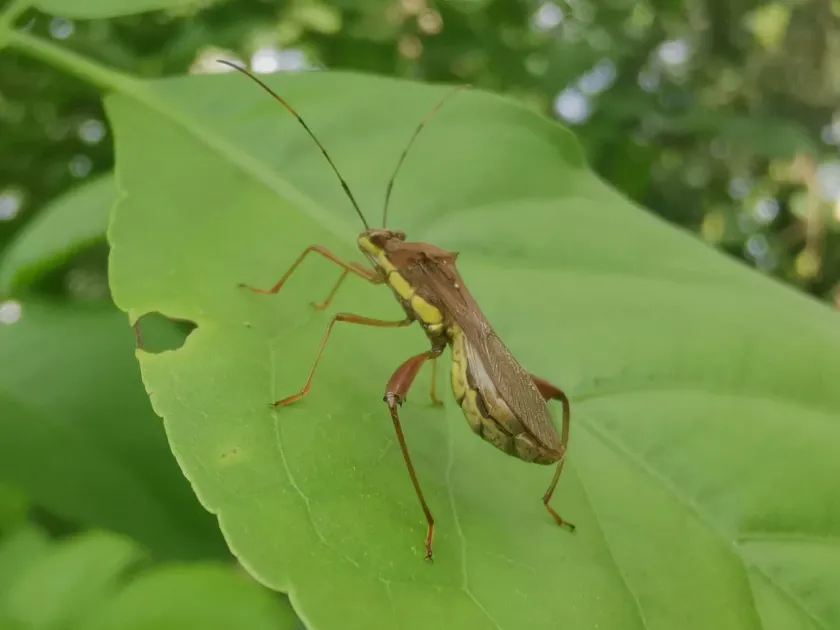
Description
How to identify
Riptortus linearis, commonly known as the bean bug, belongs to the family Alydidae in the order Hemiptera. Adult insects are slender, measuring approximately 15–17 mm in length.
Their bodies are typically brown or reddish-brown, distinguished by a thin, pale or white longitudinal stripe running along the sides of the abdomen and thorax.
The head is relatively broad with four-segmented antennae. They possess long, powerful legs, enabling them to move rapidly between host plants in search of food or mating partners.
Nymphs, especially in the early stages of development, exhibit Batesian mimicry by resembling ants, which helps protect them from predators in the field.
The life cycle undergoes incomplete metamorphosis, consisting of five nymphal instars before reaching the sexually mature adult stage.
What it damages
This species primarily attacks leguminous crops, with soybeans, cowpeas, mung beans, and kidney beans being the most frequently damaged hosts.
Both adults and nymphs feed by inserting their needle-like mouthparts into plant tissues, primarily targeting the developing pods and seeds of the host plant.
Feeding on pods leads to the shriveling of seeds, malformation, and a significant reduction in the overall seed weight and marketable yield quality.
Furthermore, the physical damage caused by feeding punctures facilitates the entry of various pathogenic fungi and bacteria into the pods, resulting in rotting.
Under heavy infestations, the entire crop yield can be devastated, making it a critical pest to monitor throughout the reproductive stages of legumes.
Signs of infestation
The primary symptom of an infestation is the presence of distorted or underdeveloped pods, which appear thinner than healthy ones upon inspection.
Close observation of the pod surface reveals small dark lesions or sunken spots, indicating where the insects have pierced the skin to feed on the developing seeds.
In infested fields, one may observe the adults resting on the upper canopy of the plants or fleeing rapidly upon being disturbed by human presence.
The presence of ant-like nymphs roaming on leaves and stems during the mid-season is a clear indicator that the pest population is actively reproducing.
Farmers often notice damage starting at the edges of the field, especially when the soybean crop is adjacent to alternative host plants or weedy areas.
Control measures
Cultural control practices, such as removing weeds and alternative wild hosts surrounding the field, are essential to reduce the pest's overwintering sites.
Adjusting planting dates to ensure that the critical pod-filling stages do not coincide with the peak population of the bean bug can significantly minimize losses.
Chemical control involving systemic insecticides is often necessary when the population density exceeds the economic threshold during the R5-R6 growth stages.
Regular field scouting using sweep nets is highly recommended to assess the population size and determine the appropriate timing for any pesticide application.
Adopting integrated pest management (IPM) strategies, including the use of selective chemicals that spare natural enemies, helps maintain the ecosystem balance.
Taxonomy
- Latin name
- Riptortus linearis
- Order
- Hemiptera (bugs, aphids, leafhoppers)
- Family
- Alydidae
- EPPO code
- RIPTLI
Discussion
No discussions yet — be the first.