
Rice bug
Leptocorisa acuta
Description
How to identify
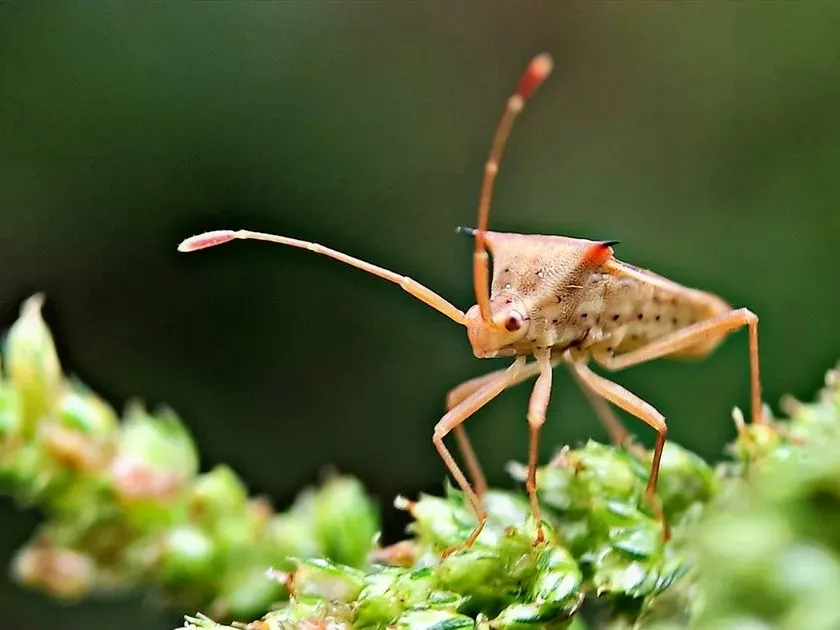
The rice bug, scientifically identified as Leptocorisa acuta, is a member of the Alydidae family. It is a slender, elongated insect that measures approximately 14 to 17 millimeters in length, usually displaying light brown or greenish hues.
The insect is characterized by its long, thin legs and antennae, which are adapted for moving quickly across the plant canopy. Both nymphs and adults share a similar body structure, although nymphs lack fully formed wings.
What it damages
The primary host for this pest is rice, although it also infests various other grasses and cereals, including sorghum, millet, and corn. It is particularly damaging in tropical and subtropical rice-growing regions.
The damage is caused by the insect using its piercing-sucking mouthparts to feed on the milky endosperm of developing rice grains. This feeding activity results in empty or discolored grains, leading to significant yield losses.
When it appears
The biological cycle of Leptocorisa acuta consists of egg, nymph, and adult stages. Females typically lay eggs in linear clusters on leaves, stems, or sheaths of the host plant.
Nymphal development involves five instars, spanning about three to four weeks before reaching adulthood. The pest thrives in warm, humid climates, allowing it to produce multiple generations throughout the rice-growing season.
Signs of infestation
Field inspection reveals the presence of "pecky rice," characterized by dark, spotted, or empty grains within the panicle. Plants may also exhibit a general decline in health as the bug sucks vital sap.
A notable sign is the distinct, foul-smelling odor produced by the insects when they are disturbed. Large populations can often be detected by this odor while walking through the fields.
Control measures
Integrated pest management starts with sanitation, which includes removing alternative host grasses and weeds from the edges of rice paddies to minimize the pest's reservoir.
Biological control agents, such as egg parasitoids, play a crucial role in regulating populations. Conserving these natural enemies is essential for sustainable agriculture.
Chemical control involving systemic or contact insecticides may be necessary during the heading and grain-filling stages if the population exceeds the economic injury level.
Taxonomy
- Latin name
- Leptocorisa acuta
- Order
- Hemiptera (bugs, aphids, leafhoppers)
- Family
- Alydidae
- EPPO code
- LEPRAC
Discussion
No discussions yet — be the first.