
Alydus
Alydus
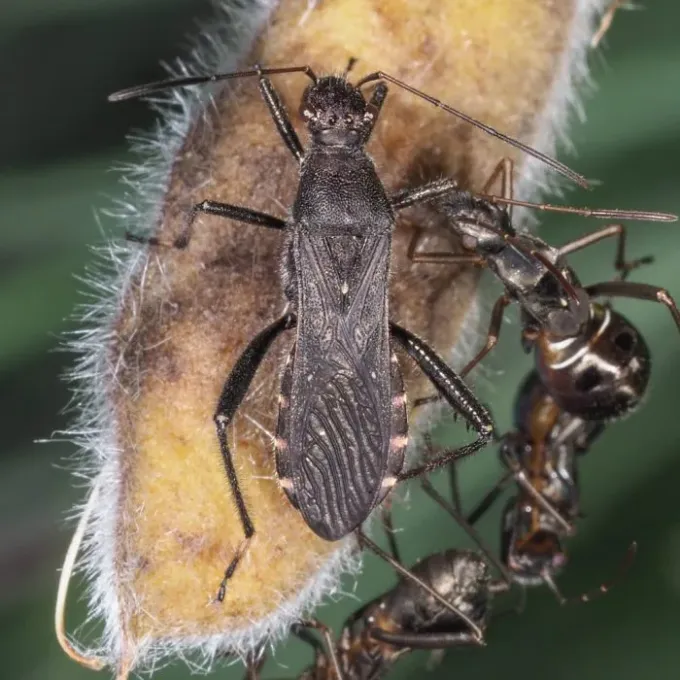
Description
How to identify
Alydus is a genus of bugs in the family Alydidae, order Hemiptera. These insects are easily recognized by their slender, elongated body shape and, in the nymphal stage, by their remarkable mimicry, which makes them look like ants.
Adult insects are characterized by long legs and antennae. Their coloration typically blends in with dry vegetation, stems, and soil, providing excellent camouflage in agricultural environments during the summer months.
The head of an Alydus bug is equipped with a piercing-sucking mouthpart. This specialized apparatus allows them to penetrate the tough outer layers of plants to feed on the nutrient-rich sap within the tissues.
They possess well-developed wings, allowing them to migrate efficiently between fields in search of suitable host plants. Their activity is heavily influenced by ambient temperature, favoring sunny and warm conditions.
As members of the Hemiptera order, they undergo incomplete metamorphosis. The life cycle involves distinct egg, nymph, and adult stages, with each stage requiring specific environmental conditions for survival.
What it damages
Alydus bugs primarily target legume crops, including soybeans, lupins, and various beans. They are most destructive during the pod-filling stage, which is a critical period for yield formation.
By piercing the pod wall, the bugs extract fluid from the developing seeds. This feeding behavior results in shriveled, malformed, or discolored seeds, leading to a significant reduction in grain weight and market value.
The damage caused by these insects often extends beyond direct consumption. The puncture wounds provide entry points for secondary pathogens, such as fungi and bacteria, which can cause rotting of the entire pod.
Heavy infestations can lead to substantial yield losses. In addition to physical damage, the physiological stress placed on the plant can result in stunted growth and delayed maturity of the crop.
Because they feed on the reproductive parts of the plant, their impact is particularly severe in seed-production fields, where seed quality and germination capacity are of primary importance.
When it appears
The seasonal activity of the Alydus bug begins in late spring. As temperatures rise, overwintering adults emerge from dormancy to seek out early-growing host plants, including weeds and legumes.
The population peak typically occurs in mid-summer, coinciding with the flowering and pod-set stages of crops. This period requires vigilant field scouting to prevent population explosions.
The bug can complete one or more generations per year depending on the climate. Warm and dry weather conditions are generally conducive to faster development and higher survival rates for nymphs.
As autumn approaches and temperatures drop, adults begin moving toward overwintering sites. They often seek shelter under crop residues, leaf litter, or along field margins and forest edges.
Temperature monitoring throughout the growing season is crucial. A delayed arrival of frost can extend the activity period of the bugs, potentially leading to higher pest pressure in the following year.
Signs of infestation
The presence of Alydus is often first detected through visual inspection of the pods. Small, dark pinprick-like holes on the surface of the pods are primary indicators of their feeding activity.
When pods are opened, the presence of damaged, spotted, or improperly filled seeds serves as a confirmation of their presence. These symptoms are typical of piercing-sucking pest damage.
Nymphs are often found aggregated on the stems or near the flower clusters of host plants. Sweep-netting is the most effective method for detecting and quantifying the insect population in a field.
General plant decline, including premature yellowing or wilting of the foliage, can also signal a high infestation, especially when this occurs in localized patches across the field.
In seed-producing fields, laboratory analysis of seed quality often reveals "stippled" or mottled seed coats, which are telltale signs of historical damage caused by these bugs during the growth phase.
Control measures
Managing the Alydus bug requires an integrated pest management (IPM) approach, combining cultural, mechanical, and chemical tactics to maintain pest populations below the economic injury level.
Cultural control is highly effective. Removing weeds, particularly wild legumes that act as host reservoirs, from field edges significantly reduces the risk of bug migration into the main crop.
Chemical control should be used judiciously, applying insecticides only when scouting confirms that the population has exceeded the economic threshold, preferably using products safe for pollinators.
- Implement crop rotation to disrupt the bug's life cycle.
- Use pheromone or sticky traps to monitor adult arrival.
- Ensure rapid and uniform crop development through proper irrigation.
- Tillage practices in the fall to bury crop residues where bugs overwinter.
Biological control, including the encouragement of natural predators like spiders and parasitic wasps, can play a vital role in maintaining the balance of the agroecosystem and reducing pest pressure.
Taxonomy
- Latin name
- Alydus
- Order
- Hemiptera (bugs, aphids, leafhoppers)
- Family
- Alydidae
- EPPO code
- ALYDSP
Discussion
No discussions yet — be the first.