
Camptopus lateralis
Camptopus lateralis
Description
How to identify
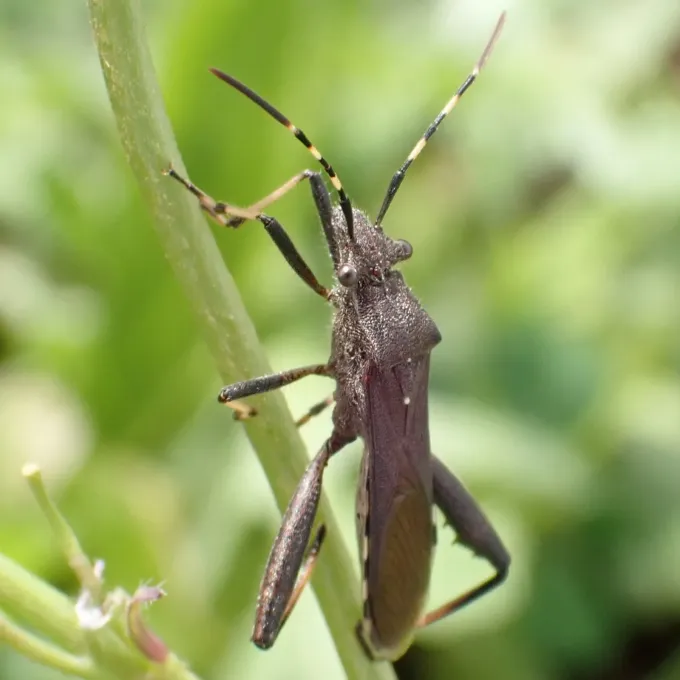
Camptopus lateralis is a species of insect belonging to the order Hemiptera and the family Alydidae. These insects are known for their slender body shape and specific morphology of the hind legs, which is typical for the family.
Adult insects are generally brown or brownish-gray, with distinctively shaped lateral edges of the pronotum. The body size typically ranges between 10 and 12 millimeters, making them clearly visible during field inspections.
The nymphs go through several instars before reaching maturity, often mimicking ants in their early stages, which serves as a defensive strategy against predators in their environment.
They prefer open habitats, including meadows, grasslands, and field margins. Their daily activity is heavily influenced by ambient temperature and relative humidity levels.
Well-developed sensory organs allow these bugs to efficiently locate host plants during the most vulnerable periods of plant growth and seed development.
What it damages
This pest primarily affects legume crops, such as clover, alfalfa, and various grain legumes. These bugs utilize their piercing-sucking mouthparts to feed on plant sap.
Significant damage occurs when the insects feed on developing seeds, pods, and young stems. This feeding behavior results in decreased yields and reduced quality of the harvested produce.
In cases of high population density, the pest can cause withering of inflorescences and premature dropping of seeds. Damaged pods are often deformed, rendering the crop less marketable.
Beyond direct feeding damage, the punctures created by the bug allow entry for secondary pathogens, which can increase the incidence of fungal and bacterial infections in the crop.
The economic impact of this pest is more pronounced in drought years when wild host plants become scarce, forcing the insects to migrate into cultivated fields.
When it appears
Adults overwinter in forest litter, under plant debris, or in soil crevices. As spring temperatures rise, they emerge from their hibernation sites to begin their active season.
The peak activity and reproduction period usually occur in summer, specifically during June and July. During this time, mating takes place followed by egg-laying on host plants.
The life cycle typically consists of one or two generations per season, depending on regional climatic conditions. Migration back to hibernation sites begins as temperatures drop in late autumn.
Throughout the growing season, overlapping generations can often be found, meaning different life stages (nymphs and adults) are present in the field simultaneously.
The optimal temperature range for development is between 22 and 28 degrees Celsius, which allows for rapid progression from egg to adult stages under moderate moisture levels.
Signs of infestation
Visible signs of infestation include wilting patches in the field. Microscopic puncture marks on stems, leaves, and pods are clear indicators of the bug's presence.
Detection is often achieved by inspecting inflorescences or by using a sweep net to assess the population density within the crop canopy.
- Deformed, shriveled pods and seeds.
- Premature yellowing of foliage in affected areas.
- Mass shedding of immature seeds and lower germination rates.
A specific defensive odor produced by the insect's glands can sometimes be detected when high numbers of these bugs are present in the field.
A decline in crop productivity during the pod-filling stage is a critical signal that professional phytosanitary assessment is required.
Control measures
Protection strategies rely on agronomic practices that disrupt the pest's overwintering sites, such as deep autumn plowing and thorough weed control on adjacent lands.
Crop rotation is essential to prevent the buildup of pest populations in specific areas. Avoid planting susceptible legumes near unmanaged pastures or wild meadows.
Chemical control using insecticides is recommended only when the economic injury level is exceeded. Use only registered insecticides that are safe for the specific crop variety.
Biological control methods include maintaining populations of natural enemies, such as parasitic wasps and predatory insects, which help regulate bug numbers in natural ecosystems.
Regular monitoring using yellow sticky traps or systematic field scouting allows for early detection of population growth and ensures timely intervention to protect the crop.
Taxonomy
- Latin name
- Camptopus lateralis
- Order
- Hemiptera (bugs, aphids, leafhoppers)
- Family
- Alydidae
- EPPO code
- CAMSLA
Discussion
No discussions yet — be the first.