
Camptopus
Camptopus
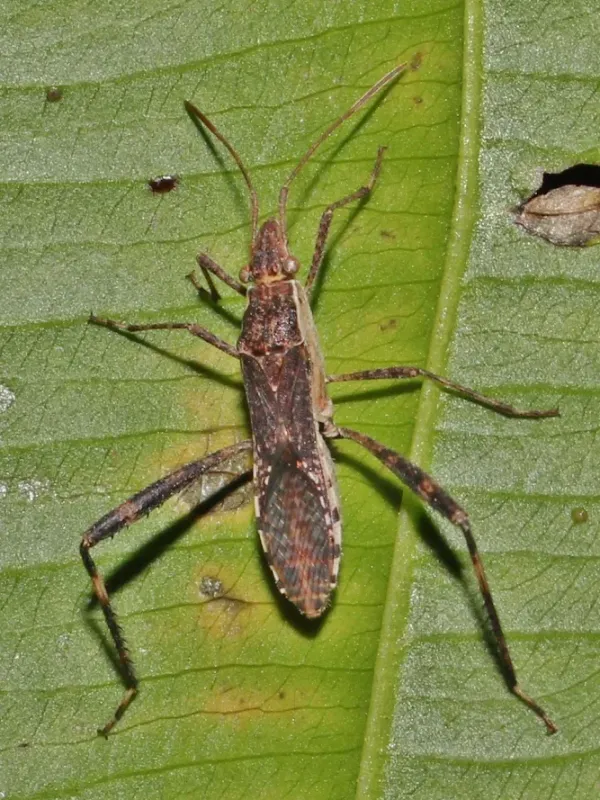
Description
How to identify
Camptopus (Camptopus lateralis) belongs to the family Coreidae (leaf-footed bugs) in the order Hemiptera. This insect is characterized by an elongated body, usually ranging from 10 to 15 millimeters in length. Its coloration varies from grayish-brown to dark brown, which provides excellent camouflage among plant debris.
Special attention should be paid to the hind femora of the adult, which are noticeably thickened in this species. In males, they are often equipped with pronounced spines on the ventral side. The head is relatively small with well-developed compound eyes, and the antennae consist of four segments, with the last segment usually being darker or specialized in shape.
Camptopus larvae undergo several developmental stages, during which they gradually acquire the features of an adult. At early stages, they have softer cuticles and may be greenish or yellowish in color. The development of larvae is closely linked to the presence of generative organs on the host plant, which they actively feed upon.
The biology of the species involves one or two generations per season, depending on the climatic zone. Usually, adults overwinter by hiding under fallen leaves, in plant litter, or in other dry, protected areas in fields and near forest belts.
In natural conditions, Camptopus prefers well-lit and warm areas. Adults are capable of active flight, which allows them to quickly colonize new crop fields during the peak flowering and pod-formation stages of target agricultural crops.
What it damages
The primary damage is caused by both adults and larvae, which are typical phytophages. They primarily target plants in the legume family (Fabaceae). The most significant harm occurs during the formation of generative organs when the pest begins to suck cell sap from the tissues.
The pest pierces the walls of young pods with its proboscis and damages the developing seeds. This leads to the disruption of normal fruit development, deformation, and partial or complete underdevelopment of seeds inside the pod. Secondary infections often develop at the puncture sites, further reducing the quality of the harvest.
Considerable economic losses are observed in crops such as alfalfa, vetch, lentils, and other forage or grain legumes. Heavy infestation leads to the shedding of young ovaries, which critically impacts the final seed yield. Damaged seeds lose their viability and commercial value.
In dry summer conditions, the harmfulness of Camptopus increases because plants weakened by moisture stress are more sensitive to nutrient loss. A mass outbreak of the pest can lead to losses of up to 20–30% of the legume harvest if timely control measures are not taken.
In addition to direct impact on seeds, the insects contribute to weakening the plant's overall immunity. Due to the disruption of nutrient flow to the fruits, the plant may slow its growth and development, making it more vulnerable to other pest species and pathogenic microorganisms.
Control measures
The protection system against Camptopus is based on a combination of agricultural and chemical measures. The most important step is timely weed control, especially the removal of leguminous weeds that serve as reservoirs for the pest before it migrates to crop fields. Deep autumn plowing helps destroy overwintering sites for adults.
Crop rotation is an essential requirement for reducing population density. Avoiding continuous planting of legume crops on the same field limits the food source for the pest. Spatial isolation of new plantings from previous-year fields also significantly slows down the migration of the bugs.
Chemical control is applied when the pest population reaches the economic threshold. It is recommended to use systemic or contact-stomach insecticides authorized for use on these specific crops. Spraying should be carried out during morning or evening hours to increase efficacy.
Biological control involves creating conditions for the activity of the bug's natural enemies, such as parasitic wasps and predatory entomophages. In some regions, the release of Trichogramma egg parasitoids proves effective, as they reduce the fertility of the Camptopus population during the spring-summer period.
Monitoring pest density using an entomological sweep net allows for timely decisions regarding chemical treatment. Regular field inspections during the flowering and pod-formation phases help identify breeding hotspots before the insects can cause significant damage to the seed material.
Taxonomy
- Latin name
- Camptopus
- Order
- Hemiptera (bugs, aphids, leafhoppers)
- Family
- Alydidae
- EPPO code
- CAMSSP
Discussion
No discussions yet — be the first.