
Bean bug
Riptortus clavatus
Description
How to identify
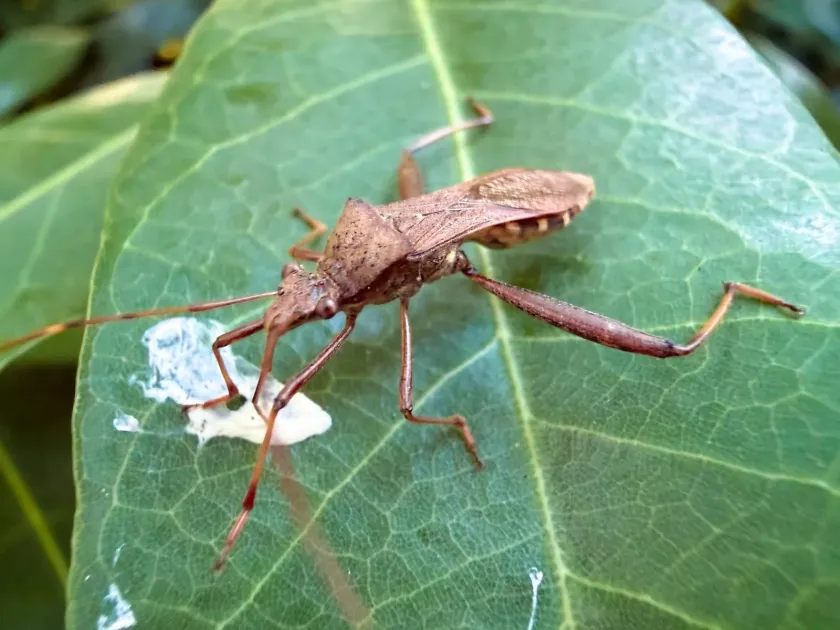
The bean bug (Riptortus clavatus) is a member of the Alydidae family in the order Hemiptera. These insects have a slender, elongated body measuring approximately 15–17 mm, typically ranging in color from yellowish-brown to dark brown.
A key identifying feature of the bean bug is the presence of a distinct light-colored stripe running along the sides of the abdomen. They possess long, thin legs and antennae that are characteristic of the species, making them distinguishable from other similar-looking bugs.
During their developmental stages, the nymphs mimic ants, which is an evolutionary adaptation to avoid predators. As they molt through five instars, they gradually lose this ant-like appearance and take on the more robust form of the adult bug.
The lifecycle and the number of generations per year are highly dependent on the local climate. In tropical and subtropical regions, the bean bug can complete multiple generations in a single season, leading to rapid population growth.
Adults typically overwinter in protected areas, such as leaf litter, plant debris, or just beneath the soil surface. They emerge in the spring to feed on wild hosts before migrating to cultivated legume crops as they begin to flower.
What it damages
The bean bug is a significant pest for various leguminous crops, with soybean being the primary target. Other susceptible crops include green beans, peas, and chickpeas, which are frequently damaged during the reproductive stages.
The adult and nymph stages use their piercing-sucking mouthparts to penetrate the pods. They feed directly on the developing seeds, which prevents the seeds from filling properly and leads to severe reductions in yield and seed weight.
Damage to the seeds is often accompanied by quality degradation. The feeding punctures can serve as entry points for secondary infections, such as fungi and bacteria, which cause seed rotting and internal discoloration, making the crop unmarketable.
In severe infestations, the bean bug can cause pod abortion or empty pods, as the plant reacts to the feeding damage by shedding the compromised reproductive parts. This leads to uneven pod development and thinning of the stand.
Feeding activity also disrupts the physiological processes of the plant. The plant diverts energy toward healing tissues rather than grain development, resulting in stunted growth and a significant loss in total biomass production for the affected field.
Signs of infestation
The most reliable sign of bean bug activity is the presence of adult insects on the plants. They are most visible during the early morning or late afternoon when they bask on the pods or stems of the legume plants.
Small, dark, necrotic spots on the exterior of the pods are classic indicators of feeding punctures. These spots often cluster around the areas where the bug has inserted its stylet to reach the developing seed inside the pod.
When pods are opened, the seeds themselves often display lesions, shriveling, or abnormal coloration. Sometimes, the seed will appear completely flat, as the bug has successfully drained all the nutrient content from the embryo.
The presence of fecal spots on the leaves and pods is another indicator of a recent infestation. Under humid conditions, these spots can promote the growth of sooty mold, which creates a dark, dusty appearance on the plant surfaces.
Yellowing of the foliage and premature senescence of the plant are often observed in fields with high pest pressure. These symptoms reflect the overall stress placed on the plant due to the loss of sap and nutrients to the feeding bugs.
Control measures
Effective management begins with strict field sanitation. Removing host weeds and crop residues after harvest helps eliminate overwintering sites, significantly reducing the pest population in the subsequent growing season.
Chemical control is often required when population levels exceed the economic injury threshold. Systemic insecticides are generally the most effective, especially if applied during the R3-R5 growth stages of soybeans, when pod development is most vulnerable.
Biological control plays a crucial role in managing bean bug populations. Various parasitic wasps and egg predators naturally suppress the bug population; therefore, choosing selective insecticides that do not harm beneficial insects is vital.
Monitoring is essential for timely intervention. Using yellow sticky traps or sweep netting, farmers can estimate the population density and decide on the necessity of spraying based on the number of insects per meter of row.
Implementing integrated pest management (IPM) techniques, such as crop rotation and the use of resistant varieties, can provide long-term benefits. These methods reduce reliance on chemical sprays and promote a more sustainable balance in the agroecosystem.
Taxonomy
- Latin name
- Riptortus clavatus
- Order
- Hemiptera (bugs, aphids, leafhoppers)
- Family
- Alydidae
- EPPO code
- RIPTCL
Discussion
No discussions yet — be the first.