
Riptortus
Riptortus
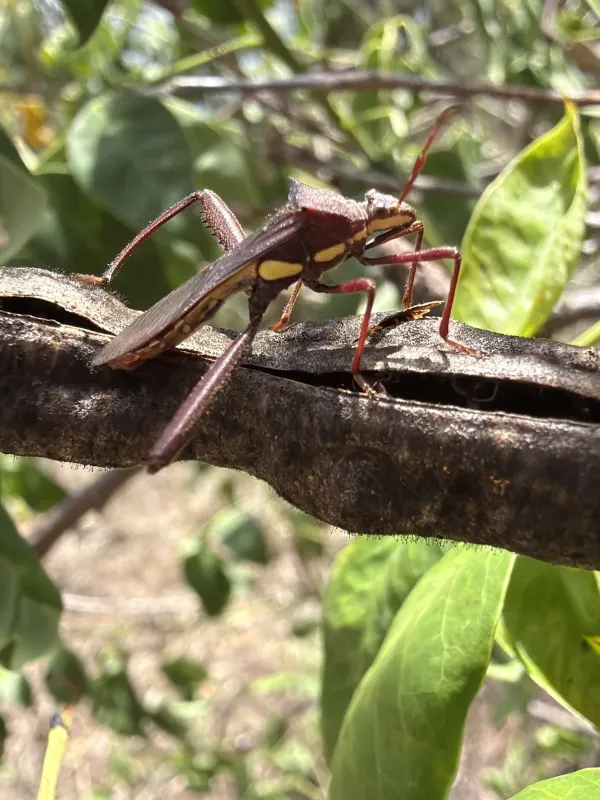
Description
How to identify
The genus Riptortus belongs to the family Alydidae, commonly known as broad-headed bugs. These insects are characterized by their slender bodies, usually measuring 13 to 17 mm in length.
Adults typically exhibit a brown or reddish-brown coloration. A key identification feature is the presence of pale longitudinal stripes along the sides of the abdomen, making them relatively distinct.
Nymphs, especially in early stages, show a remarkable resemblance to ants. This mimicry is an evolutionary adaptation that helps them avoid predation during their vulnerable development phases.
The head is broad with prominent compound eyes and long antennae, which are essential for navigating the dense canopy of legume crops where they spend most of their time.
The hind legs are noticeably thickened in adults, featuring a row of sharp spines on the femora. This structure provides them with the agility needed for jumping or quick movement when disturbed.
What it damages
Riptortus species are major pests of various legumes, with soybeans being their primary target. They use their piercing-sucking mouthparts to feed on developing pods and seeds.
Feeding on young pods causes the seeds to shrivel or deform. Because the bugs inject digestive enzymes while feeding, the damaged seeds often develop necrotic spots or fungal infections.
When feeding occurs during the early reproductive stages of the plant, it can lead to flower and pod abortion, resulting in significant yield losses for the farmer.
The damage often reduces the grain quality, affecting its weight, oil content, and germination rate, which is a major concern for seed production farms.
High infestation levels can lead to substantial reduction in total yield, with some studies showing losses exceeding 40% if control measures are not implemented during the peak season.
When it appears
The life cycle of Riptortus is highly influenced by seasonal temperatures. In temperate climates, they typically complete one or two generations per growing season.
Adults overwinter in sheltered areas, such as leaf litter, tall grass, or agricultural debris near the fields. They emerge in the spring when temperatures rise consistently.
The most critical period for crops is during the flowering and pod-filling stages. This is when the pest population typically peaks and migrates into soybean or other legume fields.
Development from egg to adult takes several weeks, depending on ambient humidity and heat. Warm, dry weather conditions generally accelerate their reproductive cycles.
As the crops mature and are harvested, the bugs migrate back to surrounding vegetation or weed patches to seek hibernation sites, remaining in diapause until the following spring.
Signs of infestation
The presence of Riptortus is often first indicated by small, dark punctures on the pod surface. Over time, these puncture marks may enlarge or turn black as the plant tissue reacts.
Early signs in the field include flower drop or the presence of malformed, undersized pods that seem to be developing poorly despite adequate soil moisture and nutrition.
Opening the affected pods often reveals seeds that are shrunken, discolored, or covered in white, spongy patches, which is a direct consequence of the bug's feeding mechanism.
Visual observation of the adult bugs resting on the upper leaves or stems, particularly in the morning or late afternoon, is a common way to confirm an infestation.
A foul, pungent odor is another common sign. Like many other true bugs, Riptortus releases defensive secretions from specialized glands when threatened or handled.
Control measures
Effective management begins with strict field sanitation. Removing weeds and crop residues after harvest significantly reduces the available overwintering sites for the insects.
Crop rotation and selecting resistant varieties, where available, serve as sustainable long-term strategies to keep pest populations below the economic injury level.
Chemical control is often necessary during outbreaks. Targeted applications of insecticides during the pod-setting stage provide the best protection against nymph development.
Integrated Pest Management (IPM) practices, including the use of pheromone traps to monitor adult migration, help growers time their applications precisely for maximum efficiency.
Maintaining healthy natural predator populations, such as spiders and birds, can also help mitigate the impact of Riptortus, emphasizing the need for selective pesticide use.
Taxonomy
- Latin name
- Riptortus
- Order
- Hemiptera (bugs, aphids, leafhoppers)
- Family
- Alydidae
- EPPO code
- RIPTSP
Discussion
No discussions yet — be the first.