

Pest · Coleoptera (beetles) · affects Bird cherry, Cherry plum, Sweet cherry
Cherry fruit weevil
Rhynchites auratus
Description
How to identify
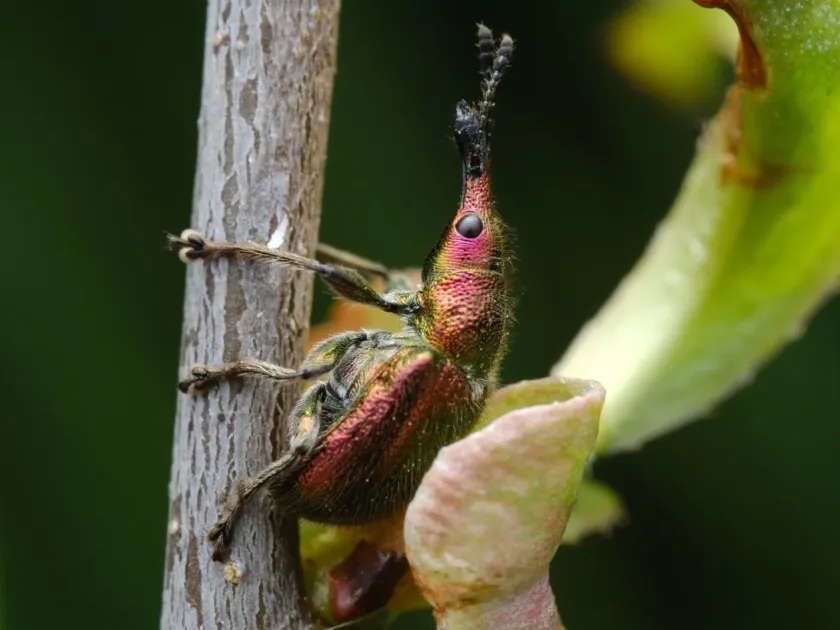
The cherry fruit weevil (Rhynchites auratus) is a beetle species belonging to the Attelabidae family. Adult insects are characterized by a striking golden-green metallic color.
The beetle typically measures 5 to 9 millimeters in length and features a long, prominent snout, known as a rostrum, which is used for both feeding and preparing sites for egg-laying.
The larvae are legless, C-shaped grubs with white bodies and brown heads. They are exclusively adapted for development inside the hard shells of stone fruit pits.
Adult weevils are capable of flying, which enables them to move efficiently across orchards. They are most active during warm, sunny days, which coincides with the flowering of stone fruits.
The overwintering stage occurs in the soil, where the insects remain as pupae or larvae. They emerge in early spring, synchronized with the onset of tree budding.
What it damages
This pest primarily attacks stone fruits, including cherries, sweet cherries, apricots, plums, and peaches, posing a significant risk to the overall crop yield.
Adults cause mechanical damage by chewing deep holes in flower buds, young leaves, and developing blossoms, which can prevent the tree from setting fruit successfully.
Female weevils damage young fruit by drilling holes and depositing eggs inside the fruit flesh. This leads to fruit deformity, cessation of growth, and frequent premature shedding.
Once the larva hatches, it burrows into the fruit and consumes the kernel of the pit. This activity makes the fruit inedible and leads to severe financial losses for fruit growers.
High population densities in years with light harvests can lead to complete failure of the crop, as a single female is capable of damaging a large number of developing fruits.
When it appears
Adults emerge from the soil in early spring when air temperatures consistently reach 10-12 degrees Celsius, which aligns with the bud burst phase of host trees.
A period of maturation feeding follows emergence, where adults consume plant tissue to gather energy for reproduction before the peak of the fruit-set season.
Egg-laying activity peaks shortly after the petals have fallen, once the developing fruit reaches a size sufficient to support the internal growth of the larvae.
Larval development typically concludes by mid-summer. Once fully grown, the larvae exit the fruit and burrow into the soil to pupate for the remainder of the season.
The entire life cycle is strictly tied to the phenological stages of the trees, making the timing of intervention critical for the success of control efforts.
Signs of infestation
The initial signs of infestation are small, irregular holes or "shot-holes" found in the developing leaves and flower buds early in the spring season.
Small, dark puncture marks on the surface of green fruit are indicative of egg-laying sites. These areas often appear depressed due to localized tissue growth retardation.
The most visible symptom is the premature dropping of fruit. When these fallen fruits are dissected, the damage to the kernel by the larva becomes clearly evident.
Adult beetles can be spotted by shaking branches over a white sheet during the cool, early morning hours when the insects are less mobile and drop easily.
Orchards with heavy infestations often display reduced vigor, with large amounts of immature fruit accumulating under the canopy as the season progresses.
Control measures
Cultural control involves regular cultivation or tilling of the soil around the base of trees to disturb pupae and larvae residing in the upper layers of the soil.
Mechanical control, such as manual collection, is effective for smaller orchards. Shaking the trees early in the morning and disposing of the collected beetles is a sustainable practice.
Chemical control is often necessary for high-density infestations, involving the application of registered insecticides before flowering and immediately after the petal-fall stage.
Prompt removal and destruction of all fallen fruit (drops) is essential to prevent larvae from completing their exit into the soil, thereby reducing future population levels.
Maintaining tree health through proper irrigation and fertilization ensures that trees are more resilient and can potentially withstand lower levels of pest pressure.
Content graph
Connections · Cherry fruit weevil
Most often together:
Marketplace
Products · 9


Biology
Taxonomy
- Latin name
- Rhynchites auratus
- Order
- Coleoptera (beetles)
- Family
- Attelabidae
- EPPO code
- RNCHAF
Community
Discussion
No discussions yet — be the first.