

Pest · Coleoptera (beetles) · affects Onion, Fodder beet, Wild cabbage
Especially harmful
Grape leaf roller
Byctiscus betulae
Description
How to identify
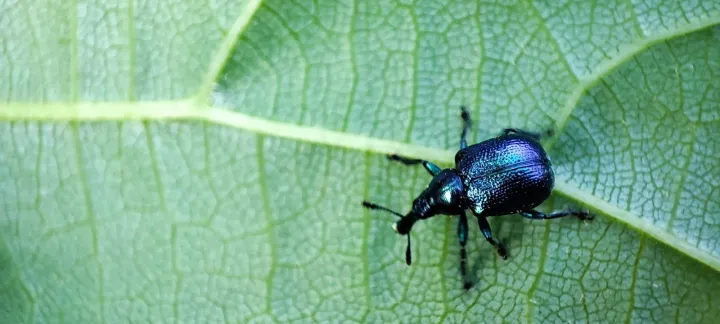
The Grape leaf roller (Byctiscus betulae) belongs to the Attelabidae family of beetles. It is a distinct pest characterized by a shiny, metallic green, blue, or golden appearance.
The adult beetle measures between 6 and 9 mm in length and features the elongated rostrum typical of the Curculionoidea superfamily, commonly known as weevils.
The larvae are small, legless, and white with a hardened brown head, specially adapted to live within the restricted space of a rolled leaf structure.
Adults overwinter in the soil or under leaf litter, emerging in early spring when temperatures rise, signaling the start of their reproductive and feeding cycle.
The species is widespread and exhibits a high degree of adaptability, affecting both cultivated vineyards and various wild tree species in surrounding habitats.
What it damages
While known as a grape pest, it is highly polyphagous and feeds on a variety of hosts, including lime, birch, poplar, and several deciduous fruit trees.
In vineyards, the pest causes damage by feeding on young leaves, flower clusters, and developing buds, which can lead to significant yield losses if left unchecked.
The adults create holes in the leaves and damage the petioles, causing the leaves to wilt prematurely and detach from the vine shoots.
The most visible damage is caused by the females rolling leaves into tight, cigar-shaped structures. These rolls serve as both a nesting site for eggs and a food supply for the emerging larvae.
Continuous leaf damage weakens the plant, reduces photosynthetic efficiency, and impacts the accumulation of sugars in the grapes, ultimately affecting overall vine health.
When it appears
The emergence of adult beetles typically occurs in early spring, synchronized with the bud-break stage of the grapevine, usually when temperatures exceed 10-12 degrees Celsius.
The peak activity for mating and egg-laying occurs during the pre-flowering and flowering stages, as the beetles seek out tender foliage for their offspring.
The leaf-rolling phase is most intense during the late spring and early summer months, lasting approximately three to four weeks depending on regional weather patterns.
Larval development takes place inside the leaf rolls; once complete, the larvae drop to the ground to pupate in the soil during the summer period.
A second generation of adults may appear in mid-to-late summer, but these generally cause less economic damage as the vines are already fully developed.
Signs of infestation
The earliest indicators of infestation are small puncture marks on young leaves and damaged, shriveled buds, which may initially be misidentified as frost damage.
The most diagnostic sign is the presence of neatly rolled leaf "cigars" that are typically found hanging from the shoots or lying on the ground beneath the vines.
Upon unrolling these structures, one can observe the presence of eggs or creamy-white larvae, along with the necrotic tissue they have consumed.
Gradual browning and death of the leaf blades often accompany the infestation, leading to a ragged appearance of the vineyard canopy during the peak growth season.
A noticeable decrease in the vigor of the shoots, coupled with premature leaf fall, provides clear evidence of a damaging population of the grape leaf roller.
Control measures
Manual collection and destruction of the rolled leaves is the most effective organic control method, provided it is performed before the larvae emerge to pupate.
Cultivating the soil in the vine rows during mid-summer can effectively destroy pupae residing in the upper layers of the earth, disrupting the insect's life cycle.
Chemical intervention may be necessary in cases of severe infestation, specifically targeting the adult beetles during the pre-flowering or post-flowering periods.
- Application of contact insecticides during adult migration.
- Use of systemic insecticides to protect developing foliage.
- Maintaining a clean vineyard floor to remove alternate host vegetation.
Integrated Pest Management (IPM) practices, including regular monitoring and alternating between different chemical classes, help prevent the development of pesticide resistance.
Reference
Connections · Grape leaf roller
Most often together:
Marketplace
Products · 1
Biology
Taxonomy
- Latin name
- Byctiscus betulae
- Order
- Coleoptera (beetles)
- Family
- Attelabidae
- EPPO code
- BYCTBE
Community
Discussion
No discussions yet — be the first.