
Southern cattle tick
Rhipicephalus microplus
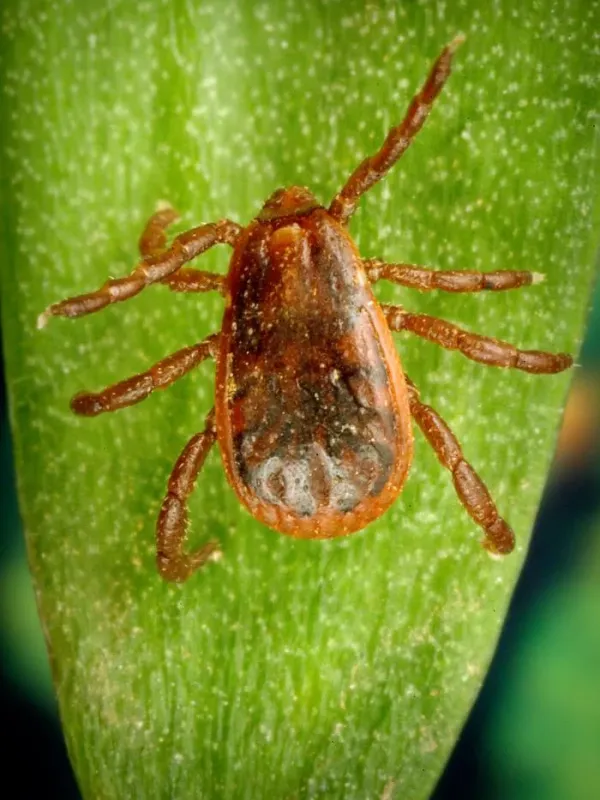
Description
How to identify
Rhipicephalus microplus is a highly specialized ixodid tick belonging to the Ixodidae family, notorious for its impact on the global cattle industry.
The adult female has an oval body that expands significantly after a blood meal, often changing to a slate-grey or greenish-blue color during engorgement.
The male is much smaller than the female, characterized by a hard, chitinous shield that covers its entire dorsal surface, facilitating mating on the host's body.
This species is a one-host tick, meaning that larvae, nymphs, and adults all complete their development on the same animal without returning to the environment.
Identification often involves checking the soft skin areas of livestock, such as the dewlap, udder, and inner thighs, where ticks prefer to attach and feed.
What it damages
The primary hosts for R. microplus are cattle, though the pest can occasionally affect other ungulates, causing severe agricultural distress.
While the tick itself does not destroy crops, its presence forces the closure of pastures, leading to inefficient land use and increased management costs.
The damage caused to livestock is multifaceted, including direct blood loss, irritation, and significant reduction in milk yield and meat production.
The tick bites damage the hide, reducing the commercial value of the leather, and the skin lesions serve as entry points for secondary infections.
Crucially, this tick serves as a primary vector for protozoal diseases like babesiosis and anaplasmosis, which are fatal to susceptible cattle populations.
When it appears
The tick's life cycle is strictly dependent on temperature and humidity, as eggs and larvae are highly susceptible to desiccation in dry environments.
In tropical and subtropical regions, the tick can be active throughout the year, enabling multiple overlapping generations within a single calendar year.
Peak activity typically occurs during the warm and wet seasons when environmental conditions are optimal for egg hatching and larval survival on vegetation.
During colder months, development slows down; however, the tick can persist in protected environments like barns or sheds where the microclimate remains stable.
Rainfall is a key environmental trigger, as moisture allows larvae to migrate up the blades of grass, making them more accessible to passing hosts.
Signs of infestation
Early symptoms of infestation include increased restlessness and frequent rubbing against posts or fences as cattle attempt to alleviate severe skin irritation.
A physical inspection will reveal inflammatory lesions, scabs, and localized swelling at the attachment sites, indicating high levels of tick activity.
- Marked weight loss and poor body condition in young calves and adult cattle.
- Drop in milk production due to physiological stress and parasitic burden.
- Pale mucous membranes, signifying anemia caused by heavy feeding by adult ticks.
- Visible clusters of engorged ticks in protected skin folds of the animal's body.
Advanced infestation signs include high fever and lethargy, which are often indicative of concurrent blood-borne infections transmitted by the ticks.
Control measures
Chemical control remains the primary strategy, involving the use of acaricides applied through dipping vats, spray races, or pour-on formulations.
Systemic treatments, including injectable endectocides, are widely used to provide longer-lasting protection and reach ticks in hidden body areas.
Strategic pasture rotation is an essential management technique, as it forces the larvae to die of starvation while the host is absent from the grazing area.
Strict quarantine measures should be applied to all new cattle introduced into a herd to prevent the accidental introduction of resistant tick strains.
Integrated pest management (IPM) incorporates the use of tick-resistant cattle breeds, which possess innate immune mechanisms to limit tick attachment and feeding.
Taxonomy
- Latin name
- Rhipicephalus microplus
- Family
- Ixodidae
- EPPO code
- BOOPMI
Discussion
No discussions yet — be the first.