
Lone star tick
Amblyomma americanum
Description
How to identify
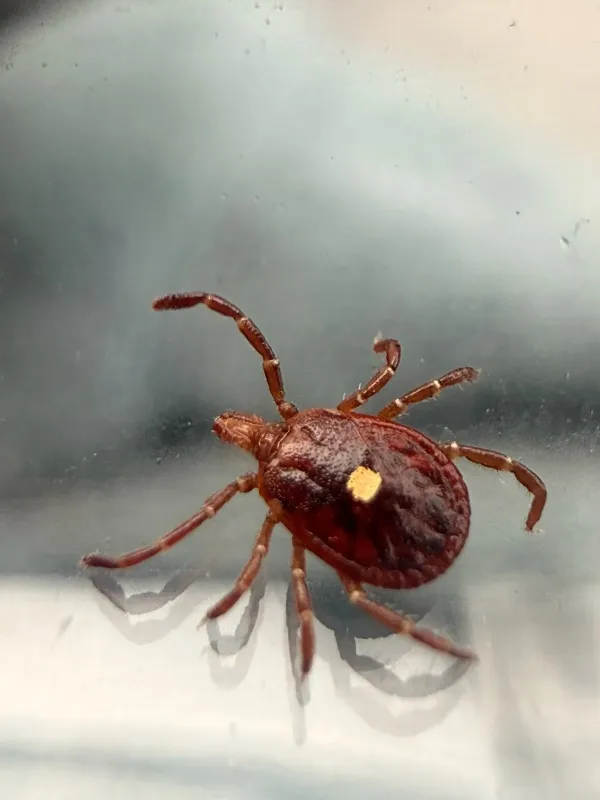
The Lone star tick (Amblyomma americanum) is a member of the Ixodidae family, known for its distinct morphological features that help in its identification.
Adult females are characterized by a prominent, singular white spot on their dorsal shield, which is the primary trait used to distinguish them from other tick species.
Adult males are generally smaller than females and lack the white spot, instead displaying a dark coloration with decorative white patterns on their posterior margins.
Larvae are extremely small and easily overlooked, often aggregating in large numbers on vegetation while waiting for a host to pass by.
Nymphs are slightly larger than larvae and possess a highly efficient mouthpart structure designed for rapid attachment and feeding on host blood.
What it damages
While Amblyomma americanum is not a direct pest that feeds on plant tissues, it poses a severe threat to the livestock industry and agricultural workforce.
Feeding by these ticks causes significant distress to livestock, leading to reduced grazing efficiency, lower weight gain, and diminished milk production.
Severe infestations on animals result in skin irritation, secondary bacterial infections at the bite sites, and potential long-term damage to the hide quality.
The tick acts as a primary vector for various pathogens, including the causative agents of ehrlichiosis and tularemia, which threaten both animals and farm personnel.
Management costs associated with tick control and animal health care represent a substantial economic burden for farms situated in endemic regions.
When it appears
The activity of the Lone star tick begins in early spring as soon as temperatures rise above 10-12 degrees Celsius, marking the start of the risk period.
Mid-summer represents the peak season for these ticks, as high humidity and warm temperatures favor their survival and active host-seeking behavior.
These ticks are most aggressive during early morning and late afternoon hours, when they climb to the tips of blades of grass to wait for potential hosts.
The life cycle requires consistent blood meals to transition between developmental stages, making the availability of animal hosts a key driver of population density.
Activity gradually declines with the onset of autumn, though the ticks may remain active until sustained freezing temperatures occur in the late season.
Signs of infestation
Frequent inspections of livestock for embedded ticks during their daily return to pens or handling areas are essential for early detection.
The presence of ticks in pastures can be detected using a drag cloth method, which involves pulling a white fabric across the vegetation to collect host-seeking individuals.
Changes in animal behavior, such as constant scratching or restlessness, often indicate a tick infestation that requires immediate attention and treatment.
Observation of clusters of tiny, mobile larvae on leaves or stems is a strong indicator of a high tick population density in a particular field or pasture.
Finding adult ticks on clothing after working in brushy or grassy areas confirms that the site is an active habitat for this species.
Control measures
Maintaining short-cut vegetation in pastures and around farm infrastructure is the most effective cultural method to reduce suitable humidity for tick survival.
Regular application of approved acaricides to livestock is necessary to protect animal health and prevent the spread of tick-borne diseases across the farm.
Establishing cleared buffer zones between wooded areas and grazing lands helps limit tick movement and decreases the risk of contact with livestock.
Integrated Pest Management strategies should include managing wild animal populations, as they are primary hosts that facilitate the tick's dispersal.
Ensuring that all field workers use appropriate personal protective equipment and insect repellents is vital for preventing tick bites during daily agricultural tasks.
Taxonomy
- Latin name
- Amblyomma americanum
- Family
- Ixodidae
- EPPO code
- AMBYAM
Discussion
No discussions yet — be the first.